

A property transition can become complicated before the keys change hands. When valuation, repairs, removals, paperwork, and handover details are handled as separate tasks, it can be difficult to see what needs attention first. Property transition services are most useful when coordinated around a clear plan that reflects whether you’re preparing to occupy, rent, sell, or hand over a property. A practical checklist can help reduce the risk of overlooking a document, repair, or responsibility.
This guide explains what a property transition may involve, how to sequence preparation and handover tasks, and which services may suit different circumstances. It covers asset valuation, property removals, renovations, and ongoing property management, as well as the records and agreed details to review before handover. Documentation and transfer procedures can vary, so confirm current requirements with a qualified professional before acting. Matching the tasks and support to your situation can help you make decisions with greater clarity and keep responsibilities visible at each stage.
Key Takeaways
- Property transition services can support changes in ownership, occupancy, or property use. Start by clarifying what is changing.
- Set the desired property condition, timing, and responsibilities early so you can sequence tasks and coordinate the handover.
- Match services such as valuation, renovations, removals, or property management to the specific needs of your transition.
- Before handover, check the property’s condition, agreed work, access arrangements, belongings, and records.
- Ask qualified legal or transaction professionals which documents and procedures apply to your situation in Nigeria.
What Do Property Transition Services Include in Nigeria?
Property transition services are practical services that help prepare, change, or hand over a property when its ownership, occupancy, or use changes. Depending on the situation, the work may include assessing the property, arranging removals or renovations, and planning ongoing management. There is no single set of services that suits every transition. The right combination depends on the property and what is changing.
Think of a transition as a coordinated set of property-related tasks, not as a replacement for specialist advice. Preparing a property for a new occupant may involve different work from preparing it for sale or arranging management after an owner’s circumstances change. A transfer of ownership may also involve conveyancing, the legal process of transferring property. Don’t assume a property service provider gives legal, tax, or engineering advice unless that expertise is specifically confirmed.
Which property changes may need coordinated support?
Support may be useful when an owner is preparing a property for sale, arranging for a new occupant, or changing how a property is used or managed. A move or a change in who occupies a home can create practical tasks involving belongings, repairs, access, and ongoing oversight. A change in how a property is used may require a different sequence, especially if work needs to be completed first.
Start by defining the outcome. If the property is changing occupants, removals and preparation may be relevant. If you’ll retain ownership but need continuing oversight, property management may be more suitable. Not every transition requires every service. Clarifying the change helps you avoid arranging unnecessary work and identify what still needs attention.
What can a property transition service provider do?
Depending on the provider’s confirmed scope, different services may support separate parts of the process:
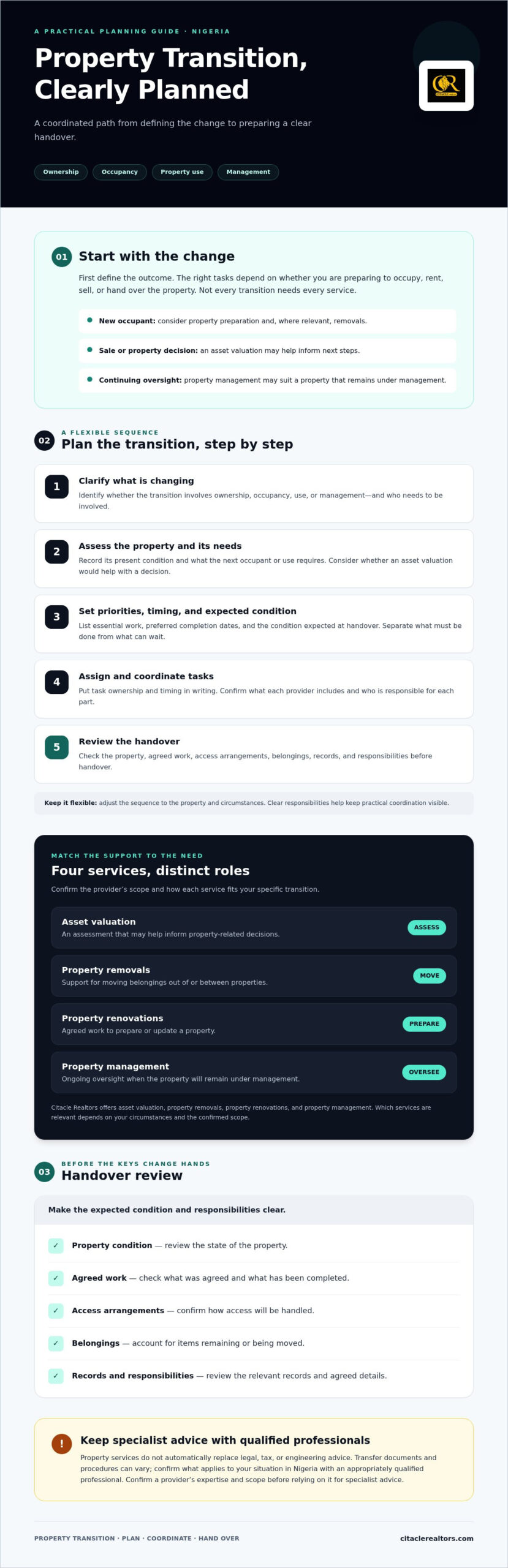
- Asset valuation: provides an assessment that may help inform property-related decisions.
- Property removals: supports moving belongings out of or between properties.
- Property renovations: addresses agreed work to prepare or update a property.
- Property management: supports ongoing oversight when the property will remain under management.
These are distinct services. Before engaging a provider, confirm what is included, who is responsible for each task, and how the work fits your transition. Citacle Realtors offers asset valuation, property removals, property renovations, and property management. Which services may be relevant depends on your circumstances and the confirmed scope. For transfer documents, tax questions, or technical assessments, consult appropriately qualified legal, tax, or engineering professionals. Clear responsibilities help keep practical coordination useful while ensuring specialist advice comes from the right source.
How to Plan a Property Transition Step by Step
A clear sequence turns a property change into manageable tasks. Before arranging work, agree on the intended outcome, who is responsible, and the condition the property should be in at handover. These details give you a basis for coordinating property transition services without assuming every transition needs the same support.
Start with the property, people, and intended outcome
First establish who owns, occupies, manages, and will receive the property. Then record the key dates, desired condition, and immediate priorities. A property being prepared for a new occupant may need a different plan from one changing use or moving into ongoing management. If the property’s value or condition is uncertain, consider whether a suitable assessment would help before you decide what work to arrange.
Coordinate work, responsibilities, and handover
Once priorities are clear, put task ownership and timing in writing. This helps avoid confusion when owners, occupants, managers, and service providers are involved. Use the steps below as a flexible sequence, adjusting them to your circumstances.
- Clarify the change. State whether the transition involves ownership, occupancy, use, or management, and identify the people who need to be involved. This defines the scope before tasks begin.
- Assess the property. Note its present condition and what the next occupant or use requires. If value is relevant to your decision, asset valuation may help inform your next steps.
- Set priorities and timing. List essential work, preferred completion dates, and the condition expected at handover. Separate tasks that must be completed from work that can wait.
- Assign and coordinate tasks. Give each task a responsible person and agree on timing. Depending on the plan, this may include property removals, agreed renovations, or property management for ongoing oversight. Confirm access arrangements with everyone who needs to enter the property.
- Check and hand over. Before the agreed date, review completed work, remaining items, belongings, and the property’s condition. Record outstanding matters and make sure the relevant people understand what has been completed and what remains.
Allow for tasks that depend on one another. Removals may need to happen before renovation work begins, while management arrangements may need to be settled before the property is handed over for ongoing oversight. Confirm each provider’s scope and timing rather than assuming one service includes another.
If you’re deciding which support fits your plan, review Citacle’s property services and consider discussing your requirements. Confirm the precise scope and availability for your situation before making arrangements.
Which Property Transition Services Fit Your Situation?
The right support depends on what needs to change, not on a standard bundle of services. A property being prepared for sale may need a different combination from one being cleared for a new occupant or kept under ongoing oversight. Use this guide to match a need with a service to consider, then confirm the provider’s exact scope before making arrangements.
| Transition need | Service to consider | Purpose |
|---|---|---|
| You need a clearer view of the property’s value | Asset valuation | To inform property-related decisions |
| The property needs agreed preparation work | Property renovations | To address specified work before a change in use, occupancy, or ownership |
| Belongings need to be cleared or relocated | Property removals | To support the practical movement of items |
| You need continuing oversight after the transition | Property management or facilities management | To support ongoing property needs, depending on the arrangement |
When can valuation, renovation, or removals help?
Consider asset valuation if you need a clearer view of value to inform a decision. It may be relevant during a sale or another change in plans, but it isn’t a substitute for legal, tax, or other specialist advice. For more context, read this property valuation guide for sellers.
Renovations may be suitable when specific work is needed before the property is occupied or used differently. Agree on the scope and priorities first, since not every property needs renovation. Property removals may be relevant when belongings must be cleared or relocated. These are separate services, so check what each provider will handle rather than assuming removal, repair, and preparation are included together.
When does ongoing property management become relevant?
A one-time task, such as preparing a property for handover, differs from ongoing oversight. If you’ll retain the property but need continuing support, property management may be worth considering. Facilities management may also be relevant when the ongoing need relates to the property’s facilities. Clarify the intended responsibilities and scope before engaging a provider. The residential property management guide can help you understand this option.
Property transition services don’t automatically include every legal or technical task. Confirm a provider’s role in valuation, renovations, removals, or management separately from any professional advice or documentation support you may need. Citacle Realtors offers these property services, but the relevant combination depends on your circumstances and the confirmed scope. Choosing by purpose can help you coordinate support without arranging tasks that don’t fit your transition.
What Should You Prepare Before a Property Handover?
A handover is easier to manage when everyone has the same record of the property’s condition, agreed work, access arrangements, belongings, and outstanding tasks. Prepare these details with the people involved, then confirm which documents apply to your transaction with a qualified legal or transaction professional. Requirements and procedures can vary, so verify current guidance rather than relying on a checklist from another situation.
Create a property condition and task record
Where practical, walk through the property with the relevant parties. Record what is present, what has been completed, and anything that still needs attention. A written record helps distinguish agreed work from unresolved issues.
- Condition: Note visible issues and the condition of relevant areas, fixtures, or facilities.
- Agreed work: List repairs or renovations, who is responsible for each item, and whether it is complete or outstanding.
- Access: Confirm how the incoming party will access the property and record the handover of keys or other agreed access items.
- Belongings: Identify what will remain, what must be removed, and who will arrange any removals.
- Evidence and records: Take dated photographs where appropriate and acceptable to the parties. Keep copies of the condition notes and relevant communications together.
- Outstanding matters: Write down each unfinished task, the person responsible, and the agreed next step.
Keep the record factual and clear. If the parties disagree about an item, note that it remains unresolved rather than recording it as completed. Confirm who will address each outstanding matter and by when, so responsibilities remain clear after access changes hands.
Confirm documents and professional responsibilities
Ask a qualified legal or transaction professional which documents and procedures apply to your particular handover. Don’t assume a checklist from another property or transaction is sufficient. Requirements may depend on the circumstances, so verify current procedures before signing or relying on records.
Keep service coordination separate from independent professional advice. A property provider may coordinate agreed work or services within its confirmed scope, but don’t assume that this includes legal review, tax advice, valuation, or technical assessment. Confirm who is responsible for each professional task, and engage an appropriately qualified person where needed.
Preparing these details can make it easier to coordinate the practical side of property transition services while keeping decisions and responsibilities visible. If you need support with relevant property services, discuss your property transition needs with Citacle Realtors and confirm the scope that fits your situation.
How Can Citacle Realtors Support a Smoother Property Transition?
A property change may involve several practical needs, but not every transition calls for every service. Citacle Realtors offers asset valuation, property renovations, property removals, and property management. These services may support different stages, depending on your plans and the provider’s confirmed scope. The aim is to identify what fits your situation, not to assume one package covers every task.
Match Citacle’s services to the transition you are managing
If you need a clearer understanding of an asset’s value to inform your plans, asset valuation may be relevant. If a property needs agreed work before a change in occupancy or use, renovations may be worth discussing. Property removals may help when belongings need to be cleared or relocated. Each service has a different purpose, so describe the task you need addressed and confirm what the service includes.
After the immediate change, ongoing property management may be relevant if you need continuing oversight. That is distinct from one-time preparation, such as arranging removals or renovation work before handover. For example, an owner might first consider valuation, then agree on preparation work and removals, and separately discuss management if ongoing oversight is needed. The order and combination should reflect the owner’s priorities, not an assumed standard sequence.
Take the next step with a clear brief
A concise brief can make an initial discussion more useful. Share:
- Property type: Describe the property involved.
- Intended change: Explain whether you are preparing it for a new occupant, changing its use, or arranging ongoing management.
- Timing: Give your key dates or preferred timeframe, without assuming availability.
- Priorities: Identify known work, belongings to move, valuation questions, or management needs.
Ask which services are included, which responsibilities you or others will retain, and whether separate professionals should be involved. Legal, tax, and technical matters may require appropriately qualified independent professionals. Clear expectations help you decide whether the property transition services being discussed suit your needs.
If you’re planning a property change in Nigeria, contact Citacle Realtors to discuss your property, timing, and priorities. You can clarify which confirmed property services may be relevant and what scope to verify before proceeding.
Make Your Next Property Change With Confidence
A smoother transition starts with a clear outcome, a workable sequence of tasks, and agreement on who is responsible for each one. The right property transition services depend on whether you’re preparing a property, changing who occupies it, or arranging ongoing management. Keep a record of its condition and handover details, and confirm document requirements with qualified professionals familiar with your transaction.
Citacle Realtors offers asset valuation, renovations, removals, and property management to support different property needs. The company serves clients nationally across Nigeria, with the relevant services and scope to be confirmed for each situation. Legal, tax, and technical advice may require separate qualified professionals.
To discuss your property transition, share the property type, intended change, timing, and priorities with Citacle Realtors. Contact Citacle Realtors to discuss suitable property support and confirm the scope before proceeding.
Frequently Asked Questions
What are property transition services?
Property transition services are practical services that help prepare, change, or hand over a property when its ownership, occupancy, or use changes. Depending on your needs, this could involve asset valuation, property removals, renovations, or arranging ongoing property management. The right mix varies by situation. These services don’t automatically include legal, tax, or technical advice, so identify any specialist support you may need separately.
When should I arrange property transition services?
Arrange support once you know what is changing and have an intended handover date or timeframe. Starting early gives you time to assess the property, agree on priorities, assign responsibilities, and confirm the scope and timing of any services. For example, removals may need to happen before renovation work starts. If your dates or plans are uncertain, discuss the sequence with the people involved before committing to tasks.
What documents are needed for a property handover in Nigeria?
The documents needed depend on the type of handover and transaction, so there isn’t one checklist that applies to every property. Ask a qualified legal or transaction professional to identify the records required for your circumstances and verify current procedures before relying on them. Separately, you may find it useful to keep an agreed condition record, details of outstanding work, and a written note of access items handed over.
Can one company manage every part of a property transition?
Not necessarily. A provider may offer practical property services such as valuation, removals, renovations, or management, but that doesn’t mean it handles every legal, tax, or technical matter. Ask what is included, who is responsible for each task, and which professionals you may need to engage separately. Clarifying these boundaries early can help you coordinate the work without assuming one provider covers responsibilities outside its confirmed scope.
How do I choose the right property transition services?
Choose services by first defining the change, the property’s desired condition, your timing, and your priorities. Then match each need to a relevant service: valuation may inform decisions, removals may help clear belongings, renovations may address agreed work, and management may suit continuing oversight. Before engaging a provider, confirm the scope, responsibilities, and availability, and identify any legal or technical advice that needs a separate professional.
Do property transition services include renovations and removals?
They can, but inclusion depends on the provider and the agreed scope. Citacle Realtors offers property renovations and property removals as distinct services. Renovations may address agreed preparation work, while removals may help when belongings need to be cleared or relocated. Ask what each service covers and how it fits your timing. Don’t assume that arranging one service automatically includes the other or any additional work.
What happens if a property is not ready by the handover date?
If the property may not be ready, tell the other parties as soon as possible and identify what remains unfinished. Record each outstanding item, who is responsible, and any proposed next steps. Discuss whether the handover timing or arrangements need to change, and have any agreed changes confirmed appropriately. If the date or consequences are governed by transaction documents or an agreement, seek guidance from a qualified professional.