
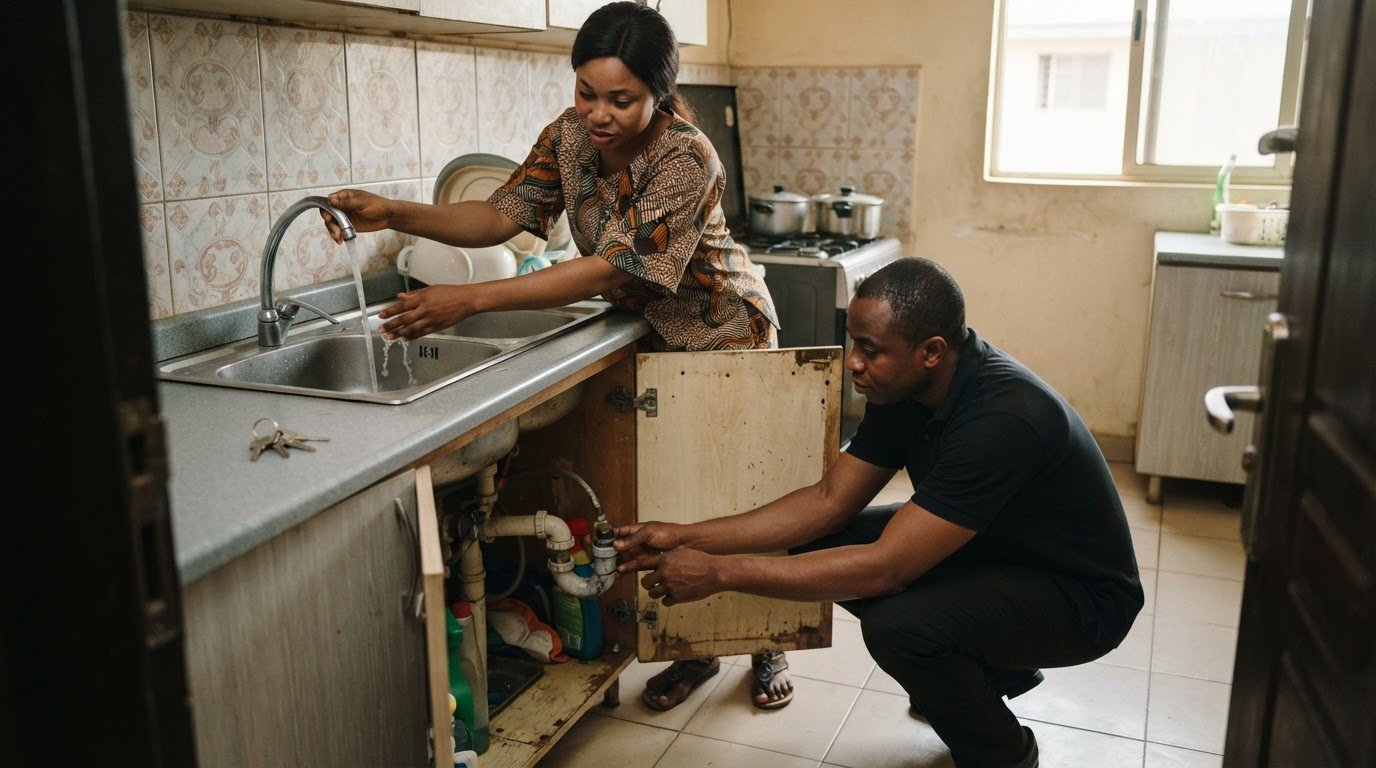
A property handover checklist for tenants should document the home’s condition and confirm what is included. Pay particular attention to the kitchen: test the tap and drainage, inspect appliances and note visible damage. Record access items, signs of moisture or defects, fixtures and meter readings so the handover record is clear.
It’s easy to focus on the keys and overlook details that matter once you start using the property. A careful written record gives both parties a shared reference for the home’s condition and any issues that need attention.
This checklist covers what to record during a Nigerian property handover, from keys, locks and photographs to fixtures, meter readings and kitchen condition. It also explains how to document outstanding issues clearly, helping you start your tenancy with an organised record.
Key Takeaways
- Account for every key, fob, remote and access code, and record any item that is missing or does not work.
- Capture visible damage and signs of moisture in a dated record, noting which issues remain unresolved.
- Match fixtures and equipment to the inventory, and document meter readings and account arrangements at handover.
- Test key kitchen fittings and appliances, then record any faults or missing parts before accepting the handover.
Recording keys, fobs, remotes and access codes
Keep the tenancy agreement and handover record nearby during the walkthrough. Use this property handover checklist for tenants to match each access item to its purpose. A key for the main entrance is different from one for a bedroom cupboard or store room. Label each item clearly to avoid confusion after move-in.
- Match keys to doors. Record keys for the apartment, cellar, attic and other rooms. This helps identify missing keys before you accept the handover.
- Test each lock before key handover. Turn the key in the entrance door, then check other accessible locks. Record a key that is present but does not operate its lock.
- Check doors and windows. Open and close each one, then test its lock or latch. Note a jammed door, loose handle or window that will not secure.
- Record fobs and remotes separately. Note which gate, building entrance or garage access each device operates. Test each item at its intended access point.
- Write down access codes securely. Identify which entry point uses each code and how instructions were provided. Avoid including codes in photographs shared beyond the handover record.
- Include cupboards and storage. Try keys for built-in cupboards, utility spaces and included storage rooms. Record any locked cupboard without a key.
- Count items together. Compare keys, fobs and remotes with the handover list. Note anything missing, damaged or untested, and keep a copy of the updated record.
Describe each item precisely, such as “store-room key” rather than “small key,” and identify the door or access point it belongs to. A property handover checklist for tenants should also record unresolved access problems in writing. Where agreed, include who is responsible and a realistic resolution date. This gives both parties a shared reference if an entry point remains unusable after move-in.
Recording visible defects and moisture
Walk through each room before moving belongings inside. Note marks, worn surfaces, cracks, leaks and damp patches. Check bathroom sinks for cracks or scratches, then run the water and observe how it drains. Look beneath sinks and around window frames for water stains, peeling paint or musty odours. Check balcony and terrace drains for blockages that could stop rainwater from draining.
Tenants should receive a copy of the tenancy agreement and handover record. Keep the property inventory and any written record of outstanding issues with these documents.
Check the rent, caution fee and other payments against the agreement. Keep receipts or written acknowledgements that show the amount, purpose and date of each payment. Record any discrepancy in writing before treating the handover account as settled.
The tenancy agreement should set out the rent terms and any agreed handover conditions. It should also identify the inventory or condition record used to document included items and the property’s state.
Responsibility for outstanding utility bills and repairs depends on the agreement and written handover record. Record meter readings, existing bills and each unresolved repair, including any agreed responsibility and resolution date.
- Record each defect clearly. Write its location, appearance and effect, such as a bathroom leak making the floor wet.
- Photograph the condition. Take dated pictures or video, naming files by room and inspection date.
- Separate observations from items needing verification. Note a visible damp patch as observed, and identify its possible source as unresolved.
- Agree repairs before handover where possible. List completed work and check the repaired area again during the walkthrough.
- Document unfinished work. Describe the defect, agreed responsibility and realistic resolution date in writing.
Key risks include hidden moisture, disputes over pre-existing damage, unclear payment records and unresolved bills. A written, acknowledged condition summary gives both parties a shared reference. Recording a defect alone does not establish who must pay for its repair.
Documenting fixtures, meters and readings
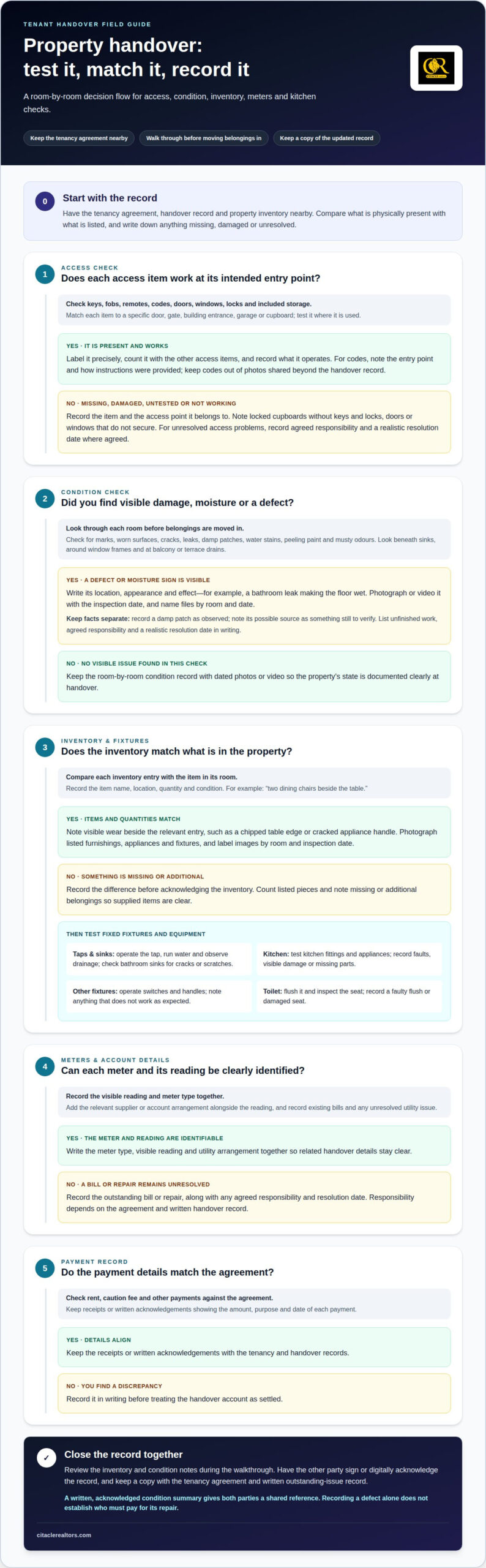
Use a property handover checklist for tenants to match each inventory entry with the item in the room. Record its name, location, quantity and condition so the description remains clear when reviewed later. For example, write “two dining chairs beside the table” instead of “dining furniture.” Compare entries with the tenancy inventory, and note missing or additional items before acknowledging it.
- List included belongings. Record furniture, appliances and accessories by room, because a precise inventory distinguishes supplied items from personal belongings.
- Match quantities to the inventory. Count chairs, shelves, appliance parts or other listed pieces, since a count can reveal a missing item.
- Describe the condition. Note visible wear, such as a chipped table edge or a cracked appliance handle, beside the relevant entry.
- Check fixed fixtures. Operate taps, switches and handles, then record any that do not function as expected.
- Test the toilet. Flush it and inspect the seat, so a faulty flush or damaged seat is recorded at handover.
- Identify each meter. Write the visible reading and meter type together, helping distinguish one meter from another.
- Record utility arrangements. Note the relevant supplier or account arrangement alongside the reading, keeping related handover details together.
- Photograph listed items. Pair images of furnishings, appliances and fixtures with written descriptions, then label files by room and inspection date.
- Review the inventory together. Walk through the property and have the other party sign or digitally acknowledge the record, creating an agreed reference.
Keep the completed property handover checklist for tenants with your tenancy documents, not just among moving-day photos. If an inventory entry does not match the room, amend its description before accepting it. For instance, specify which shelf is missing rather than writing “cabinet incomplete.” Written details and photographs work together; video alone can be harder to search when you need to check a particular fixture.
Kitchen appliances, fittings and cleaning
Test the kitchen fittings and included appliances during the handover walkthrough. Record what works, what is missing and any visible damage. A leaking tap, a fridge without shelves or a dark oven light should be clearly noted in writing. This adds useful detail to the inventory beyond simply listing appliance names.
- Run the kitchen tap and check the sink drain. Note leaks, slow drainage or water that remains in the basin.
- Check the extractor hood and its mesh filter. Record whether the hood operates, and clean or replace the filter before handover.
- Inspect the fridge and freezer. Confirm they are defrosted and thoroughly clean, then note any visible damage or cleanliness issue.
- Check the fridge door seals. Record cracked seals, since they affect the appliance’s condition and should be visible in the handover record.
- Look inside the fridge for accessories and lights. Note whether shelves, drawers and other included parts are present, and whether the interior light works.
- Test the oven light. Record if it does not switch on, so the issue is not mistaken for an unreported fault later.
- Confirm the oven tray and grid are present. List missing pieces against the inventory, rather than recording only that an oven is included.
- Test each essential kitchen appliance included in the tenancy. Note the appliance, the check performed and any fault observed.
Clean the extractor hood and refrigerator before recording their final condition. Photograph a cracked seal, missing oven grid or damaged sink surface, then describe the same issue in writing. Keep each note specific: “fridge light does not work” is more useful than “fridge faulty.” Include appliance names and locations in the inventory, and record any unresolved problem with its agreed next step. Review the completed kitchen entries together before acknowledging the handover record.
Citacle Realtors
Citacle Realtors provides Property Management and Facilities Management, which can support property owners with property condition, fixtures and ongoing upkeep. A written handover record helps clarify what was observed at move-in and which issues need attention. For tenants and owners looking for a more organised approach to property oversight, these services are a natural next step after completing the checklist. The right support depends on the property and its management needs. Contact Citacle Realtors to discuss property oversight.
Carry your handover record into the next step
A well-prepared property handover checklist for tenants can be the starting point for a more organised tenancy. Keep the acknowledged record accessible and add agreed updates as issues are resolved. This creates continuity between the condition noted at move-in and the property’s ongoing management.
For ongoing property oversight or a future land purchase, Citacle Realtors offers Property Management, Facilities Management and Residential Land Sales. Consider which service fits your plans and the property decision ahead.
Contact Citacle Realtors today to discuss your property needs and take the next step with confidence.
Frequently Asked Questions
Kitchen: what do I have to pay attention to when handing over my apartment?
Confirm which kitchen items are included and how each appliance operates. Ask for available user manuals or operating instructions, especially for unfamiliar cooker controls or extractor settings. Check whether detachable items, such as fridge shelves or removable racks, belong with the appliance. If an item is excluded from the tenancy, have that recorded to avoid confusion about what stays.
Outdoor area and storage rooms: what is part of the handover?
Confirm which outdoor and storage spaces are included in the tenancy, such as a garden, balcony, garage or store room. Distinguish private areas from shared spaces, and note access instructions for gates or communal facilities. Record whether items in the space will remain or be removed. If parking is included, clarify the allocated space and record it in the handover documents.
What do I need to check throughout the flat?
Check each room before furniture or boxes obscure surfaces and fittings. Look at ceilings, built-in wardrobes, light switches and ventilation points, and note anything unusual or inaccessible. Open internal doors fully and inspect behind them for damage or obstructions. In rooms with fitted equipment, confirm how the controls work and where instructions are kept. Add room-specific notes rather than relying on memory.
What should a tenant inspect during a property handover in Nigeria?
Inspect the whole property, including room access, water flow, electrical fittings, included equipment and outdoor spaces. Check how to access shared facilities and where waste should be placed. Ask for practical building information, such as whom to notify about routine concerns or urgent incidents. Keep these details with the tenancy papers for easy reference after moving in.
How should tenants record the property’s condition at handover?
Use a room-by-room record with concise descriptions that separate what you observed from what still needs investigation. For example, write “stain beneath bedroom window” rather than assuming its cause. Identify who attended the walkthrough and keep the acknowledged copy with the tenancy documents. Store another copy where you can retrieve it during the tenancy, not only on a device used for moving-day photographs.
What utility meter readings and bills should be checked at handover in Nigeria?
Record each visible meter’s type, identifier if shown, reading and inspection date. Compare the reading with any available utility bill, noting the bill period and account arrangement. If a meter serves more than one unit, record that shared arrangement rather than treating its full reading as exclusive to the apartment. Keep copies of relevant bills and written notes together for later reference.