
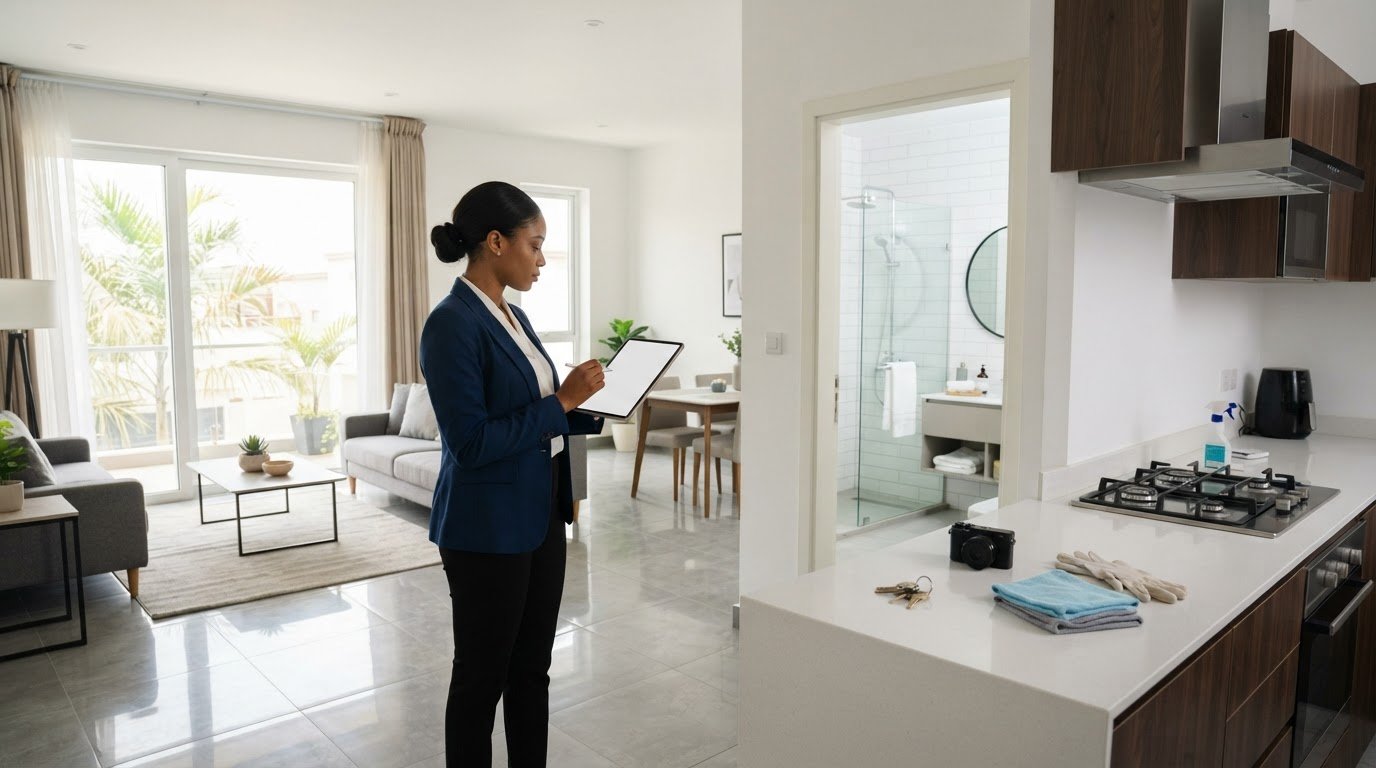
A clean rental isn’t necessarily a ready rental. A rental property turnover checklist helps you identify what needs attention before handover, without confusing cleaning with inspection or repairs. If you’re unsure which tasks to prioritise, or how to distinguish tenant-caused damage from normal wear, a clear process can make the transition easier to manage.
Cleaning is an important part of preparing a home for its next occupant, but it’s only one step. Record the property’s condition before and after cleaning, and plan maintenance in sequence to avoid redoing work, such as cleaning floors before dusty repairs are complete.
This guide provides a practical room-by-room cleaning and readiness checklist, plus advice on documenting condition and separating cleaning tasks from repair concerns. You’ll also learn how to organise the handover so the property is properly prepared for its next tenant. For owners managing rental assets, a consistent turnover process supports more organised property oversight and a clearer transition between tenancies.
Key Takeaways
- Use a rental property turnover checklist to organise access, cleaning, verification and record-keeping in a practical sequence.
- Work through each room and shared area, cleaning surfaces while separately checking whether fixtures and appliances function.
- Distinguish residue, routine wear, damage and maintenance concerns carefully. A cleaning task alone doesn’t establish responsibility.
- Record the property’s condition before and after cleaning, and note unfinished work for follow-up.
- Before handover, confirm cleanliness, access items and any safety or system checks that may need a qualified professional.
What an End-of-Tenancy Cleaning Checklist Should Cover in Nigeria
End-of-tenancy cleaning is the planned cleaning stage after the departing occupant has removed their belongings and before the property is handed over or prepared for its next occupant. It focuses on removing dirt, dust and residue from rooms, fixtures and surfaces. Depending on the property and its condition, tasks may include cleaning floors, cupboards, bathroom fittings and kitchen surfaces.
Cleaning is one stage of a rental property turnover, not the complete turnover. Inspection, maintenance, repairs, condition records and handover arrangements need separate attention.
A useful rental property turnover checklist keeps these activities distinct. Cleaning makes the property presentable; an inspection records its condition; maintenance and repairs address faults. For example, wiping a kitchen tap is a cleaning task, while investigating a leak beneath the sink requires a separate assessment. The property’s layout, condition, fixtures and tenancy agreement all affect the work required.
When does cleaning fit into rental property turnover?
Once you know a tenancy is ending, plan access, inspection and any providers needed. There’s no universal schedule for every property, so coordinate the work with the agreed move-out date. Start cleaning after belongings have been removed and the property is accessible. An initial inspection can reveal maintenance or repair work. If that work is likely to create dust or debris, schedule the final clean afterward.
Who is responsible for end-of-tenancy cleaning?
Don’t assume that every tenant or landlord has the same cleaning duties. Review the tenancy agreement, discuss unclear expectations with the other party and record what has been agreed. The wider relationship is governed by landlord-tenant law, but applicable requirements can vary. Before relying on a legal interpretation in Nigeria, check the relevant rules for the property and seek qualified advice where needed.
Keep responsibilities specific and in writing. The agreement or a move-out record can clarify which cleaning tasks are expected, how the property’s existing condition will be assessed and how reported defects will be handled. A cleaning checklist alone cannot determine who is responsible for a damaged fixture or maintenance issue. Clear records help separate preparation work from questions about responsibility.
A Step-by-Step End-of-Tenancy Cleaning Checklist for Landlords
A clear sequence helps keep cleaning focused and makes it easier to identify completed tasks, outstanding work and jobs that require a qualified provider. Use this rental property turnover checklist as a working plan, adjusting it to the home’s condition and layout.
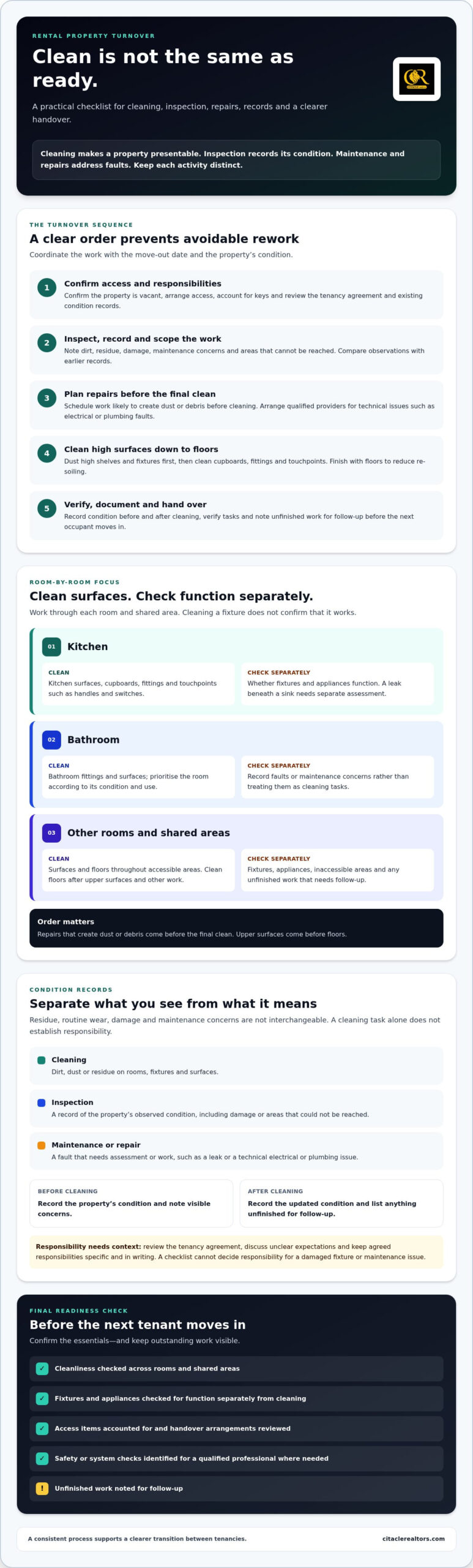
Practical sequence: confirm access, review records, inspect and plan repairs, prepare supplies, clean from high surfaces down, then verify and document each task.
Plan access, supplies and cleaning responsibilities
Before work begins, confirm that the property is vacant, arrange access and account for the keys. Review the tenancy agreement and existing condition records to clarify responsibilities and identify pre-existing issues. Make a task list that separates routine cleaning from repairs or specialist work. Note any access limits, such as a locked store room or an appliance that cannot be moved safely.
Follow the cleaning and verification sequence
Use the steps below to guide the work. Adapt the order to the property: a heavily used kitchen or bathroom may need early attention, while repairs that create dust should usually happen before the final clean.
- 1. Walk through and scope the work. Note visible dirt, residue, damage, maintenance concerns and areas that cannot be reached. Compare your observations with earlier records.
- 2. Assign tasks and prepare supplies. Gather suitable cleaning materials and identify any specialist support needed. Don’t attempt work that requires skills or equipment you don’t have.
- 3. Complete repairs that could create more mess. Coordinate relevant maintenance first, including work that may leave dust or debris. Arrange qualified providers for technical issues, such as electrical or plumbing faults.
- 4. Clean from upper surfaces down. Dust high shelves and fixtures before lower surfaces. Then clean cupboards, fittings and touchpoints such as handles and switches. Prioritise kitchens and bathrooms according to their condition and use.
- 5. Finish with floors and overlooked areas. Clean floors after other surfaces to reduce the chance of re-soiling them. Check corners, accessible areas behind appliances and shared spaces included in the agreed scope.
- 6. Verify and record the result. Review each task against the list. Clearly mark unfinished, damaged or inaccessible items rather than recording them as complete.
Keep dated notes and condition photos where useful. Use consistent angles and clear descriptions so the records can be compared later. Cleaning confirms that a task was performed; it doesn’t prove that a fixture works or establish who is responsible for a defect. Record those findings separately for follow-up.
Owners coordinating several property tasks may find professional property management useful for broader rental oversight. Confirm the scope of any support directly, and keep cleaning arrangements distinct from other management or maintenance work.
Room-by-Room Rental Property Cleaning Checklist
Use this room-by-room rental property turnover checklist as a guide, not a fixed standard for every home. Include only areas, fixtures and appliances that are part of the rental, and adjust the tasks to the property’s condition and finishes. In each room, record completed cleaning separately from any concern about whether an item works.
Kitchen and bathrooms: focus on hygiene and residue
These rooms often need close attention to grease, soap residue and other visible build-up. Clean the surfaces and fittings that are present and accessible, using methods suitable for their materials.
- Kitchen: Wipe worktops, sinks, taps, splashbacks, cupboard fronts and handles. Remove visible grease from suitable surfaces, and clean inside cupboards if included in the agreed scope. Clean appliance interiors only if the appliances are supplied and their condition makes cleaning appropriate.
- Bathroom: Clean the toilet, sink, taps, shower or bath, mirrors and tiled surfaces, as applicable. Remove visible soap residue from screens and fittings. Clean accessible drain covers, but treat a blockage as a separate maintenance concern.
Keep function checks separate. A clean tap may still leak, and a wiped appliance may still fail to operate. Note such concerns for a separate inspection or appropriate service provider rather than marking them as cleaning tasks.
Bedrooms, living areas and shared spaces
Work through each room methodically, including storage and shared areas that form part of the rental. Remove marks only where the surface can be cleaned safely. Record stains, scratches or other damage that cleaning won’t resolve.
- Bedrooms: Dust reachable surfaces, clean floors and skirting, wipe suitable marks, and remove dust or residue from interior storage such as wardrobes and drawers.
- Living areas: Clean accessible surfaces, window interiors and floors. Include fitted shelves or other fixtures where present, and note damage separately.
- Corridors and stairs: Dust reachable ledges and clean floors, stair treads and handrails if these are included in the property.
- Balconies or outdoor areas: Remove loose dirt and residue from areas included in the tenancy, where access and conditions allow.
For every room, distinguish visible cleanliness from operational condition. Wiping a light switch doesn’t confirm that a light works, and cleaning a window doesn’t verify that it opens or closes correctly. Add any functional concern to the inspection record for separate follow-up.
How to Separate Cleaning, Repairs and Move-Out Condition Records
A mark on a wall, residue on a worktop and a leaking tap call for different follow-up. A clear rental property turnover checklist separates what can be cleaned from signs of wear, damage or a maintenance issue. This distinction helps you plan the next task without treating every visible flaw as proof of responsibility.
What belongs on a cleaning list versus a repair list?
Use the table as a guide, not a final decision about who is liable. The same observation may need context from the tenancy agreement and earlier condition records. Technical concerns may also need assessment by a suitable professional.
| Category | Examples | Record and next step |
|---|---|---|
| Cleanable residue | Dust on a shelf, grease on a suitable kitchen surface, or soap residue on tiles. | Note the location and cleaning needed. Removable dirt or residue is not, by itself, evidence of damage. |
| Routine wear | Minor fading or gradual surface changes from ordinary use. | Describe what you observe and compare it with the move-in record before deciding whether action is needed. |
| Damage | A cracked fixture, broken cupboard fitting or a new hole in a wall. | Document the location and condition, then compare it with earlier records. Don’t assume responsibility based on the cleaning list alone. |
| Maintenance issue | A persistent leak, an appliance fault or a condition that may be unsafe. | Record it separately and arrange an appropriate assessment or repair. Cleaning does not establish the cause or resolve the fault. |
An unfinished task isn’t automatically damage, just as a clean surface doesn’t confirm that a fixture works. Avoid deciding on deductions or liability from appearance alone. Review the tenancy agreement and applicable requirements, and seek qualified guidance if the situation is unclear.
How should landlords document the property condition?
Use the same room names and, where practical, similar photo angles in move-in and move-out records. For each observation, note the date, precise location, description and status, such as “cleaning required,” “repair assessment needed” or “complete.” Keep the original records and updated notes together so the comparison is easy to follow.
Dated, consistently labelled notes and photographs make it easier to compare like-for-like conditions, identify outstanding work and distinguish cleaning from potential damage or maintenance needs. They support clearer turnover decisions, but don’t independently determine responsibility.
For organised oversight of rental assets, explore Citacle Realtors’ property management and confirm directly whether the support suits your requirements.
Final Rental Turnover Checks Before the Next Tenant Moves In
A final walk-through is your chance to catch missed cleaning and confirm that open tasks are clearly recorded before handover. Use the same room labels as in your earlier notes, and treat cleanliness, repairs and functional checks as separate parts of the review.
Use a final walk-through to confirm readiness
Revisit every room against the completed rental property turnover checklist. Check that agreed fixtures and supplied appliances are present and visibly clean, then note separately if any item appears damaged or may not work. If repair work has left dust or debris, arrange the final clean after that work where the sequence allows.
- Cleanliness: Confirm the agreed rooms, surfaces, floors and shared areas have been cleaned. Record missed or incomplete tasks rather than assuming they were done.
- Outstanding work: List unresolved repairs, maintenance concerns and inaccessible items separately from cleaning. For safety concerns or technical systems, arrange assessment by an appropriately qualified professional rather than treating cleaning as verification.
- Access items: Confirm which keys or other access items are present and record anything outstanding for follow-up.
- Condition records: Save dated notes and relevant photographs with the property file, including the status of unfinished tasks.
This sign-off records what you observed; it doesn’t prove that every system is safe or functioning. Keep any professional assessment or repair documentation with the relevant item in the property file.
Coordinate the next turnover without overcomplicating it
Save the completed checklist beside the move-in inventory and earlier condition evidence. A consistent file makes future comparisons easier, while adapting the task list to each property, its fixtures and the tenancy agreement keeps the process practical. Owners can also review this duplex inspection checklist for tenants for a related handover perspective.
For owners coordinating several property tasks, professional property management may be an option for broader oversight. Explore the property management overview to learn more about that service, and confirm directly whether its scope fits your needs.
Make Your Next Rental Handover More Organised
A reliable rental property turnover checklist gives you a clear path from vacancy to handover. Plan cleaning after belongings are removed, work through each room and record completed tasks alongside outstanding repairs. Keep condition notes and photographs consistent, and compare them with earlier property records. This helps distinguish cleaning needs from wear, damage or maintenance concerns without treating one as proof of another.
Before the next occupant moves in, complete a final walk-through and confirm that unresolved work is clearly documented. Adapt the process to the property and tenancy agreement, and arrange qualified support for checks beyond routine cleaning. A repeatable approach can make each transition easier to oversee.
For broader oversight, Citacle Realtors provides property and facilities management for residential and commercial assets, as well as property renovation and removal services. Explore Citacle Realtors’ property management services to see whether they may suit your needs. With clear records and a practical plan, you can prepare your rental for its next chapter with greater confidence.
Frequently Asked Questions
Is end-of-tenancy cleaning legally required in Nigeria?
Cleaning responsibilities may depend on the tenancy agreement and applicable requirements, so don’t assume one rule applies to every rental across Nigeria. Review the agreement and document the property’s condition at move-out. If the parties disagree about their obligations, seek qualified local advice. A checklist helps organise cleaning tasks, but it doesn’t determine legal responsibility or, by itself, authorise charges against a tenant.
What should an end-of-tenancy cleaning checklist include?
Include the kitchen, bathrooms, bedrooms, living spaces, storage and any outdoor areas covered by the rental. Note surfaces, floors, fixtures and, where appropriate, the interiors of supplied appliances that need cleaning. A rental property turnover checklist should keep cleaning tasks distinct from checks on whether systems or appliances work. Record repairs and safety concerns separately so completing a cleaning task isn’t mistaken for testing or fixing an item.
How do I distinguish cleaning from damage at move-out?
Cleaning removes dirt, dust, grease or residue from a surface; damage or maintenance issues need separate attention. A broken fixture, persistent leak or defect won’t be resolved by wiping it clean. Record cleaning needs and observed defects separately, then compare the move-out notes with available move-in condition records and the tenancy agreement. Don’t use the cleaning checklist alone to decide who caused a defect or who is responsible for it.
When should a landlord arrange end-of-tenancy cleaning?
Plan the work once you know the expected move-out date, but arrange cleaning after the property is vacant and belongings have been removed. Confirm access and agreed responsibilities before assigning tasks. If repairs or renovation work could leave dust or debris, coordinate the sequence so the final clean follows that work where practical. Once cleaning is complete, walk through the property and record any missed tasks or unresolved issues.
Can a landlord deduct cleaning costs from a tenant’s deposit?
Don’t assume cleaning costs can automatically be deducted from a tenant’s deposit. Check the tenancy agreement and applicable requirements, and keep clear records of the property’s condition and any work completed. The answer may depend on the circumstances and relevant jurisdiction. If there’s a disagreement or you’re unsure how the rules apply, seek qualified local advice rather than treating a generic checklist as authority to make a deduction.
Should landlords hire professional cleaners for a rental turnover?
Hiring a cleaner depends on the property’s condition, the work required and the time available. You may handle straightforward tasks yourself or arrange a service provider for more extensive cleaning. Before work starts, define which rooms and tasks are included, and keep cleaning separate from repairs or technical checks. Afterward, review each room against the agreed checklist and record incomplete work rather than assuming every item has been addressed.
What should happen after the rental property has been cleaned?
After cleaning, complete a final walk-through and record any missed tasks, outstanding repairs or access items that still need attention. Keep dated notes and relevant photographs with the property’s condition records. If you’re preparing to rent the home again, address unresolved readiness issues before moving to the next agreed step, such as viewings or handover. This helps keep the property’s status clear for everyone involved.