

What if the most valuable renovation isn’t the one with the newest finishes, but the one that solves your property’s real needs? It can be hard to know where to begin when the scope is unclear, work could disrupt daily use, and each improvement needs to support a clear goal. The right building renovation specialists can help focus the project on practical improvements that support the property’s condition, use and longer-term value.
A considered renovation starts with understanding the building, setting priorities and planning the work around specific outcomes. This guide covers how to approach the main stages, decide which improvements suit your property and connect renovation plans with ongoing property management and asset valuation. Citacle Realtors provides property renovation services in Nigeria as part of its wider property and facilities management offering. With a clear plan, you can make more confident decisions about what to improve and how to care for the property over time.
Key Takeaways
- Start with the property’s purpose and needs so the renovation addresses real priorities, not just a list of upgrades.
- Building renovation specialists can help shape a project scope around the property’s condition, intended use and goals.
- Use the property’s use, condition and maintenance needs to guide priorities for an owner-occupied, rental or managed building.
- Prepare a focused brief with known concerns, desired outcomes and practical constraints to keep planning aligned.
- Consider how renovation connects with property management, facilities management and asset valuation over time.
Building renovation specialists: what they do for property owners
Building renovation specialists help property owners plan and carry out improvements that respond to a building’s condition, function, appearance or intended use. Rather than applying the same upgrade list to every property, they help define work around the building and the owner’s objectives. Depending on what the property needs, the scope may include repairs, upgrades or the renewal of spaces.
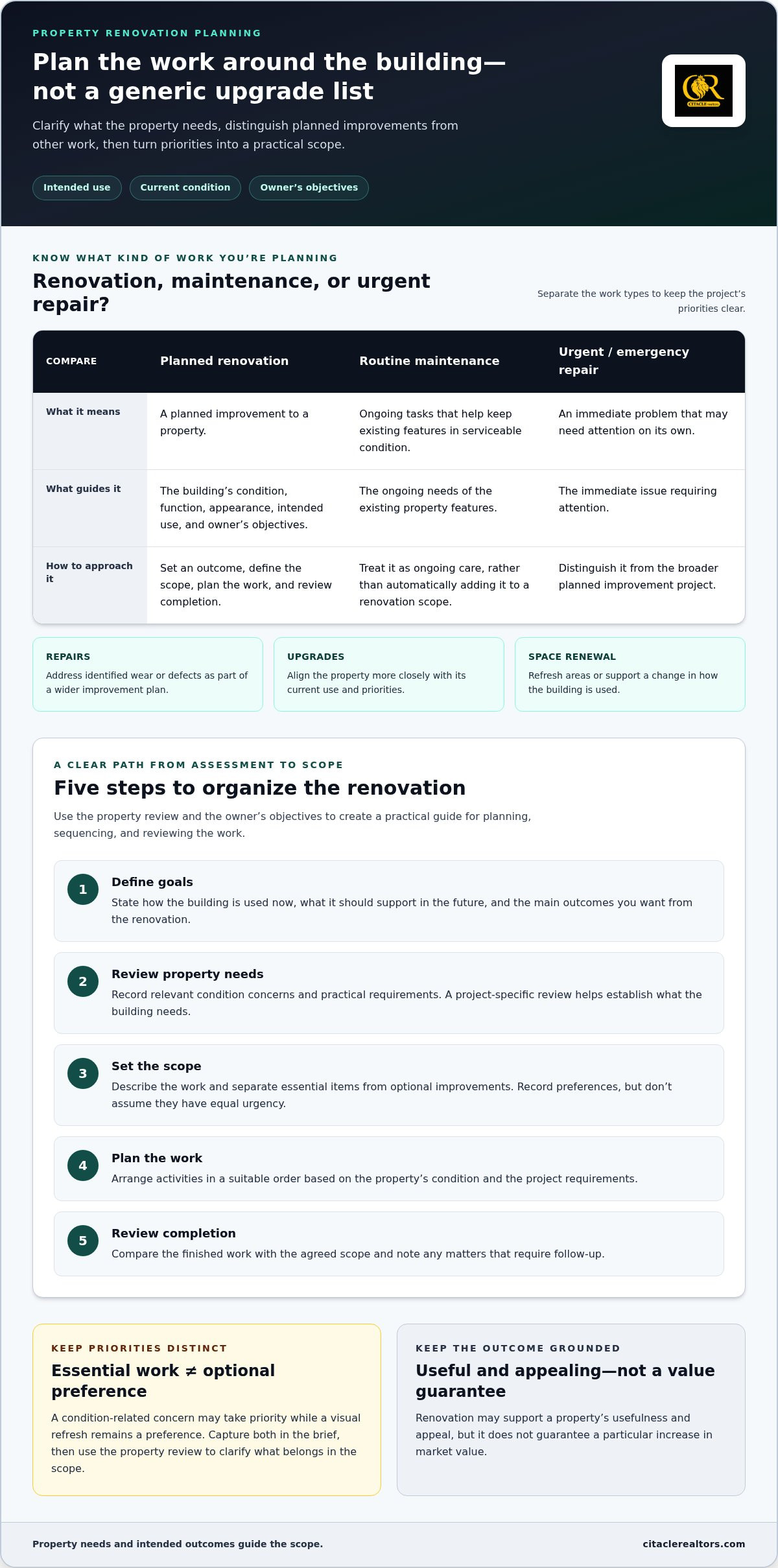
Renovation is a planned improvement to a property. Routine maintenance, by contrast, involves ongoing tasks that help keep existing features in serviceable condition. For a general overview of the process of improving structures, Wikipedia describes renovation across residential and commercial settings. For an owner, a defined renovation scope can bring related improvements together, rather than treating each concern as an isolated upkeep task.
What work can a building renovation project address?
The right work depends on the property’s condition and the outcome you want. A project may include one or more of these broad categories:
- Repairs to address identified wear or defects as part of a wider improvement plan.
- Upgrades that better align the property with its current use and priorities.
- Space renewal to refresh areas or support a change in how the building is used.
These are starting points, not a standard package. An owner preparing a property for continued occupation may have different priorities from one planning to use the building differently. Define the intended outcome first, then decide which items belong in the project and which can remain outside its scope.
When should an owner consider renovation?
A renovation review may be useful when a property’s use is changing, visible wear is affecting its condition or presentation, or an owner wants to address the building’s needs through a planned project. The key question isn’t simply which feature looks dated. Consider whether the proposed work supports the property’s purpose and the owner’s priorities.
Urgent maintenance or emergency repair differs from a planned renovation. An immediate problem may need attention on its own, while renovation is organised around a broader improvement objective. Combining the two without distinguishing them can make priorities less clear. Building renovation specialists can help frame the project around the property’s needs and intended outcome.
How a building renovation moves from property assessment to a clear scope
A renovation is easier to plan when decisions follow a clear sequence. Building renovation specialists can help translate an owner’s goals into a defined scope. Start by looking at the property itself: its present condition, intended use and the improvements that matter most.
A clear renovation scope turns the property’s needs and the owner’s priorities into a practical guide for planning, sequencing and reviewing the work.
Start with the property and the owner’s objectives
Describe how the building is used now and what you want it to support in the future. A property intended for continued occupation may need different improvements from one being prepared for another use. Record visible concerns and practical needs, and separate them from preferences that relate mainly to appearance or longer-term plans.
A project-specific review helps establish what the building needs. A remote description alone can’t replace that review. Use the findings alongside the owner’s objectives to decide what belongs in the renovation brief.
Turn priorities into a practical renovation scope
Once the goals and property needs are understood, organise decisions in a clear sequence:
- Define goals: State the intended use and the main outcomes you want from the renovation.
- Review property needs: Record relevant condition concerns and practical requirements.
- Set the scope: Describe the work, separating essential items from optional improvements.
- Plan the work: Arrange activities in a suitable order based on the property’s condition and project requirements.
- Review completion: Compare the finished work with the agreed scope and note any matters requiring follow-up.
Separating essential work from optional improvements keeps decisions focused. For example, an owner may identify a condition-related concern as a priority while treating a visual refresh as a preference. Record both, but don’t assume they have equal urgency.
Make the brief specific enough to guide planning without trying to settle every detail before the property has been reviewed. Findings may clarify priorities or affect the sequence of work. Citacle Realtors provides property renovation support tailored to the property and the owner’s project objectives, keeping the plan connected to how the building is meant to serve. Explore property renovation support as part of a considered plan for your property.
Compare renovation priorities by property use, condition, and value
The right renovation priorities depend on the property’s intended use, its current condition and the owner’s plans. Building renovation specialists should connect proposed work to those factors rather than assume the same improvements suit every building. Renovation may support a property’s usefulness and appeal, but it doesn’t guarantee a particular increase in market value.
Use this comparison to begin setting objectives, not as a prescribed upgrade list:
| Property use | Priority to consider | How condition can affect focus |
|---|---|---|
| Owner-occupied | Comfort, function and the household’s intended use | Address condition concerns that interfere with daily use before considering preference-led changes. |
| Rental | Usability, ongoing upkeep and the needs of the intended occupants | Distinguish work needed to address current condition from optional presentation improvements. |
| Managed property | Consistent operation, maintenance planning and the property’s longer-term purpose | Consider how observed condition and recurring maintenance needs shape the scope and sequence. |
For owners planning around rental use, the guide to increasing rental property value offers a related perspective. Let the property’s actual condition lead the decision. A visible defect or functional concern may take priority over an optional refresh, even when the refresh is more noticeable.
Renovation priorities for rental and managed properties
For rental and managed buildings, consider durability, usability and the needs of ongoing property operations. An improvement that supports everyday use or addresses a known condition issue may deserve more attention than a presentation-led change. Think, too, about how the property will be maintained after renovation, so the project supports ongoing care rather than treating the work as a one-off event.
Where continuing oversight matters, consider professional residential property management as part of the wider property plan.
Connect renovation decisions with asset value
Improving a property and establishing its market value are related but distinct activities. Renovation changes the building in line with an agreed purpose; asset valuation provides a separate assessment of value. Owners considering a sale may find the property valuation guide for sellers useful when exploring that separate perspective. Keeping both questions in view supports informed decisions without assuming every improvement will produce a specific valuation outcome.
Prepare a building renovation brief that keeps the project focused
A concise renovation brief helps property owners explain what they want to achieve and what the building may need. It doesn’t have to settle every technical detail in advance. Instead, bring together the property information, priorities and constraints that can guide a project-specific discussion with building renovation specialists.
What to include in a renovation brief
Gather relevant property records and notes, then use this checklist to capture the essentials:
- Property details: Note the property type and how it is currently used.
- Goals: Describe what you want the renovation to support, such as continued occupation, rental use or another intended purpose.
- Known concerns: Record visible wear, recurring issues or areas that may need attention. Separate what you have observed from anything that still needs assessment.
- Preferred priorities: List the outcomes that matter most, distinguishing essential needs from optional improvements.
- Practical constraints: Note access considerations, whether the property will be occupied and any operational factors that could affect planning.
- Useful information: Collect relevant property documents, maintenance records and existing details that may help explain the building’s condition.
This preparation makes the project discussion more specific without treating an owner’s observations as a technical assessment. If a concern is uncertain, record it as a question for review rather than assuming what work it requires.
How to keep renovation decisions grounded
Use the original goals as a reference point as the project develops. For each proposed item, consider whether it responds to a known property need, supports the intended use or is an optional preference. This check keeps priorities visible and helps prevent attractive but unrelated ideas from taking over the scope.
New information from a property review may change the order of priorities or clarify what the project should include. Update the brief as decisions are made, and distinguish established requirements from matters still under assessment. Avoid adding speculative costs, timelines or technical requirements without evidence specific to the property.
Once your brief captures the property’s goals, concerns and practical constraints, Citacle Realtors can use it as a starting point for renovation support tailored to the property and project objectives. Discuss your property renovation project and shape a focused scope.
Work with Citacle Realtors on property renovations in Nigeria
Good renovation decisions consider more than the work itself. The property’s current condition, intended use and longer-term management needs can all shape which improvements make sense. Citacle Realtors provides property renovation services in Nigeria, alongside property management, facilities management and asset valuation. This broader property perspective helps owners consider how renovation fits with the way a building is used, cared for and assessed.
A property-focused approach to renovation
Every building has its own requirements. A renovation plan for a property in active use may have different priorities from one intended for rental or another purpose. The owner’s objectives and the property’s condition guide the plan, keeping decisions relevant to the building rather than driven by a generic upgrade list.
Renovation can also form part of a longer-term approach to property care. Property management and facilities management relate to ongoing oversight and use, while asset valuation provides a separate perspective on a property’s value. Considered together, these services help owners connect improvement plans with continuing property needs and asset goals, without assuming renovation alone determines market value.
For property owners seeking building renovation specialists, Citacle Realtors provides renovation support tailored to the property and the project’s objectives. The focus is on what the owner wants the building to support and the needs identified for that particular property.
Take the next step with Citacle Realtors
Before discussing a project, bring together a brief summary of the property, its intended use, your renovation goals and any known priorities. Include practical considerations that may affect planning, such as occupancy or access. You don’t need to have every detail resolved. A clear outline of what you know and hope to achieve is a useful starting point for planning a project-specific approach.
Citacle Realtors helps property owners explore renovation in the context of their wider property plans. Explore Citacle Realtors and take the next step towards discussing your property renovation objectives.
Move forward with a renovation plan built around your property
A successful renovation begins with clear priorities: understand the property’s condition, define how it needs to serve you and shape the scope around those goals. The right building renovation specialists can help keep decisions connected to the building’s needs rather than a generic list of upgrades. A considered plan can also link improvements to ongoing property care and longer-term asset goals, without assuming a particular change in value.
Citacle Realtors provides property renovation services alongside property management, facilities management and asset valuation. This joined-up perspective places renovation within the broader responsibilities of owning and caring for a property. Citacle serves clients nationally across Nigeria, with renovation support tailored to the property and project objectives.
Whether you’re refining your brief or ready to discuss the next step, bring your property goals and known priorities into the conversation. Explore Citacle Realtors to discuss a project-specific path forward. Start with a clear purpose and thoughtful planning to move ahead with greater confidence in your property’s future.
Frequently Asked Questions
What does a building renovation specialist do?
Building renovation specialists help property owners plan and carry out improvements based on a building’s condition, intended use and project goals. Work may include repairs, upgrades or the renewal of spaces, with the scope shaped by the property’s needs. This differs from routine maintenance, which focuses on ongoing upkeep. A clear renovation brief helps establish priorities and gives the project a practical direction.
How do I plan a building renovation project?
Start by defining what you want the property to support, then record known concerns and intended future use. Review the property’s needs, separate essential work from optional improvements, and turn agreed priorities into a clear scope. Plan the work sequence around the building’s condition and project requirements. At completion, review the work against the agreed scope and note any matters requiring follow-up.
What should I include in a renovation brief?
Include the property type, its current use, known condition concerns, intended future use and desired outcomes. List your priorities, separating established needs from questions that require a project-specific review. Record practical considerations such as occupancy, access and operational constraints, and gather relevant property or maintenance information. A brief doesn’t need to resolve every technical detail. It should explain your goals and guide a focused project discussion.
How can renovation support property value?
Renovation can help maintain or enhance a property’s usefulness and condition, which may be relevant to how owners consider its longer-term value. However, improvements don’t guarantee a particular increase in market value. Renovation and valuation serve different purposes: renovation changes the property in line with project goals, while asset valuation provides a separate assessment of value. Owners can consider both perspectives when planning for ongoing use or a potential sale.
How do I choose renovation priorities for a rental property?
Begin with the property’s condition, intended rental use and practical needs. Give attention to concerns that affect usability or require planned maintenance, then consider optional presentation improvements in light of your goals. Think about durability and how the work fits with ongoing property operations, rather than relying on a generic upgrade list. A clear scope distinguishes condition-related needs from preferences and keeps decisions connected to the property’s purpose.
Can renovation and property management be planned together?
Yes. Planning renovation alongside property management can help owners connect project decisions with the property’s ongoing use and care. Renovation focuses on improvements shaped by the building’s condition and the owner’s objectives; property management relates to its wider oversight. Citacle Realtors provides property renovation and property management services, as well as facilities management and asset valuation, to support a broader perspective on property needs and asset goals.
How long does a building renovation take?
The duration depends on the property’s condition, the agreed scope, the sequence of work and project-specific requirements. A project involving a limited set of improvements may differ substantially from one with broader needs, so a general timeline won’t reliably apply to every building. A project-specific review helps clarify the work to be planned and supports setting a realistic schedule. Changes in scope or new findings may also affect timing.