
A smooth move is planned before the first box arrives. Preparing for a home or office move means getting essential services ready and making sure the empty space is clean, accessible and suited to your belongings. Arrange utility services at least one week before moving in, confirm their start dates and, if possible, test them before arrival.
It’s easy to focus on packing and transport, but some advance coordination can make settling into a new property more organised. This guide explains how to arrange utilities, clean before furniture arrives, measure rooms and access routes, and plan where key items will go. You’ll also find practical steps for preparing a home or workplace so it’s ready for move-in, with fewer last-minute adjustments to furniture placement.
Key Takeaways
- Arrange utility services ahead of move-in and confirm when they’ll be ready.
- Plan to clean the empty space before belongings and furniture arrive.
- Measure rooms and access routes so you can anticipate fit and moving challenges.
- Map out furniture placement in advance to make settling into the new space more organised.
Activating utilities before moving in
- Contact each utility provider at least one week before moving in. Arrange the services your home or office needs, such as electricity, water, and telecommunications. For organisations setting up office phone and VoIP systems, specialist providers such as nexgen.com.au help ensure voice connectivity is ready from day one. Providing the property address and intended move-in date early gives you time to coordinate activation.
- Confirm the service start dates before moving. If possible, test each utility before your belongings arrive, so you can identify interruptions or faults while the space is still accessible. Keep a record of provider instructions and any property access arrangements.
- Choose a moving company by asking for a clear written scope, schedule and inventory process. For a Nigerian move, discuss the origin, destination, access conditions and handling needs in advance. Specific plans make it easier to understand what the move includes.
- Before dispatch, ask the moving company to account for relevant permits and site rules. Requirements can depend on the route and property, including building access procedures. The company should identify applicable restrictions and plan its arrival and loading accordingly.
- Discuss packing options before moving day, including whether professionals will pack, label and unpack your belongings. For fragile items, agree on individual wrapping, suitable cushioning and clearly marked boxes. Tell the team about glassware, electronics or artwork so they can plan how to handle them.
- Identify belongings you plan to donate or dispose of before finalising the inventory. If agreed as part of the service, the moving company can separate those items from the load. For offices, a Business Continuity Plan helps minimise operational disruption, according to the UK Government.
- Ask the company to plan for moving-day risks, such as damaged belongings, blocked access and delays. Beyond logistics, risk management specialists such as MyGen Insurance Brokers emphasize the importance of tailored insurance coverage to protect valuable assets during transit. In Nigerian cities, share building access rules, loading points and any known route restrictions beforehand. The company can use these details to coordinate arrival, crew and vehicle access.
Inspect for leaks, electrical issues, damaged fixtures, missing or non-functional smoke or carbon monoxide detectors, loose railings, floorboards, trip hazards, pests and water damage. Change or rekey locks, test the alarm system, check outdoor lighting and clean before belongings arrive, while the space is still clear.
Cleaning an empty home
- Schedule cleaning after the previous occupants leave and before furniture arrives. An empty room gives cleaners access to floor edges, corners and wall areas usually hidden behind sofas or cabinets. Coordinate the cleaning window with the move schedule so the teams don’t have to work around each other.
- Prepare a room-by-room scope before cleaning begins. At home, include bedrooms, bathrooms, kitchen cupboards and living areas. For an office, list workrooms, meeting spaces, reception areas and shared facilities. A written scope makes it clear which spaces need attention.
- Identify high-contact and easily overlooked areas in advance. These may include door handles, light switches, window sills, skirting boards and cupboard shelves. For a kitchen, include the inside of empty cabinets; for an office, add desk surfaces and storage units if they’ll remain.
- Keep cleaning separate from repairs and maintenance. A stained ceiling, leaking tap or damaged floor needs attention beyond routine cleaning. Record visible concerns during the walkthrough and arrange to address them before belongings cover the area. This also helps distinguish existing damage from marks noticed after move-in.
- Keep the cleaning route clear. Arrange access to rooms, water points and electrical outlets, and identify any areas that must remain untouched. For example, tell cleaners which cupboards are ready to clean and which contain belongings that need to stay in place.
- Plan how to dispose of rubbish and leftover materials before work starts. Empty packaging, dust and abandoned items can obstruct cleaning or delay furniture placement. Set aside anything intended for donation or disposal, separate from items scheduled for the move.
- Complete a final walkthrough before the first boxes arrive. Check visible surfaces, floors and wet areas, then note any missed spots for follow-up. In an office, inspect reception and shared rooms first, as staff and visitors may use them soon after the move.
Measuring entryways and rooms
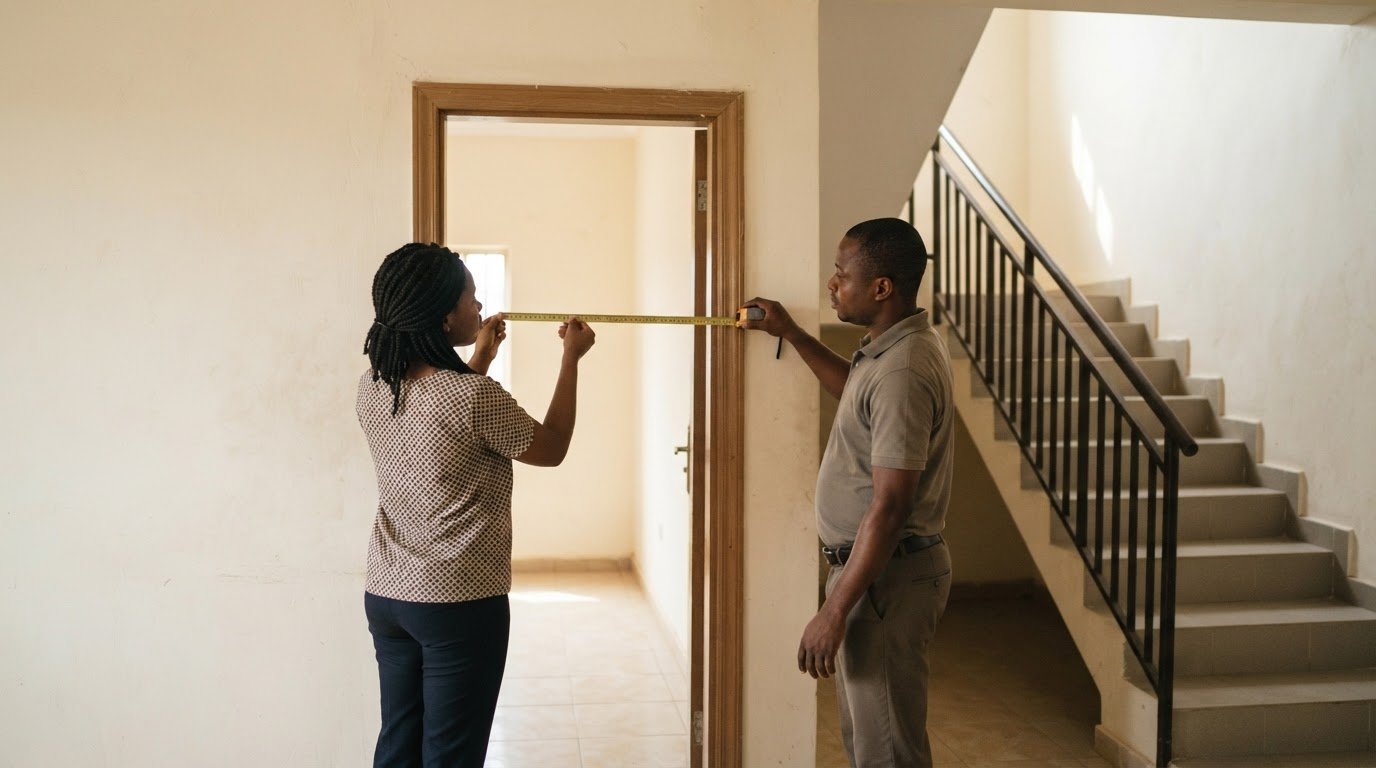
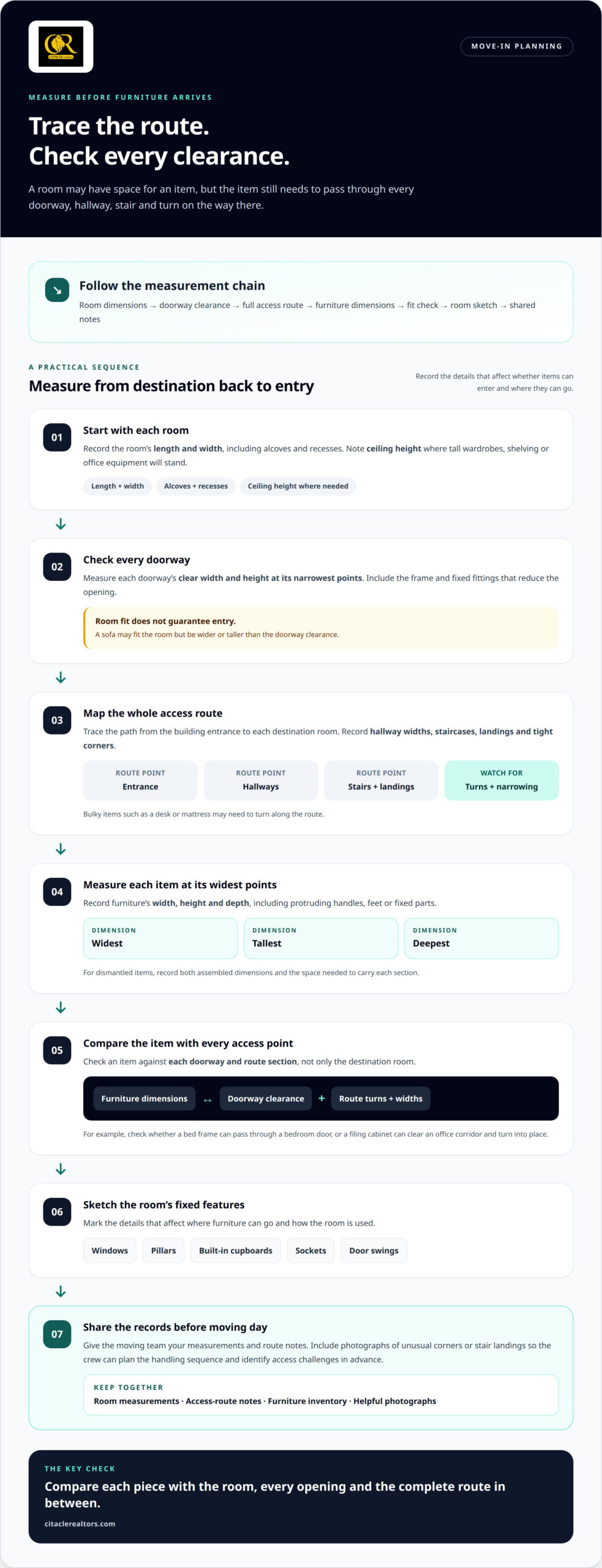
- Ask the moving team to record each room’s length and width, including alcoves and recesses. Note ceiling height where tall wardrobes, shelving or office equipment will stand. These dimensions help match furniture to usable floor space, not just the room’s overall footprint.
- Measure each doorway’s clear width and height at its narrowest points. Include the door frame and any fixed fittings that reduce the opening. A sofa may fit the room but still be difficult to bring inside if it’s wider or taller than the doorway clearance.
- Map the full access route from the building entrance to each destination room. Record hallway widths, staircases, landings and tight corners. Bulky items such as a desk or mattress may need to turn along the way, so note where the route narrows or changes direction.
- Measure furniture at its widest, tallest and deepest points, including protruding handles, feet or fixed parts. For items that can be dismantled, record both the assembled dimensions and the space needed to carry each section through the route.
- Compare each item’s measurements with every access point, not just the destination room. Check whether a bed frame can pass through a bedroom door, or whether a filing cabinet can clear an office corridor and turn into its intended space.
- Mark windows, pillars, built-in cupboards and other fixed features on a simple room sketch. Include sockets and door swings. These details affect where a bed, desk or cabinet can go without obstructing access or everyday use.
- Share your measurements and route notes with the moving team before moving day. Include photographs of unusual corners or stair landings. Clear records help the crew plan the handling sequence and identify access challenges before furniture reaches the property.
- Keep measurements with the furniture inventory. Label each item with its intended room, then match it to the room sketch. For example, assign a conference table to a meeting room only after considering the route and available placement space.
Planning furniture placement
- Decide how each room will be used before assigning furniture. At home, arrange the bed, wardrobe and bedside table around daily routines. In an office, identify workstation, meeting and reception needs. A clear purpose for each room prevents furniture from arriving without a planned place.
- Sketch a simple floor plan and mark each large item. Place desks, beds, sofas and cabinets first, then fit smaller pieces around them. Keep paths between entrances and frequently used areas clear. For example, leave an unobstructed route from an office door to the workstations.
- Book a moving company once your move date and property details are firm. The lead time depends on the route, item volume, access conditions and flexibility of the date. Sharing these details early helps the team plan and confirm the schedule. Preparing for a home or office move also means explaining how each space will be used.
- Set furniture-placement priorities before loading begins. Tell the moving team which items to unload first, such as a bed, reception desk or essential workstation. This helps make key rooms usable sooner and avoids unnecessary shifting of heavy furniture.
- Protect valuables, documents, electronics and furniture with clear handling instructions. Keep important papers separate, label electronic equipment, and use suitable wrapping and padding for delicate surfaces. Identify fragile or high-value items in the inventory before packing.
- Plan how people will move around the furniture. Keep desk chairs clear of doors, avoid blocking access to cupboards, and position sofas so people can pass comfortably. In a meeting room, arrange chairs around the table while keeping a direct route to the exit.
- Share the final room plan with the moving crew and label each item by destination. Use specific labels such as “main bedroom” or “meeting room” rather than vague ones. Preparing for a home or office move with a room-by-room plan helps the team place items correctly. If a placement changes on arrival, tell the team where the item should go before they carry it inside.
For help coordinating your relocation plan, discuss your move.
Citacle Realtors
Citacle Realtors provides Property Removals to support your relocation planning. The service can help coordinate a move into a home or office, taking property access, room plans and priorities into account. Share your destination details, inventory and intended schedule to give the team a clear picture of the move. Once you’ve settled in, Property Management or Facilities Management may also suit your ongoing property needs.
Every move has different requirements, from the items involved to access arrangements at each property. Contact Citacle Realtors to discuss your move and the support you need.
Make the new space work for you
Move-in day is a starting point, not the finish line. As you settle in, notice how people use each room and where daily routines feel less convenient than expected. A workspace may need a quieter meeting area; a home may need clearer storage zones. Let those observations guide small adjustments instead of trying to decide everything before you’ve experienced the space. Preparing for a home or office move also means considering what will help the property serve you well over time.
Citacle Realtors also provides Property Management, Facilities Management and Residential Land Sales. These services can support your plans as they develop, whether you’re overseeing a property, managing its facilities or considering land for a future project. Choose the service that fits your next property decision.
Contact Citacle Realtors today to discuss your needs and take the next step with confidence.
Frequently Asked Questions
What should I expect from a professional home or office move, step by step?
Start with an agreed scope and schedule, then coordinate packing, transport and delivery. Before work begins, clarify who will handle keys and building access, and who will make decisions if plans change. During delivery, direct the team to the correct rooms and flag items needing special attention. Finish with a joint handover, promptly noting any missing or damaged belongings and keeping move-related documents together.
How do I compare moving companies and verify they are reliable in Nigeria?
Ask each company for a clear written scope, schedule and inventory process. Discuss the move’s origin, destination, access conditions and handling needs in advance.
How far in advance should I start planning a move in Nigeria?
Contact utility providers at least one week before moving in. Book a moving company once your move date and property details are firm, and share the route, item volume and access conditions.
What packing supplies do I need, and how should I pack fragile items?
Discuss whether professionals will pack, label and unpack your belongings. For fragile items, agree on individual wrapping, suitable cushioning and clearly marked boxes, and identify glassware, electronics or artwork.
How should I declutter, donate, or dispose of unwanted belongings before moving?
Identify items to donate or dispose of before finalising the inventory. Set them aside from belongings scheduled for the move; if agreed as part of the service, the moving company can separate them from the load.