
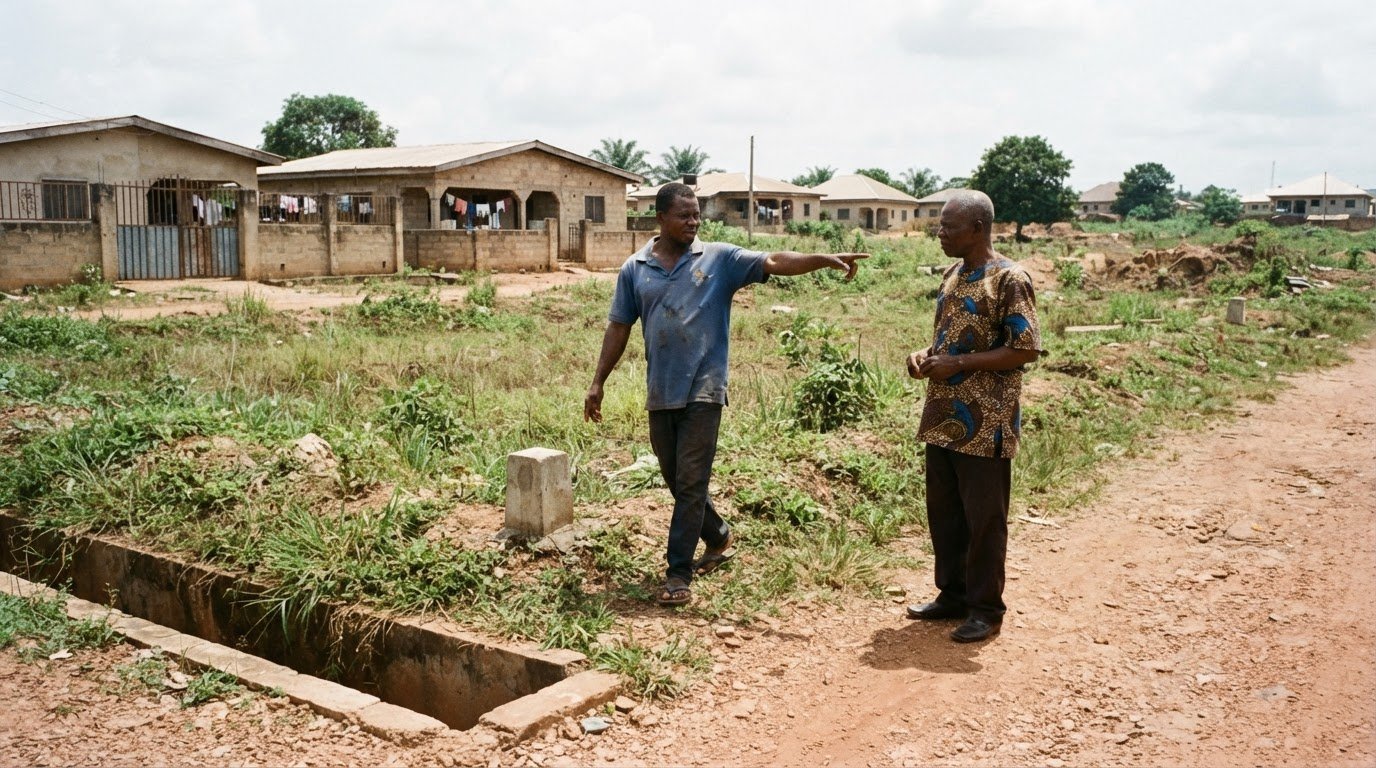
To decide how to choose a real estate agent for selling land, compare four factors: marketing and professional networks, sale timelines, seller requirements, and relevant land expertise. A strong fit should understand the type of land you’re selling and explain how they’ll reach buyers who may be interested in it. Their approach should also reflect your priorities for timing and the sale.
Choosing a land agent can be difficult when every proposal sounds convincing. Comparing agents against the same practical criteria helps you focus on what matters for your property, rather than relying on broad promises.
This guide explains how to assess an agent’s marketing plan, discuss timelines and expectations, review experience with similar land, and judge the value of specialist knowledge. Use it to compare your options and choose a professional suited to your sale in Nigeria.
Key Takeaways
- Look beyond a polished listing: assess how an agent will present your land and connect it with potential buyers.
- Discuss your sale priorities early, then agree on how progress and updates will be communicated.
- Give greater weight to experience with land similar to yours than to general property sales experience alone.
- Use evidence of specialist land-sale work to distinguish an agent who understands your property’s likely buyers and selling considerations.
1. Assessing marketing strategies and professional networks
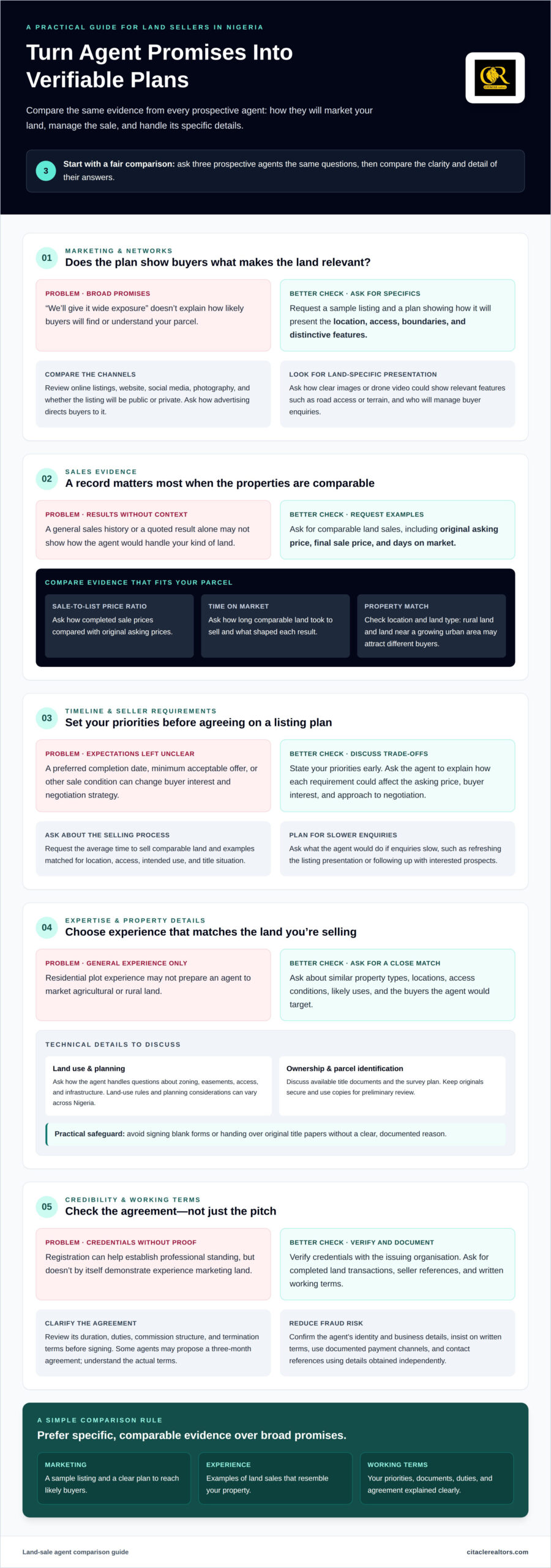
Ask three prospective agents the same questions about marketing your land. Request a sample listing and a specific plan for presenting its location, access, boundaries, and distinctive features. The agent should explain which channels are intended to reach likely buyers, rather than simply promising broad exposure. Compare the clarity and detail of each response before choosing an approach.
Review each agent’s online listings, website, social media activity, and property photography. Ask how the marketing will show relevant land features, such as road access or terrain, through clear images or drone video. Find out whether the listing will be public or private, and which advertising methods will direct buyers to it. For sellers comparing presentation quality, reviewing established firms like King Estates illustrates how professional property showcases and digital campaigns are structured to reach qualified buyers.
Compare agents’ completed land sales using the sale-to-list price ratio and days on market. Ask for examples of similar properties, their original asking prices, final sale prices, and time on the market. A sales record is more relevant when the properties resemble yours in location and land type. For example, rural land and a plot near a growing urban area may attract different buyers and follow different selling patterns.
Ask prospective agents about their registration and relevant credentials. Verify details with the issuing organisation, and clarify what each qualification covers. Registration can help establish professional standing, but it doesn’t by itself demonstrate experience marketing land. Ask for examples of completed land transactions and a sample listing to assess practical ability.
Assess the agent’s professional network and communication style during your meeting. Ask how photographers, local contacts, and advertising partners support the campaign, and who will manage buyer enquiries. Notice whether the agent listens, answers directly, and adapts the discussion to your land and target market. A measured, detailed conversation may suit a complex property better than a high-pressure pitch. Compare the answers with each agent’s marketing examples and sales record.
2. Clarifying sale timeline and seller requirements
Set out your priorities before agreeing on a listing plan. Tell the agent if you have a preferred completion date, a minimum acceptable offer, or another condition for the sale. Ask how each requirement could affect the asking price, buyer interest, and negotiation strategy. A seller who needs a timely sale may choose a different approach from one who can wait for a particular offer. Ask the agent to explain the likely trade-offs clearly.
Ask for the agent’s average time to sell comparable land and examples of completed transactions. Check whether the examples match your parcel’s location, access, intended use, and title situation. Ask what the agent does to maintain buyer interest if enquiries slow, such as refreshing the listing presentation or following up with interested prospects. A track record is more useful when the agent can explain the circumstances behind each sale, not just quote a result.
Before marketing begins, clarify how the agent will prepare and present the land. Agree on which property details, boundaries, access points, and documents the listing should describe accurately. Ask whether preparation includes a site visit and how photographs or maps will represent the parcel. Any suggested improvement should have a clear purpose connected to buyer interest. Before agreeing to work, understand its purpose and implications.
For a Nigerian land sale, the agent should review documents relevant to ownership and parcel identification, including available title documents and the survey plan. These can help prepare accurate listing information and identify details that need clarification before buyers rely on them. Keep original documents secure and use copies for preliminary review. Avoid signing blank forms or handing over original title papers without a clear, documented reason.
Ask about the proposed agency agreement, including its duration, duties, commission structure, and termination terms. Some agents may propose a three-month agreement, but understand the actual terms before signing. To reduce fraud risk, confirm the agent’s identity and business details, insist on written terms, and use documented channels for payments. Ask for references from previous land sellers and contact them using details you obtained independently. These steps help you assess credibility alongside experience.
3. Choosing an agent with relevant property expertise
Match an agent’s transaction experience to the land you’re selling. Experience with residential plots may not prepare an agent to market agricultural or rural land. Ask for examples involving similar property types, locations, access conditions, and likely uses. Look for evidence that the agent understands what makes your parcel distinct, rather than relying on a long history in general property sales.
Local knowledge matters because land-use rules and planning considerations can vary across Nigeria. Ask how the agent identifies likely buyers and handles questions about zoning, easements, access, and infrastructure. When deciding how to choose a real estate agent for selling land, look for answers that connect these details to your property and its potential uses. The agent should explain how they handle technical questions outside their direct experience.
Ask the agent to describe a comparable rural land transaction, from initial assessment through completion. Which features shaped the likely buyer profile? How did the agent address questions about access, boundaries, or permitted uses? Specific examples reveal more than broad claims of expertise. If the agent’s past listings concern a different property type, ask how that experience applies to your parcel.
Use focused questions during your interview. Ask what kinds of land the agent has sold, which buyers they would target, and what property details could affect marketability. Ask how they develop a comparative market analysis and explain the proposed asking price. One practical way to choose a real estate agent for selling land is to listen for reasoning grounded in comparable properties and local conditions.
Discuss rates and responsibilities before signing an agreement. Ask what the commission covers, whether additional costs may apply, and how the agent will keep you informed. Compare those answers with the agent’s land-sale experience and buyer strategy. A professional designation can indicate relevant training, but should complement practical examples. Prioritise an agent whose knowledge suits your land and whose approach is explained plainly.
4. Choosing an agent who specialises in land sales
A dedicated land agent brings a different focus from an agent whose work centres on residential homes. Land buyers may assess access, boundaries, permitted uses, and development potential before making an offer. Ask prospective agents which land types they have sold, such as residential plots or agricultural property, and request examples similar to yours. Interviewing three to five agents gives you a basis for comparing experience, approach, and communication.
Look for evidence of specialisation, not just a label. Ask about past land transactions, seller references, and membership in professional land-selling associations. A designation such as Accredited Land Consultant can indicate land-related expertise, but practical examples should show how that knowledge applies to your property. Ask how the agent identifies likely buyers and handles questions about land features that influence a purchase decision.
Specialist insight is particularly valuable when land is rural or has a distinctive use. Ask the agent to explain how a comparable parcel was marketed, who showed interest, and what shaped the sale. An agent experienced with residential plots may have a different buyer network or preparation approach from one experienced with timber or agricultural land. Match the agent’s record to the land you want to sell.
In Nigeria, a land sales agency agreement should make the working arrangement clear. Review the agent’s duties, commission structure, proposed list price, agreement length, update process, and termination terms. Confirm how buyer enquiries and offers will be handled, and whether the arrangement is exclusive. Written details help both parties understand expectations before marketing begins. Don’t rely on verbal assurances when contract terms can be stated plainly.
Choose the agent whose land-specific record, buyer strategy, and written terms best fit your needs. If you’re preparing a residential parcel for sale, discuss residential land sales with a professional team.
Citacle Realtors: Residential Land Sales
Citacle Realtors provides Residential Land Sales for property owners preparing to sell residential land in Nigeria. Compare the marketing plan, relevant experience, and agreement terms, then consider whether this service suits your needs. It can be a next step when you’re ready to discuss selling a residential plot with a real estate firm that offers land sales.
Before proceeding, gather the key details of your land and your priorities for the sale. A clear discussion about the property and your expectations can help establish whether the proposed approach aligns with your goals. If your main need is selling residential land, contact Citacle Realtors to discuss your requirements.
Move Forward With a Clear Selling Plan
Choosing representation is also a chance to set the tone for the decisions ahead. Before committing, consider whether you can speak openly with the agent, understand their advice, and make decisions without feeling rushed. A sound working relationship should leave room for your priorities to guide the process as new information or offers arise.
If you’re still considering how to choose a real estate agent for selling land, focus on a professional who makes the next steps understandable and keeps your objectives central. You deserve a considered conversation about your land and the outcome you’re seeking, without pressure to make a quick commitment.
When you’re ready to discuss your residential land sale, contact Citacle Realtors today. A thoughtful first conversation can help you move ahead with greater clarity and confidence.
Frequently Asked Questions
What experience should a Nigerian land-selling agent have?
Look for completed sales involving land with features similar to yours, not just general property experience. Ask the agent to describe their role from initial assessment through buyer negotiations and completion. A useful example might involve a residential plot with similar access or intended use. Ask what challenges arose and how they were handled. This can reveal practical experience beyond a polished listing or broad claim.
What questions should I ask a real estate agent before signing an agreement?
Ask who will handle your sale day to day, how offers will be presented, and what information the agent needs before marketing starts. Clarify how buyer enquiries and viewing requests will be managed, and how you can give instructions if your preferences change. Before signing, read the agreement’s scope and exit terms carefully. Ask for plain-language explanations of clauses you don’t understand, and keep a copy of the final signed document.
How to compare land agents’ commission rates and fees in Nigeria
Ask each agent what their commission covers, whether additional costs may apply, and how the commission structure is set out in the agency agreement. Compare the written terms and clarify anything unclear before signing.