

What if the best first step when rent is overdue isn’t a threat, but a clear written record? If you’re wondering how to handle tenants not paying rent, a calm, documented response can help you address the arrears without turning a missed payment into a confrontation.
It’s understandable to worry about lost income, especially when you’re unsure what to say or which notice to serve. Acting in haste, or trying to remove a tenant without following the proper process, can make a difficult situation harder to resolve.
This guide walks you through a practical sequence: check the tenancy agreement and payment history, contact the tenant in writing, record any explanation or repayment arrangement, and understand when formal notices or court action may be required. Because tenancy rules differ between Nigerian states, the correct process depends on where your property is located. You’ll also find ways to strengthen rent follow-up and reduce the chance of arrears recurring. Consistent property oversight helps keep communication and records organised, giving you a clearer path from the first missed payment to an agreed next step.
Key Takeaways
- To understand how to handle tenants not paying rent, first confirm whether the payment is genuinely overdue or affected by a processing delay or billing dispute.
- Use a private, respectful message to clarify the balance and agree on a clear next step without escalating the conversation.
- Rent recovery procedures depend on the property’s state and tenancy circumstances, so avoid assuming one notice process applies across Nigeria.
- Keep a rent ledger alongside the tenancy agreement, receipts, messages, notices and any repayment-plan updates.
- Clear payment instructions and consistent tenant follow-up can help you spot emerging arrears and manage future tenancies more effectively.
How to Handle Tenants Not Paying Rent: Start by Confirming the Facts
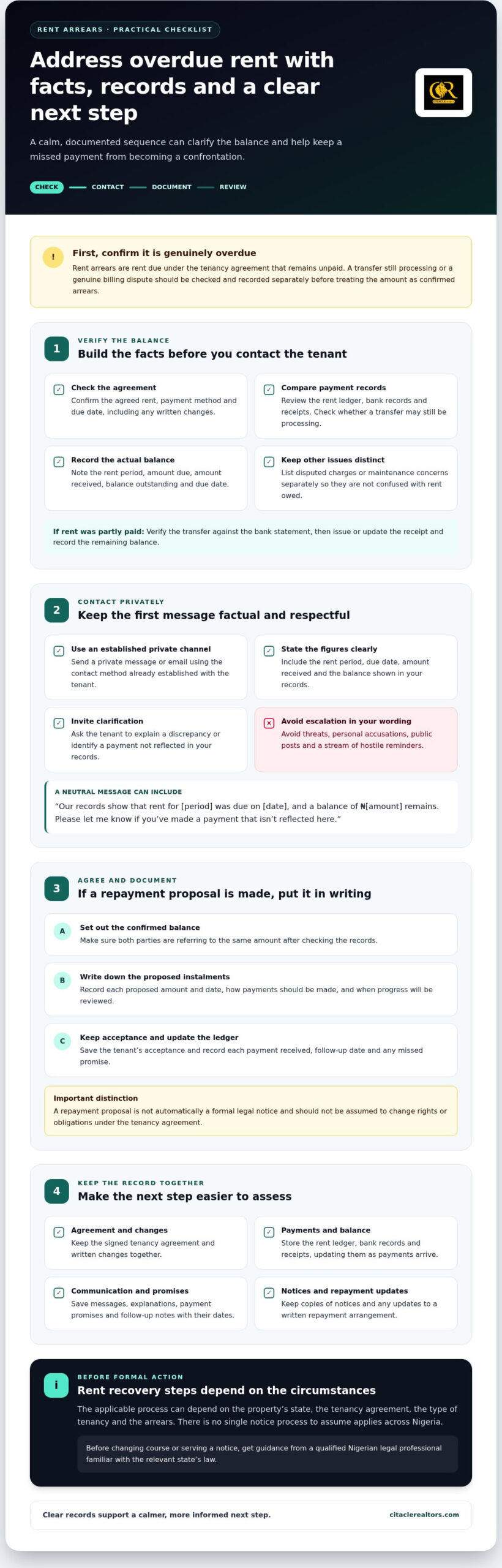
A missed payment calls for prompt, calm attention, not an immediate confrontation. Before deciding how to handle tenants not paying rent, establish whether rent is genuinely overdue. Rent arrears are rent that was due under the tenancy agreement but remains unpaid. A transfer that is still processing or a genuine disagreement about the amount should be checked and recorded separately, rather than treated as confirmed arrears.
Start with the signed agreement and any written changes to it. These set out the agreed rent, payment method and due date, while the applicable state law helps determine what can happen next. There is no single deadline or process to assume applies to every tenancy in Nigeria. For general context on the legal basis of a tenancy, see this overview of leasehold estates. The specific rights and obligations still depend on the agreement and relevant state law.
What counts as unpaid rent under the tenancy agreement?
Compare the amount and due date in the agreement with the rent ledger, bank records and receipts. Check the payment reference and whether the tenant and landlord agreed in writing to a different date, amount or method. If records show that only part of the rent was received, record the remaining balance and the date it became due. Keep disputed charges or maintenance concerns in separate entries so they aren’t confused with rent owed.
What should a landlord check before taking action?
First, confirm whether the payment has reached the account or may still be processing. Review recent messages and earlier payment records for relevant context, but don’t assume that a past delay explains the current one. If information is unclear, ask for clarification privately and keep the exchange factual.
Before contacting the tenant, note the rent period, amount due, amount received, balance outstanding and due date. For example, if your records show a partial transfer, verify it against the bank statement and issue or update the receipt before describing the balance. A simple record helps both parties discuss the same figures and gives you a reliable basis for deciding on the next step.
Keep the agreement, receipts, messages and notes about any agreed payment changes together. This early check is a practical part of property oversight: clear records make it easier to resolve misunderstandings and identify genuine arrears before taking further steps.
A Step-by-Step Way to Address Rent Arrears Without Escalating Conflict
Once you’ve checked the payment records, approach the tenant privately and work through the facts in order. A measured process helps you address the balance while keeping communication professional. It also creates a useful record if the issue remains unresolved. When considering how to handle tenants not paying rent, aim to clarify the position and agree on a documented next step, not to pressure the tenant into a rushed response.
How should you contact a tenant about late rent?
Use the contact method already established with the tenant, such as a private message or email. State the rent period, due date, amount received and balance shown in your records, then invite the tenant to explain any discrepancy. For example: “Our records show that rent for [period] was due on [date], and a balance of ₦[amount] remains. Please let me know if you’ve made a payment that isn’t reflected here.” Keep the language neutral. Avoid threats, personal accusations, public posts or a stream of hostile reminders.
If the tenant identifies a payment or billing issue, check it against your records and correct any error before deciding what to do next. If they confirm the balance but can’t pay immediately, ask what next step they propose. Record the conversation, including the date, any explanation and the date you agreed to follow up.
How can a written repayment plan help?
If both parties agree to a repayment proposal, put the details in writing. Set out the confirmed balance, each proposed instalment amount and date, how payments should be made, and when you’ll review progress. Keep copies of the tenant’s acceptance and update the rent ledger each time money is received. If a promised payment is missed, note it and follow up calmly rather than relying on memory or informal verbal assurances.
A repayment proposal isn’t automatically a formal legal notice, and you shouldn’t assume it changes rights or obligations under the tenancy agreement. The applicable rules depend on the property’s state and the circumstances. For context on a state tenancy-law framework, read this analysis of tenancy law. Before changing course or serving a notice, get guidance from a qualified Nigerian legal professional familiar with the relevant state’s law.
Keep all contact, payment promises, part-payments and follow-up dates in one accessible file. Consistent property oversight makes that routine easier to maintain. Citacle Realtors’ residential property management helps organise tenant communication and rent follow-up.
Nigerian Rent Recovery: Why Notices and Legal Steps Depend on State Law
Unpaid rent may lead a landlord to consider ending a tenancy and recovering possession, but the process isn’t the same across Nigeria. The applicable rules can depend on the state where the property is located, the tenancy agreement, the type of tenancy and the circumstances of the arrears. A notice that seems suitable in one situation may be wrong for another.
Before formal action, identify the state legislation that applies to the property and check its current requirements. Notices to quit or notices stating an intention to recover possession may form part of the process, but their purpose, timing and service requirements can differ. Don’t assume a notice automatically ends the tenancy or gives you the right to take possession. General information can help you understand the process, but it isn’t legal advice about a particular tenant or dispute.
Why can rent-recovery requirements differ across Nigeria?
Tenancy and recovery-of-premises rules are made at state level, so first establish which state’s law governs the tenancy. Review the agreement alongside current legislation and any applicable local requirements before serving a notice. Laws and their interpretation can change, so verify legal references against current sources before relying on them. For an individual case, get advice from a qualified Nigerian legal professional familiar with the relevant state.
Why are informal eviction tactics risky?
Changing locks, cutting utilities, removing a tenant’s belongings or using threats can turn a rent dispute into a more serious conflict. Don’t treat arrears as permission to bypass the lawful process or pressure someone into leaving. If you seek possession, follow the procedures that apply to the tenancy and obtain the required legal authority. A qualified legal professional can advise on the appropriate notice and recovery steps for the specific facts.
When considering how to handle tenants not paying rent, keep communication and payment records organised while you establish the correct legal route. This separates the arrears discussion from the possession process and gives a legal professional a clearer picture of the tenancy, notices served and steps already taken. Avoid relying on informal assumptions or copying a process used for a different property or state. A careful, documented approach helps maintain clarity and reduces the risk of escalating the dispute through an avoidable procedural mistake.
Build a Clear Rent-Arrears Record and Know When to Escalate
A reliable record helps you see what remains unpaid, what has been discussed and what needs attention next. It also reduces confusion if the tenant questions the balance or you need professional guidance. Keep one rent ledger for each tenancy, then store supporting documents together in a secure place with access limited to appropriate people.
What documents should landlords keep for rent arrears?
Keep the signed tenancy agreement, rent ledger, payment records, receipts and relevant messages in one organised file. Log each contact attempt, the tenant’s response, any payment promise, part-payment and follow-up date. Update the balance whenever money is received, and retain payment references so you can trace each entry.
Your ledger can use simple columns: date, rent period, amount due, amount received, payment reference and balance. Keep disputed charges separate from rent entries, and note the source of each figure. This makes the record easier to review and helps you describe the arrears accurately when deciding how to handle tenants not paying rent.
Use a simple escalation guide to match the next step to the situation:
| Status | What to record | Practical next step |
|---|---|---|
| Routine follow-up | Due date, balance, reminder and response | Confirm receipt or agree a follow-up date |
| Unresolved dispute | Tenant’s concern, relevant messages and documents | Reconcile the figures and keep disputed items distinct |
| Professional advice needed | Payment history, agreement, communications and notices | Seek appropriate guidance before formal recovery action |
When should a landlord seek professional help?
Seek guidance from a qualified Nigerian legal professional before serving formal notices or beginning possession proceedings. It’s also sensible to seek advice if communication has stopped, an agreed payment is missed, the tenant disputes the balance, or you’re unsure which formal step applies. Keep the records ready so the adviser can understand the timeline and tenancy terms.
If rent follow-up and recordkeeping are becoming difficult to sustain, professional property management can support more consistent oversight of tenant communication and property records. Explore professional residential property management to see how organised management can help owners maintain clearer processes. For support with day-to-day property oversight, learn about property management.
Prevent Repeat Rent Arrears With Better Tenant and Property Management
Once an arrears issue is resolved, review the systems around the tenancy. Clear expectations and steady follow-up can help surface a payment concern early, before the balance grows or communication becomes difficult. Prevention can’t remove every risk, but it gives both landlord and tenant a more dependable process to follow.
Which routines can help prevent rent-payment problems?
Set out the rent amount, due date, payment method and instructions in writing, and make sure the tenant knows how to request a receipt or raise a payment question. At the start of the tenancy, agree on preferred contact details and channels. Responsible tenant screening and a clear written tenancy agreement also help establish expectations from the outset.
Build simple routines into ongoing management:
- Send a courteous reminder through the agreed channel, without implying that a reminder replaces any formal notice required by law.
- Reconcile incoming payments against the rent ledger and issue receipts so both sides have a consistent record.
- Respond to payment queries and maintenance concerns through organised, documented communication, keeping each issue distinct.
Consistency matters. If a payment doesn’t appear as expected, a prompt, factual follow-up can help identify a transfer delay or other concern while there’s still time to discuss next steps calmly.
How can professional property management support landlords?
Managing a property involves more than collecting rent. Regular oversight helps keep tenant communication, payment records and follow-up organised, while making it easier to notice emerging issues. A consistent approach also supports the broader care of the asset. For ideas on maintaining and enhancing a property over time, explore this guide to increasing rental property value.
If you’re deciding how to handle tenants not paying rent while also managing the ongoing demands of a property, structured residential property management can bring communication and recordkeeping into a clearer routine. Explore Citacle Realtors’ property management for support with day-to-day oversight and more organised tenancy management.
Build a More Reliable Approach to Rent Arrears
Handling overdue rent well begins with confirming the facts, then contacting the tenant calmly and keeping a clear record of payments, messages and agreed next steps. If formal recovery becomes necessary, check the process that applies to the property’s state and tenancy, and seek qualified legal guidance before acting. These steps make it easier to decide how to handle tenants not paying rent without turning a payment issue into an avoidable confrontation.
Prevention matters too. Clear written rent terms, consistent payment tracking and respectful follow-up can help you spot concerns earlier and set better expectations for future tenancies. Organised oversight also supports the ongoing care and value of your property.
Citacle Realtors provides property and facilities management for property owners, with a focus on maintaining and enhancing property value through dedicated management and renovation solutions. If you’d like to bring more structure to your property oversight, explore Citacle Realtors’ property management services. With steady records and a clear process, you can approach rent challenges with greater confidence and protect your investment for the future.
Frequently Asked Questions
What should I do first when a tenant does not pay rent?
First, confirm that the rent is actually overdue. Check the tenancy agreement, due date, bank records, receipts and any written change to the payment arrangement. A transfer may still be processing, or the tenant may dispute an amount. Once you’ve checked the figures, contact the tenant privately with the balance shown in your records and invite them to clarify. This calm, documented approach is a practical first step in how to handle tenants not paying rent.
Can a landlord change the locks if a tenant has not paid rent in Nigeria?
No. Don’t change the locks, remove belongings, cut utilities or use intimidation to force a tenant out over unpaid rent. These self-help tactics can create serious disputes. Rent arrears don’t give a landlord permission to bypass the applicable recovery process. If you need to recover possession, follow the rules that apply to the property and tenancy, and obtain the required legal authority. Seek qualified Nigerian legal guidance before taking formal steps.
How long can a tenant stay without paying rent in Nigeria?
There isn’t one fixed period that applies to every tenancy across Nigeria. The relevant state law, tenancy agreement, type of tenancy and circumstances can affect the recovery process. A missed payment doesn’t automatically end the tenancy or give a landlord the right to remove the tenant. Check the rules for the state where the property is located and seek qualified legal guidance about the correct process for that specific situation.
Can I evict a tenant for not paying rent?
You may be able to seek possession because of unpaid rent, but you must follow the applicable legal process. The required notices and steps can depend on the state, tenancy agreement and circumstances, so don’t assume one procedure or deadline applies nationwide. A landlord shouldn’t evict a tenant through lock changes, utility disconnection or removal of belongings. Before serving a formal notice or starting recovery proceedings, consult a qualified Nigerian legal professional.
What evidence should I keep when a tenant owes rent?
Keep the signed tenancy agreement, a rent ledger, bank records, payment references and receipts. Save relevant messages, written notices and any repayment-plan proposal or update. Record contact dates, tenant responses, payment promises, part-payments and the balance after each payment. Keep disputed charges separate from rent entries, store the file securely and share it only with appropriate parties. A clear timeline can help you explain the matter accurately if you seek professional guidance.
Should I accept part-payment from a tenant who is behind on rent?
You can consider a part-payment, but record the amount, date, payment reference and remaining balance, then provide an updated receipt or ledger entry. If you agree to instalments, put the amounts, dates and follow-up arrangements in writing. Don’t assume that accepting part-payment changes your legal rights, waives the balance or replaces a formal notice. Check the tenancy agreement and applicable state law, and seek legal guidance if you’re unsure about the effect of an arrangement.
How can landlords prevent tenants from falling behind on rent?
Set clear written rent terms, payment instructions and contact preferences at the start of the tenancy. Keep payment tracking current, issue receipts and send courteous reminders through the agreed channel. Responsible tenant screening and a well-drafted tenancy agreement can establish expectations early, while organised communication makes it easier to address payment questions or maintenance concerns before they grow. Consistent property oversight can also help landlords maintain reliable follow-up and clearer records.