A well-presented plot can attract attention, but its market price depends on more than appearance. To market land for sale effectively in Nigeria, assess local demand and recent comparable sales alongside the land’s location, size, features and current market conditions. This gives you a basis for setting a realistic asking price and deciding which details to highlight for potential buyers.
It’s understandable to want a clear figure before putting land on the market. The challenge is that buyer interest and pricing trends vary by location, so a price that suits one area may not fit another. This guide explains how to assess local demand, use comparable sales to inform pricing, and prepare land so buyers can see its useful features. You’ll also learn how to combine online and offline promotion, present clear property information, and arrange viewings. A considered approach helps you make informed marketing decisions and gives interested buyers a clearer picture of the land.
Key Takeaways
- Combine online promotion with in-person viewings to help potential buyers discover the land and assess it firsthand.
- Make the site easier to understand and more appealing by presenting its boundaries, access, condition and useful features clearly.
- Track local buyer demand and pricing trends to understand which land features matter in the area and how quickly properties may attract interest.
- Use recent comparable sales alongside location, size, features and current market conditions to guide your asking price.
1. Combining online and offline marketing
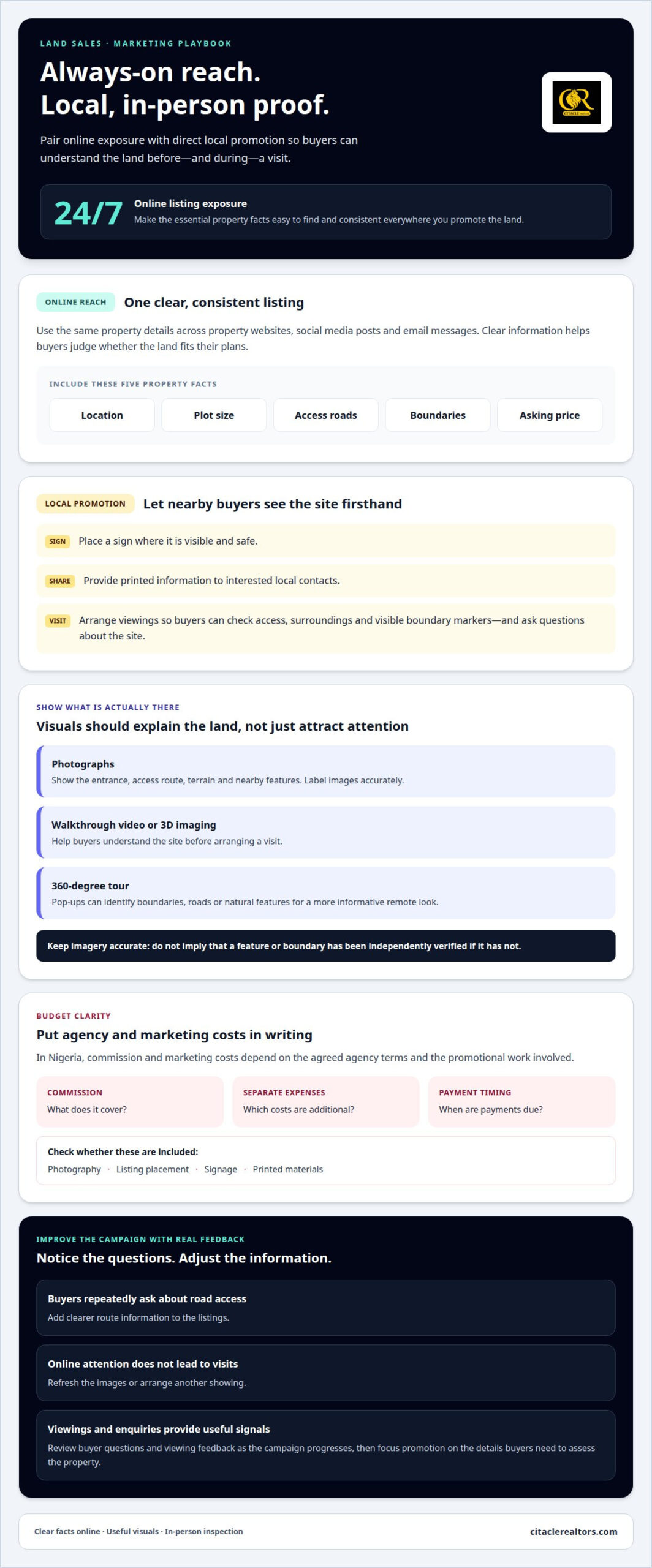
A practical plan for how to market land for sale effectively pairs online exposure with direct local promotion. Online listings provide exposure 24/7, so include the location, plot size, access roads, boundaries and asking price. Keep these details consistent across property websites, social media posts and email messages. Clear information helps potential buyers assess whether the land suits their plans.
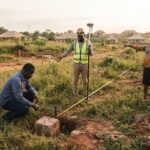
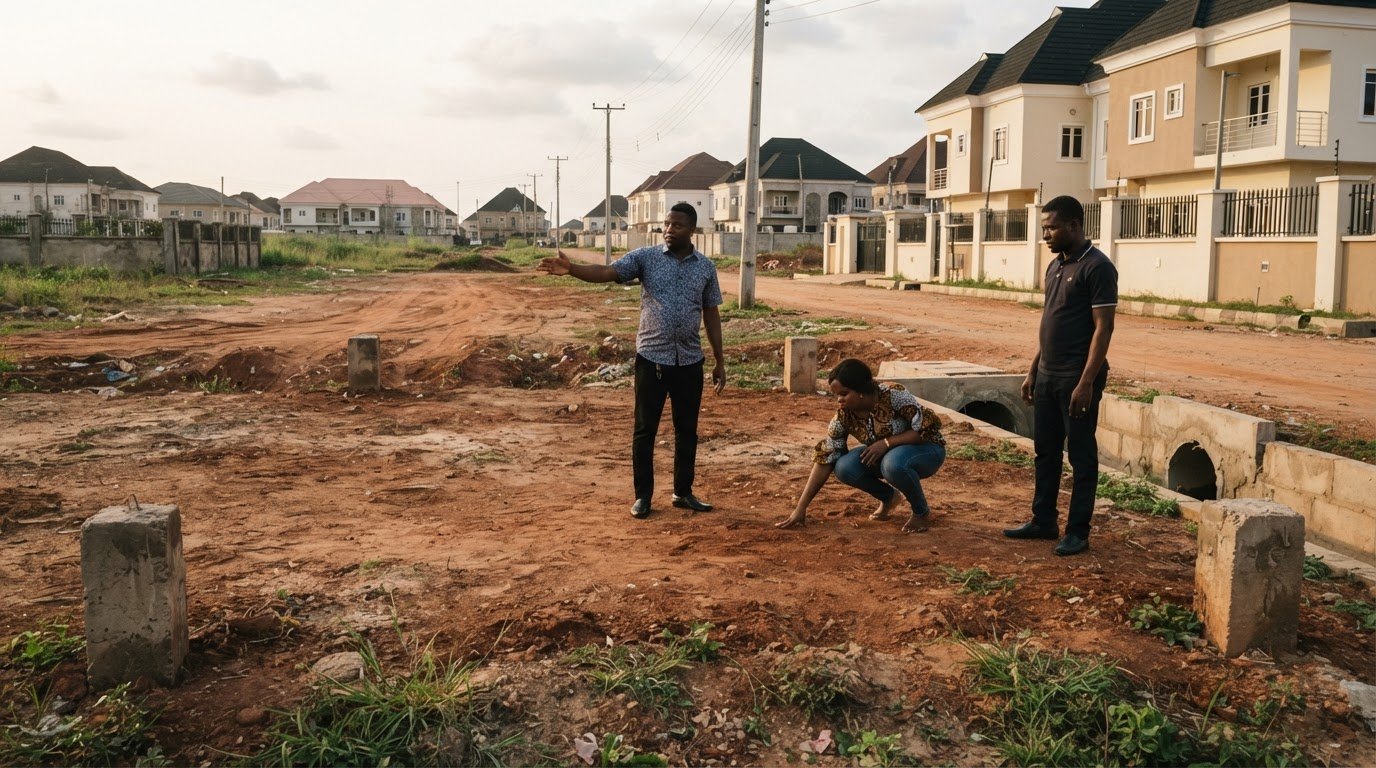
Offline promotion can put your listing in front of people familiar with the area. Place a sign where it is visible and safe, and share printed information with interested local contacts. Arrange viewings so buyers can inspect access, surroundings and visible boundary markers in person. A viewing also gives you the opportunity to answer questions about the site.
Agent commission and marketing costs in Nigeria depend on the agreed agency terms and the promotional work involved. Put in writing what the commission covers, which expenses are separate, and when payments are due. Before setting a budget, clarify whether photography, listing placement, signage and printed materials are included.
Use property images to show the land accurately, not just attract clicks. A photographer can capture the entrance, access route, terrain and nearby features. Walkthrough videos or 3D imaging can help buyers understand the site before arranging a visit. A 360-degree tour with pop-ups identifying boundaries, roads or natural features gives viewers a more informative remote look.
- Match each online listing with consistent property details and images.
- Use scheduled site visits to show access and surroundings firsthand.
- Choose promotional materials that clearly explain the land’s features.
Review enquiries and viewing feedback as the campaign progresses. If buyers repeatedly ask about road access, add clearer route information to the listings. If online attention does not lead to visits, refresh the images or arrange another showing. These adjustments keep the promotion focused on the details buyers need to assess the property.
2. Preparing and staging land or property for sale
Start with the site itself: remove rubbish, cut back overgrowth and clear visible access routes. Repair a damaged gate or boundary marker where practical. These steps help buyers understand the plot’s condition and approach. Do not move or alter boundary markers without reliable survey information.
Choose an agent or sell directly based on how much of the work you can manage. An agent can coordinate enquiries, marketing and viewings under agreed terms; direct selling leaves you responsible for those tasks and negotiations. Either way, keep a record of buyer enquiries, viewing dates and offers, and put any commission or marketing costs in writing.
Before advertising, organise documents that support ownership and identify the land. Gather available title or ownership records, a survey or plot plan, and documents relating to previous transfers or allocation. To confirm title, follow the relevant state land registry process and compare the property description with the survey details. Procedures vary by location, so keep the records together for professional review.
There isn’t one tax or disclosure checklist that fits every Nigerian land sale. Before marketing the property or agreeing to terms, have a Nigerian property lawyer review the ownership documents, proposed sale agreement, relevant disclosures and tax obligations for the transaction. Keep written records of what you tell buyers, especially about access, boundaries and known site conditions.
A useful listing names the area, plot size, access, asking price and features buyers can observe. Pair it with clear photographs of the entrance, road approach, terrain, boundaries and nearby landmarks. A photo showing the access road, for example, is more informative than a close-up of grass. Label images accurately, and don’t imply that a feature or boundary has been independently verified if it hasn’t.
For viewings, meet in a planned public location, keep a record of appointments, and avoid going alone if you feel unsafe. During negotiations, use written offers and a documented agreement; confirm payment through your bank before handing over possession or original documents. A structured property review can help organise sale-ready details.
3. Researching local property demand and pricing trends
Start with the immediate neighbourhood, not broad national property headlines. Identify nearby land listings and note their location, size, stated features, asking prices and time on the market. Then look for completed comparable sales where reliable information is available. Asking prices show what sellers expect; completed sales provide stronger evidence of buyer activity.
Next, consider what is changing around the parcel. Nearby roads, services, housing or commercial activity can influence which buyers consider the location. A plot near an established residential area, for example, may interest someone planning a home, while a larger, accessible parcel may suit a different intended use. Treat these as possibilities, not proof of demand.
To identify and reach likely buyers, match the land’s location, size, access and features to their intended uses. A residential plot may appeal to home builders, while accessible land with room for operations may attract business buyers. Describe the relevant features clearly in each promotional channel.
Track direct signals instead of relying on impressions. Record the questions potential buyers ask, which listings attract enquiries, and whether viewings lead to offers. Repeated questions about road access may indicate that it needs a clearer explanation. Strong interest in a particular plot feature can guide what you emphasise in the listing.
- Compare properties in the same locality and with similar characteristics.
- Separate asking prices from information about completed sales.
- Note nearby development and the likely uses it could support.
- Review enquiries and viewing feedback to refine buyer targeting.
Keep your observations in a simple market record, including the source and date of each listing or sale. Revisit the information as conditions change instead of assuming an older asking price still reflects current demand. This local picture helps you identify which buyers to reach and what information matters to them.
4. Pricing Land in Nigeria with Comparable Sales
Use recent comparable sales to anchor your asking price, then assess how closely each sale matches your parcel. Prioritise land in the same locality with similar size, access and observable features. A plot in another neighbourhood may provide context, but differences in buyer demand can make it a weak direct comparison.
Keep asking prices separate from completed sale prices. An advertised figure shows what a seller hopes to receive; a completed sale provides evidence of what a buyer agreed to pay. Record the source and timing of each comparison, and favour recent, relevant transactions over older listings or properties with different characteristics.
For each comparable, consider:
- Location: Compare the immediate area and access to nearby roads or services.
- Size and shape: Check whether the land can serve similar potential uses.
- Features: Note terrain, access and other visible characteristics.
- Market conditions: Consider current buyer interest in that locality.
Explain differences rather than simply copying a neighbouring price. For example, a parcel with clear road access may not compare well with a similar-sized plot reached by a less convenient route. Differences in terrain or location can also affect how buyers assess its usefulness. Treat each adjustment as a reasoned comparison, not an arbitrary addition or deduction.
Use several relevant sales to identify a reasonable price range, then choose an asking figure that reflects the strongest comparisons and the parcel’s features. If evidence is limited, rely more on close matches and explain the basis for your estimate. Revisit the price if enquiries and viewing feedback suggest a mismatch between buyer expectations and the listing.
A clear comparison record can support a confident discussion with interested buyers. Discuss your land sale when you’re ready to set a pricing approach grounded in local evidence.
Citacle Realtors: Residential Land Sales
Citacle Realtors offers Residential Land Sales, a relevant option when you’re preparing to sell residential land and want real estate support. The market research and comparable sales you’ve gathered can help frame discussions about the location, buyer interest and an appropriate asking price.
Turn to Citacle Realtors when you’re ready to explore a residential land sale. Clear property details, organised ownership records and a considered price provide useful context for the discussion. This service supports residential land sales; it does not replace legal advice on title, disclosures or transaction requirements.
Please contact Citacle Realtors to discuss your residential land sale.
Make your next land-sale decision with confidence
The next step is to turn your intentions into a clear plan for the property and the buyers you hope to reach. Knowing how to market land for sale effectively helps you approach the process with purpose, but each parcel calls for decisions suited to its location and intended use.
Citacle Realtors offers Residential Land Sales, as well as Property Management and Facilities Management. If you’re considering a residential land sale, contact Citacle Realtors to discuss your goals and how to proceed. Bring the information you’ve assembled about the property to help clarify your priorities.
Contact Citacle Realtors today to discuss your next step. A considered plan can help you move ahead with greater clarity and confidence.
Frequently Asked Questions
What Factors Determine Your Land’s Market Price?
A land’s market price reflects what buyers can use, access and reasonably expect from the parcel. Alongside nearby sales, consider whether its shape allows a practical layout, whether access is straightforward, and whether visible site conditions could affect development plans. An irregular plot, for example, may attract less interest than a similarly sized, accessible parcel. Demand for land in that location also influences how competing offers develop.
How Can Networking Benefit Your Land Selling Efforts?
Networking can introduce your listing to people whose plans suit the land, including home builders, local business owners and prospective neighbours. Share a concise description and accurate property information with trusted contacts, and ask them to pass it on to suitable buyers. Record referrals and enquiries to see which connections bring relevant interest, rather than just general attention.
How Can You Enhance Your Land Listing’s Visibility?
Make the listing easy to find and understand with a precise title, complete location details and a clear description of the parcel’s potential uses. Use the same property name and core facts wherever you post it. Update outdated details, respond promptly to enquiries and share the listing with relevant local groups. These steps help interested buyers recognise the opportunity and find the information they need.
How Can You Measure the Success of Your Marketing Strategies?
Measure results by tracking the path from listing views to meaningful buyer actions. Record enquiries, requests for further details, scheduled viewings and written offers for each promotional channel. A channel that attracts attention but no serious questions may need better-targeted information. If viewings happen but offers do not follow, review buyer feedback and check whether the listing accurately describes the land and its appeal.
How Can You Utilize Local SEO for Selling Land?
Use local search terms that identify the land’s actual area and nearby recognised landmarks, rather than relying only on broad phrases such as “land for sale.” Include those terms naturally in the listing title and description, and keep the location consistent across your online profiles. Specific, useful details help connect the listing with people searching for property in that part of Nigeria.
How Important Is Professional Photography for Land Sales?
Professional photography can help buyers understand the site before arranging a visit, especially when images show its scale and surroundings clearly. Ask for photographs from different perspectives, such as the approach, open areas and neighbouring features. Avoid misleading angles or edits that make boundaries or terrain appear different. Accurate visuals create a clearer first impression and support more informed enquiries.