

What if the rent you collect looks profitable but leaves less behind than expected? The hidden costs of being a landlord in Nigeria can quietly reduce the gap between rent collected and actual return. Repairs after tenant turnover, vacant months, power or water infrastructure, insurance, taxes and property oversight can all draw on income, sometimes while rent isn’t coming in.
Budgeting means more than setting money aside for a broken tap. You may expect occasional maintenance, but less visible expenses and gaps in payment timing can make cash flow harder to predict. In 2026, tax and compliance obligations also deserve a place in your plans, with details depending on the property and applicable rules. A sound budget won’t remove these costs, but it can make them less surprising.
This guide explains which expenses are often missed in rental calculations, how to build a practical property-specific budget and reserve, and when professional property management can help coordinate routine oversight and maintenance. By looking at costs before, during and between tenancies, you can assess rental income more realistically and make informed decisions about protecting your investment.
Key Takeaways
- Group ownership expenses by when they arise, from preparation before letting to occasional costs that can disrupt income.
- Use the hidden costs of being a landlord in Nigeria to assess rental income realistically. Rent collected is not the same as profit.
- Keep a planning ledger that separates operating expenses, reserves and estimated net income. Treat it as a planning tool, not a forecast or market benchmark.
- Base your budget on property-specific records, invoices, inspections and contracts, then revise it as costs and timing become clearer.
- Compare self-management with professional oversight by weighing your available time and coordination needs against the service fee.
Hidden Costs of Being a Landlord in Nigeria: Why Rent Is Not Profit
Rent arriving in your account can feel like a clear measure of how a property is performing. But the amount collected is not necessarily the amount available to spend or keep. Repairs, property charges, insurance, vacancy and day-to-day oversight can all take a share. Some bills may also arrive well after the rent intended to cover them.
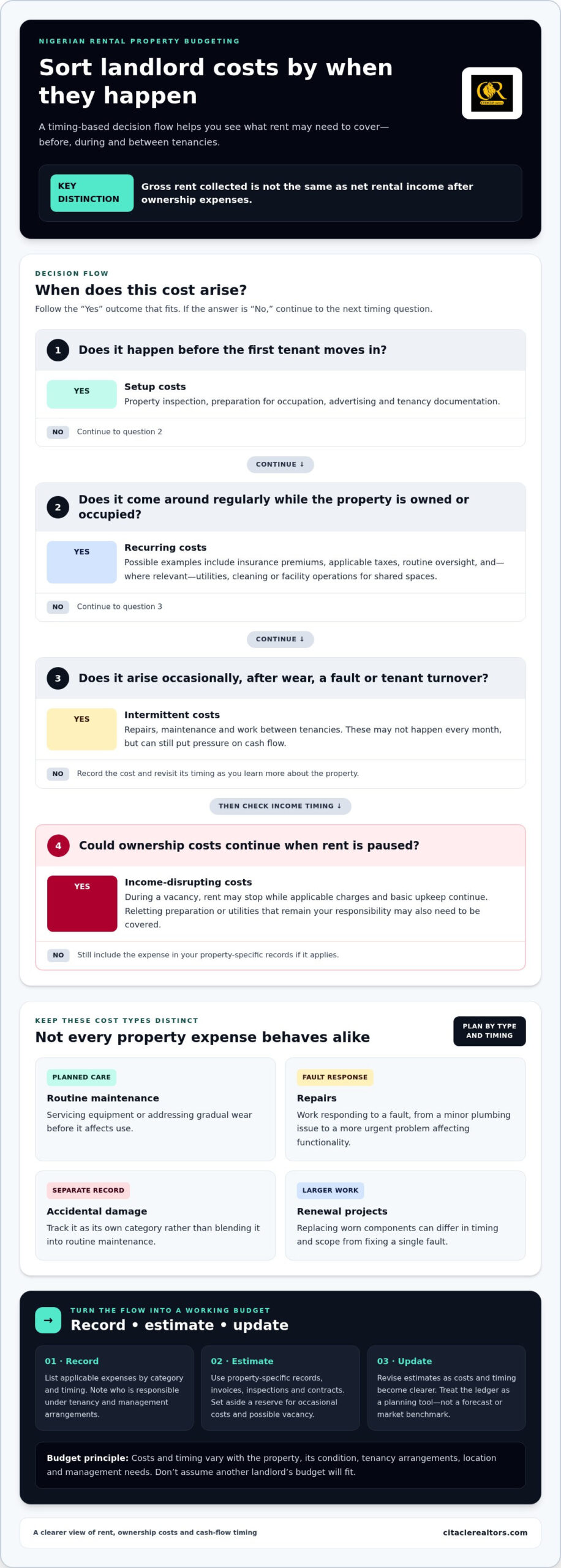
The hidden costs of being a landlord in Nigeria are ownership expenses that are easy to overlook when estimating rental income. Grouping them by when they arise helps reveal what your budget needs to cover:
- Setup costs prepare a property for letting, including work needed to make it suitable for a tenant.
- Recurring costs come around regularly, such as applicable taxes, insurance and routine oversight.
- Intermittent costs arise from time to time, such as repairs, maintenance or work between tenancies.
- Income-disrupting costs include expenses during a vacancy, when ownership bills can continue without rent coming in.
An expense can happen only occasionally and still belong in your annual plan. A one-off repair or a gap between tenants can put pressure on cash flow if you have no reserve to meet the cost.
What counts as a hidden landlord cost?
These are costs beyond the rent, purchase price or financing expenses an owner may already expect. Less-visible categories include repairs, vacancy, insurance, taxes and property oversight. Their amount and timing depend on the asset and its circumstances, so don’t leave an expense out simply because it doesn’t arise every month. Record it, estimate when it may fall due and update that estimate as you learn more about the property.
Why Nigerian landlords should budget beyond rent collection
A tenant may pay rent as agreed while you still face a bill that must be handled before the next payment arrives. If a vacancy interrupts income, upkeep and applicable charges may continue. Delaying necessary maintenance to protect short-term cash flow can also allow a small issue to affect the property’s functionality. Planning ahead helps you make considered decisions rather than relying on rent being available at exactly the right time.
There is no single expense pattern that applies to every rental property in Nigeria. A property needing more attention may require a different reserve from one in sound condition. Tenancy arrangements affect when income arrives and when turnover work may be needed. Applicable charges and operating needs can also vary with location and management arrangements. Use the property’s own records and circumstances, rather than assuming another landlord’s budget will fit.
Gross rent is the amount collected; net rental income is what remains after ownership expenses are accounted for. That distinction is central to assessing whether rent can support the property over time. The next sections break down common costs and show how to plan for them.
The Main Hidden Costs Nigerian Landlords Need to Budget For
Expenses don’t all arrive at the same time. Some arise before the first tenant moves in; others recur during occupancy, appear between tenancies or come up unexpectedly. Organising them by timing helps you plan for cash demands instead of treating every bill as a surprise. The categories below are costs to assess, not expenses that apply to every landlord or property.
Setup, administration, and recurring ownership expenses
Before letting, you may need to inspect the property, prepare it for occupation, advertise it and arrange tenancy documentation. The work depends on the property’s condition and your letting plan. Documentation and other property transactions can involve legal considerations. This overview of Nigerian property law explains the broader framework, but it isn’t a substitute for checking how current rules apply to your circumstances.
Once the property is occupied, possible recurring expenses include routine oversight, insurance premiums and applicable taxes or compliance-related costs. Professional management may also be part of your operating plan. If the building has shared spaces or facilities, utilities, cleaning or facility operations may add to the cost. Include these expenses where they apply, and record who is responsible for each one under the tenancy and management arrangements.
Repairs, vacancy, insurance, and unexpected events
Separate maintenance from repairs in your budget. Routine maintenance is planned care, such as servicing equipment or addressing gradual wear before it affects use. A repair responds to a fault, from a minor plumbing issue to a more urgent problem affecting the property’s functionality. Accidental damage is another category. Larger renewal projects may involve replacing worn components rather than fixing a single fault. Track these costs separately because their timing and scope can differ.
A vacant property can still generate ownership expenses even while rent is on pause. Between tenants, you may need to keep up applicable charges, attend to basic upkeep, prepare the property for reletting or cover utilities that remain your responsibility. The income interruption depends on how long the property is vacant; it isn’t a fixed or guaranteed loss amount. A reserve helps you plan for this possibility without assuming a particular vacancy period.
Insurance, tax and compliance obligations depend on the property, your circumstances and the rules that currently apply. Review relevant documents and obligations regularly instead of relying on assumptions from another property or an earlier year. Professional property and facilities management can help coordinate day-to-day decisions and facilities needs. Keep records of inspections, work completed and bills paid so you can distinguish predictable costs from those that need a contingency.
How Hidden Costs Change a Nigerian Rental Property’s Net Income
To see how ownership expenses affect your return, follow the rent through a simple cash-flow ledger. Gross rent is rental income collected before property-related expenses are deducted. Net rental income is what remains after relevant operating costs and planned reserves are accounted for. The hidden costs of being a landlord in Nigeria matter because their timing can change how much income is available, even when the agreed rent stays the same.
Gross rent versus net rental income
The example below uses placeholders, not a forecast or Nigerian market benchmark. Replace them with figures from your records. It assumes one property, excludes mortgage or other financing repayments, and shows estimated income before tax. Tax treatment varies with circumstances, so this ledger doesn’t calculate tax. Reserves are amounts set aside for future costs, not additional bills. If you later spend a reserve, record the payment without counting it twice.
| Planning ledger | Fully occupied period | Vacancy or repair scenario |
|---|---|---|
| Potential rent for the period | ₦[scheduled rent] | ₦[scheduled rent] |
| Rent not collected during vacancy | ₦[0] | ₦[rent for vacant period] |
| Rent collected | ₦[scheduled rent] | ₦[scheduled rent less vacancy] |
| Operating expenses | ₦[routine costs] | ₦[routine costs plus repair] |
| Reserve contribution | ₦[planned set-aside] | ₦[planned set-aside] |
| Estimated net before tax and financing | ₦[rent collected less expenses and reserve] | ₦[rent collected less expenses and reserve] |
The comparison shows how a vacancy can reduce rent collected while routine ownership costs continue, and how a repair can add to expenses in the same period. A reserve doesn’t erase the cost, but it can give you funds to meet it without relying entirely on the next rent payment.
Use scenarios to test whether the property budget is resilient
Test more than the fully occupied case. Build a routine scenario from normal bills, then model a vacancy or repair using your own estimated amounts. For each scenario, check whether rent collected can cover operating costs and the planned reserve. Also check whether available cash can meet a bill that falls due before rent arrives. Revise the assumptions as the property’s condition and records change.
| Cost pattern | Examples | How to plan |
|---|---|---|
| Predictable | Regular agreed services or recurring property charges | Record the amount and due date. |
| Irregular | Repairs or renewal work | Use invoices, inspections and prior records to estimate. |
| Income-disrupting | Vacancy or delayed rent collection | Model reduced collections alongside continuing costs. |
This approach turns a rent figure into a more useful view of cash flow. Property-specific assessments are more reliable than generic averages. A clear ledger also helps you review whether your reserve remains appropriate as circumstances change.
A Practical Budgeting Process for Landlord Expenses in Nigeria
Build your landlord budget from the property’s own history and current condition, not a generic estimate. The process below turns scattered bills, planned work and possible interruptions into a working plan you can revisit. Keep operating expenses separate from capital improvements and financing so you can see which costs relate to routine ownership and which represent a larger investment or loan obligation.
- Inventory the expenses. List costs already paid and those that may arise, grouped by category and timing. Include recurring commitments, periodic work, applicable charges and possible vacancy-related expenses. Mark each item as operating, capital or financing, and note whether it applies to this property.
- Collect the records. Use invoices, receipts, service contracts, tenancy documents and inspection notes to establish property-specific figures. Prior records can reveal repeat faults or seasonal work. If records are missing, arrange an inspection or document a reasonable estimate. Mark it as provisional rather than treating it as a confirmed cost.
- Forecast when payments fall due. Create an expense calendar showing expected payment dates, recurring commitments, periodic inspections and planned work. Compare those dates with expected rent collection. This can reveal when cash may be tight, even if annual income and expense totals appear manageable.
- Set a reserve approach. Decide how much to hold based on the property’s condition, available records and your financial capacity. Keep the reserve separate from money allocated to routine bills, and revisit it after a major repair or a change in the property’s condition. Avoid relying on a universal reserve figure that may not suit your asset.
- Review actual results. Compare estimates with spending as invoices arrive. Note why an amount differed, such as a change in repair scope or postponed work. Update the calendar and budget when tenancy arrangements, property condition or applicable rules change.
Build a property-specific expense calendar
Use one record for dates and another for supporting documents, or combine them in a simple spreadsheet. For each invoice and receipt, record the category, property and payment date. This makes it easier to compare planned costs with actual spending and spot assumptions that need revision. If day-to-day oversight is difficult to coordinate, professional residential property management can help organise property oversight. Include the relevant management service cost in your operating plan.
Set reserves and prioritise decisions
Not every project has equal urgency. Address issues affecting safety or essential functionality before cosmetic upgrades, then plan other work based on documented condition and available funds. Separate a repair that restores an existing feature from a capital improvement that renews or upgrades it. This distinction supports clearer records, though you should assess tax treatment for your circumstances with qualified tax guidance.
Base renovation decisions on inspection findings or valuation needs, not an assumed increase in rent. Review the scope, record the reason for the work and compare its cost with the property’s priorities. Property management support can help coordinate oversight and maintenance planning as part of your budgeting approach.
When Property Management Can Help Control Landlord Costs
Managing a rental property yourself keeps decisions close at hand and avoids a separate management service fee. It also takes time: you must coordinate inspections, tenant communication, maintenance, records and bills. Professional oversight adds a service cost, but can help organise these tasks and support timely decisions. Neither approach removes the underlying costs of ownership. The right choice depends on your availability, the property’s needs and how reliably you can keep operations on track.
Signs that managing costs alone is becoming difficult
Repeatedly missed inspections, delayed repairs, incomplete expense records or difficulty coordinating shared facilities may signal that self-management is taking more time than you can provide. Gaps in oversight can make it harder to spot changing property needs or understand where money is going. If your schedule is limited, structured support can help maintain clearer records and a more consistent view of property operations.
Compare the practical trade-offs before deciding:
| Consideration | Self-management | Professional oversight |
|---|---|---|
| Time | You handle day-to-day follow-up and administration. | Some coordination is handled as part of the agreed service. |
| Expense records | You organise invoices, receipts and work history. | Organised oversight can support clearer tracking of property activity. |
| Cost | No separate management service fee, but your time has value. | A service fee applies and should be included in the budget. |
| Decision-making | You make and coordinate property decisions directly. | Professional input can inform decisions, while ownership responsibility remains yours. |
How professional oversight supports informed property decisions
Facilities management can coordinate day-to-day building operations and help owners focus on functionality, planned work and recurring needs. Property management supports routine oversight and maintenance coordination. These services can make it easier to track issues and act on information, but they don’t guarantee savings or eliminate vacancy, repairs, taxes or compliance costs.
Other expertise can inform specific decisions. An asset valuation can help you understand a property’s value and investment position, while renovation work can address documented condition or functional needs. Neither is a promise of increased rent or a particular financial return. Consider property records, inspection findings and your budget before committing to work.
If the hidden costs of being a landlord in Nigeria are becoming difficult to track alongside your other responsibilities, compare the time you can commit with the coordination your property requires. Citacle Realtors provides property and facilities management, alongside valuation and renovation services, to support informed oversight of rental assets. Explore property management support as a practical next step for organising your property’s day-to-day needs.
Make Your Next Property Decision With Confidence
Make rental property decisions based on its actual condition and ownership records, not assumptions about what rent will leave behind. Treat your budget as a working tool: update it when circumstances change, and use clear information to guide decisions about oversight and future work. This steady approach can help you respond thoughtfully to the hidden costs of being a landlord in Nigeria.
If coordinating a rental asset is taking more time than you can give it, consider structured support. Citacle Realtors provides property and facilities management across Nigeria, with valuation and renovation expertise to inform property decisions. These services can support organised oversight, but they don’t remove ownership expenses or promise a particular return.
Explore Citacle Realtors’ property management services and take a considered next step towards managing your rental property with greater clarity. A practical plan and the right oversight for your needs can help you move forward with confidence.
Frequently Asked Questions
What are the hidden costs of being a landlord in Nigeria?
The hidden costs of being a landlord in Nigeria are expenses beyond the purchase, financing or expected rent calculations that can affect your cash flow. Examples include preparing the property for a tenant, arranging inspections, applicable property charges and handling work after damage or a tenancy change. Check your tenancy and service agreements to see who is responsible for each expense, then compare those responsibilities with bills and receipts.
How much should a landlord budget for unexpected repairs in Nigeria?
There’s no single reserve amount that suits every property. Use inspection findings, the building’s condition and previous repair invoices to estimate the work it may need, then set a reserve that fits your finances. For example, recurring plumbing faults in your records suggest a different contingency need from a property with no recent repair history. Review the amount after major work or a change in condition instead of relying on a generic percentage.
Do landlords in Nigeria pay tax on rental income?
Rental income may form part of an individual landlord’s taxable income, depending on their circumstances and applicable tax rules. The Nigeria Tax Act 2025 took effect on January 1, 2026; its personal income tax regime exempts individuals earning ₦800,000 or less annually, while progressive rates apply above that threshold. A corporate tenant may deduct 10% withholding tax from rent paid to an individual landlord as an advance payment of income tax. Keep records and seek qualified tax guidance.
What happens if a rental property in Nigeria stays vacant?
If no tenant is paying rent, you may have less rental cash coming in while some property obligations continue. Depending on the arrangements, these could include charges, utilities or work needed to prepare the property for a new tenancy. Track the vacancy period separately from occupied months in your accounts, and record reletting or preparation expenses as they occur. This gives you a clearer picture of the actual effect instead of assuming a fixed loss.
Can a property manager help reduce the hidden costs of being a landlord?
A property manager can help coordinate inspections, maintenance requests, records and communication, supporting timely, informed decisions. For example, a clear history of reported faults and completed work can help you assess recurring issues. Management doesn’t eliminate repairs, vacancies, taxes or other ownership expenses, and its service fee belongs in your budget. Compare the fee and scope of oversight with the time and coordination you currently handle yourself.
Are landlord insurance and maintenance costs the same?
No. Insurance is a policy that may provide financial protection for specified events, subject to its terms, limits and exclusions. Maintenance is the owner’s ongoing spending on upkeep, such as servicing equipment or addressing ordinary wear. A policy may not cover routine deterioration, so don’t treat insurance as a substitute for maintenance funding. Read the policy wording to understand what it covers, and keep maintenance invoices to document work completed on the property.