

A rental inspection should establish a clear property baseline, not make a tenant feel accused. A practical rental property inspection checklist for landlords helps you spot maintenance concerns, document existing wear and damage, and compare the property’s condition over time. Consistent oversight can help protect a rental asset’s condition while supporting clear communication with tenants.
It’s easy to overlook a defect when a visit is rushed or the inspection order changes each time. A room-by-room routine helps you check the same areas consistently, while clear notes distinguish what you observed from what still needs investigation.
This guide covers a repeatable approach to inspecting rooms, fixtures, plumbing, electrical fittings, exterior areas and ventilation. You’ll also learn how to organise photos and written records, arrange access respectfully, and track issues through to follow-up. A clear process makes inspections a practical part of property management rather than a source of unnecessary conflict.
Key Takeaways
- Use the rental property inspection checklist for landlords to review rooms, exterior areas, fixtures and visible systems in a consistent order.
- Describe what you observe without assuming the cause of a defect, so later reviews can distinguish an existing condition from a new concern.
- Build a useful property baseline with dated, clearly labelled photos and concise notes that respect tenant privacy.
- Plan inspections around occupancy changes, reported issues and move-out, following the tenancy agreement and applicable Nigerian requirements.
- Use inspection records to prioritise maintenance and support effective property oversight.
Why a Rental Property Inspection Checklist Matters for Nigerian Landlords
A rental inspection is a structured review of a property’s visible condition, safety concerns and recorded changes. The rental property inspection checklist for landlords gives each visit a consistent framework, so you can compare observations over time instead of relying on memory. A clear record helps you decide what needs attention and what to monitor.
A baseline also helps distinguish routine wear from a condition that appears to have changed. For example, a dated note about a ceiling stain gives you a point of comparison at the next visit. It doesn’t establish the cause, but it can help you decide whether to monitor the area or arrange further assessment. Use inspection findings to guide maintenance priorities, not to draw conclusions the evidence cannot support.
What a rental property inspection can and cannot tell you
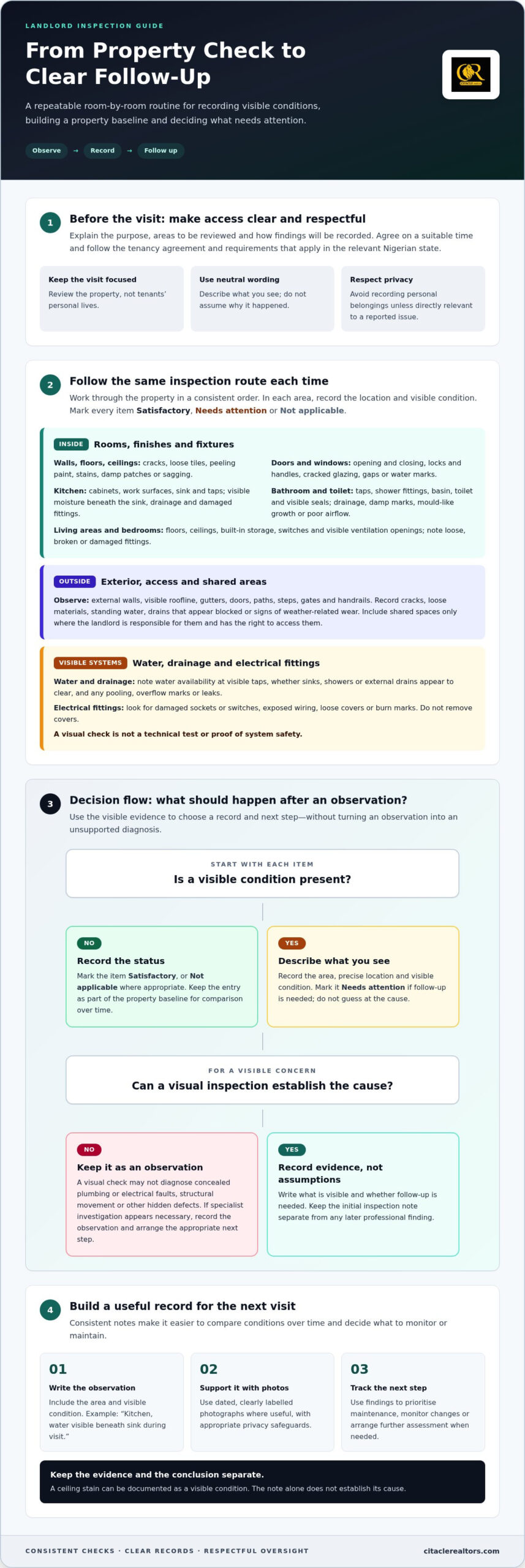
A standard inspection records observable conditions: a cracked tile, dripping tap, damaged door latch or visible mark on a wall. Describe what you see without guessing why it happened. A visual check may identify a concern, but it can’t reliably diagnose concealed plumbing or electrical faults, structural movement or other hidden defects.
Inspection notes support property oversight and decision-making, but they aren’t a substitute for technical assessment, legal advice or an asset valuation. If an issue appears to need specialist investigation, record the observation and arrange the appropriate next step. Keep the initial note separate from any later professional finding.
Set a clear, respectful purpose before the visit
Before arranging access, explain the visit’s purpose, the areas you intend to review and how you’ll record findings. Agree a suitable time and follow the tenancy agreement and requirements that apply in the relevant Nigerian state. Tenancy rules can vary, so don’t treat one state’s provisions or a single agreement as a universal standard.
Keep the visit focused on the property. Use neutral descriptions, give the tenant a chance to raise maintenance concerns, and avoid recording personal belongings unless they’re directly relevant to a reported issue. The aim is responsible oversight, not surveillance.
For each finding, note the area, visible condition and whether follow-up is needed. For example, “Kitchen, water visible beneath sink during visit” is more useful than “Tenant caused leak” when the cause hasn’t been established. Dated photographs can support the written record when taken with appropriate privacy safeguards.
This approach is part of property management, which includes looking after buildings and coordinating their ongoing needs. Property and facilities management can connect inspection observations with maintenance planning across residential and commercial assets. A checklist won’t resolve every concern, but it gives you a consistent starting point for informed decisions and respectful communication.
The Room-by-Room Rental Property Inspection Checklist
Work through the property in the same order each time, recording what you can see and where you found it. This rental property inspection checklist for landlords covers rooms, fixtures, exterior areas and visible systems. Mark each item as satisfactory, needs attention or not applicable, then add a short description. Record observations, not guesses about their cause.
Check rooms, finishes, windows, doors and fixtures
In each room, inspect from floor to ceiling. Pay particular attention to areas around windows, sinks and other places where water may enter or collect.
- Walls, floors and ceilings: Record visible cracks, loose tiles, peeling paint, stains, damp patches or sagging. Note the precise location and extent without assuming the cause.
- Doors and windows: Check whether they open and close, and whether locks and handles are present and appear intact. Look for cracked glazing, gaps, water marks or signs of water entry around frames.
- Kitchen: Observe cabinets, work surfaces, the sink and taps. Look beneath the sink for visible moisture, note whether water drains, and record damaged fittings or surfaces.
- Bathroom and toilet: Check taps, shower fittings, the basin, toilet and visible seals for leaks or damage. Observe whether water drains, and note damp marks, mould-like growth or poor airflow.
- Living areas and bedrooms: Note the condition of floors, ceilings, built-in storage, switches and visible ventilation openings. Record any fitting that appears loose, broken or damaged.
Review shared areas, exterior condition and visible systems
Continue outside, then include shared spaces only where the landlord is responsible for them and has the right to access them. Focus on visible conditions. A checklist is not a technical test or certification of system safety.
- Exterior and access: Observe external walls, visible roofline, gutters, doors, paths, steps, gates and handrails. Record cracks, loose materials, standing water, drains that appear blocked or signs of weather-related wear.
- Water and drainage: Note whether water is available at visible taps during the visit and whether sinks, showers or external drains appear to clear normally. Record pooling, overflow marks or leaks as observations, not diagnoses.
- Electrical fittings: Look for visibly damaged sockets, switches, exposed wiring, loose covers or burn marks. Don’t remove covers or treat a visual check as proof of electrical safety.
- Plumbing and ventilation: Note visible drips, corrosion, damaged pipes, blocked vents or rooms with limited airflow. Record the location and arrange technical assessment when a concern needs diagnosis.
- Shared spaces: Where access is appropriate, check corridors, stairways, refuse areas or common services for visible damage, obstructions, water accumulation or fittings needing attention.
Consistent observations can help owners coordinate repairs and ongoing oversight. A structured inspection record can also inform maintenance priorities as part of property management.
How to Record Inspection Findings and Build a Reliable Property Baseline
A useful report turns a visit into a record you can compare and act on. Use the same process each time: date the inspection, identify the room or area, describe its visible condition, then assign any necessary follow-up. The rental property inspection checklist for landlords provides structure, while clear notes make each finding understandable later.
A property-condition baseline is a dated record of a property’s observed state, kept for comparison with later inspections. It can help show whether a concern was already documented, appears to have changed or needs further assessment. Keep facts separate from conclusions: “brown mark on ceiling beside window” is clearer than “roof is leaking” if the source hasn’t been established.
Create a consistent condition report
Use the same room names and categories each time, such as “main bedroom,” “kitchen sink” and “front entrance.” For each observation, note its location, visible extent and whether action is needed. Where useful, classify it as pre-existing wear, a new concern, a maintenance need or uncertain. This adds context without presenting an unconfirmed cause as fact.
A simple report can follow this sequence:
- Date and identify: Record the visit date and property area.
- Describe: State what is visible and where, using neutral language.
- Compare: Refer to an earlier record when available, noting whether the condition appears unchanged or different.
- Assign: Mark whether follow-up is required, and note who is responsible and the next step.
For example, “Bathroom, water mark below basin, not recorded in the previous report; investigate source” describes an observation and a practical next step without assigning blame. Where appropriate under the tenancy arrangement, share the report with relevant parties and invite them to review or acknowledge it. An acknowledgment confirms receipt or review, not necessarily agreement with every observation.
Use photos and an action log responsibly
Photographs can clarify written notes, but they work best as supporting evidence rather than a substitute for a report. Date each image and label it with the property area and a brief description. Where practical, use consistent angles so you can compare later images with the earlier view.
- Link every image to a specific written observation, such as “Kitchen, pipe beneath sink, image 04.”
- Capture enough context to identify the location, then take a closer view if it helps show the condition.
- Avoid including tenants, personal documents, family photographs or belongings unless they’re directly relevant and recording them is appropriate.
- Store reports and images securely, limiting access to people who need them for property oversight.
Maintain an action log alongside the condition report. For each item, record the responsible person, next action, current status and evidence of completion, such as a dated update or follow-up photograph. Keep uncertain observations open until they’re assessed. Add the outcome to the record rather than silently replacing the original note. This creates a reliable history for maintenance planning and property management.
When to Inspect a Rental Property and How to Follow Up
Inspection timing should suit the property, tenancy stage and reason for the visit. There isn’t one schedule for every rental home in Nigeria. Use the tenancy agreement and requirements that apply in the relevant state to guide planned visits and access arrangements. A rental property inspection checklist for landlords helps keep visits consistent without turning them into unnecessary interruptions.
Planned condition reviews and responses to urgent reports serve different purposes. A scheduled inspection tracks changes over time, while an urgent report calls for attention based on its potential risk and impact.
Plan inspections around tenancy stages and agreed access
Before a tenant moves in, record the property’s condition to establish a starting point. During the tenancy, arrange planned reviews in line with the agreement and applicable requirements instead of assuming a fixed interval applies everywhere. After a tenant reports a problem, focus the visit on that concern. At move-out, compare the property with the earlier record and note changes that need follow-up.
Explain the purpose and scope before each visit, then coordinate a suitable time with the occupant. Keep an access log showing the date, areas reviewed and outcome. If an appointment is postponed, record that and any agreed next step. This creates a clear history while respecting tenant privacy and agreed access terms.
Turn findings into practical repair follow-up
After the visit, sort observations by urgency, possible impact and whether further assessment is needed. An active leak, a visible electrical concern or damage that appears to be worsening should be prioritised for prompt professional attention. A cosmetic mark with no sign of change may be recorded for monitoring. Don’t diagnose a cause from appearance alone, and note when an issue needs qualified assessment.
For each item requiring action, record who is responsible, the next step and a follow-up date. Use the date to track progress, not to promise a specific repair time. If a concern needs technical review, note who will arrange it and update the log when the assessment or repair is complete.
- Urgent concern: Record the observed risk, notify the responsible person and arrange prompt attention appropriate to the issue.
- Maintenance need: Assign the next action and track it until work is completed or a further decision is recorded.
- Uncertain condition: Preserve the original note and add the outcome after closer review, rather than rewriting the observation as a confirmed diagnosis.
Close the loop by updating the condition record with the completion date and relevant evidence, such as a repair note or follow-up photograph. If the issue remains unresolved, state why and identify the next step. This makes recurring concerns easier to monitor and helps carry inspection findings into ongoing property oversight.
For owners who want support coordinating inspections, maintenance and wider asset oversight, Citacle Realtors provides professional property management.
Make Rental Inspections Part of Effective Property Management
An inspection report is more valuable when it guides decisions after the visit. Review completed reports alongside open maintenance items to see what needs attention, what has been resolved and whether a condition has changed. A well-used rental property inspection checklist for landlords can form part of a practical routine for monitoring property condition and planning maintenance.
Choose a manageable inspection and reporting routine
Adapt the checklist to the property, its occupancy, observed condition and the responsibilities set out in the tenancy arrangement. A duplex, for example, may call for separate notes for each level and any shared exterior areas within the landlord’s responsibility. Keep reports, photographs, repair actions and completion notes together so the property’s history is easy to review.
Look for recurring observations without jumping to conclusions about their cause. If reports repeatedly mention damp marks in the same area, record the pattern and consider whether further assessment or maintenance is needed. Repeated observations are useful information, but they don’t prove why the condition is occurring. This measured approach keeps maintenance decisions grounded in the available records.
When professional property management can support landlords
Managing inspections, occupant communication, maintenance follow-up and records takes ongoing attention, particularly for owners overseeing more than one asset or balancing property responsibilities with other commitments. Professional property management provides ongoing oversight, while facilities management supports the care of a property’s physical environment. Effective oversight connects inspection findings to clear next steps instead of leaving issues in a report without follow-through.
Citacle Realtors provides property and facilities management for residential and commercial assets. Consistent inspection records can help organise maintenance priorities and monitor changes in condition. Where a property needs improvement, renovation planning can form part of a wider effort to maintain its condition. Inspection reports aren’t a substitute for an asset valuation, but they can contribute to a clearer understanding of maintenance history and property needs.
Owners can manage the routine themselves with a consistent checklist and record system, or use professional oversight for ongoing coordination. Either way, keep responsibilities clear and review open items regularly. Citacle Realtors’ property management services support property oversight and maintenance coordination.
Build a More Confident Approach to Rental Oversight
A dependable inspection process can grow with your property portfolio. Start with a record-keeping routine you can maintain, then use each review to clarify the next decision. Over time, consistency can help you move from reacting to isolated problems towards more considered planning for your property’s care.
Keep the rental property inspection checklist for landlords accessible, and revisit it as the property’s needs or tenancy arrangements change. Citacle Realtors provides professional management for residential and commercial assets to support ongoing property oversight.
Explore professional property management with Citacle Realtors to organise property oversight and maintenance coordination.
Frequently Asked Questions
How often should a landlord inspect a rental property in Nigeria?
There isn’t one inspection frequency for every rental property in Nigeria. Use the tenancy agreement and requirements that apply in the property’s state to guide planned visits. You might also arrange a review before a new tenant moves in, after a reported problem or at move-out. If the property has recurring maintenance concerns, consider whether the agreed routine gives you enough information to monitor them.
Can a landlord enter a rented property to carry out an inspection?
Generally, landlords should give the tenant reasonable notice and follow the tenancy agreement and applicable state requirements before entering for a routine inspection. The exact notice period can depend on the relevant rules and agreement, so don’t assume one standard applies across Nigeria. Explain why you need access, what you plan to review and when. An emergency may require a different response, but routine visits should respect the tenant’s privacy and agreed access arrangements.
What should a landlord record during a rental property inspection?
Record the visit date, areas observed, visible condition, reported concerns and any follow-up needed. A rental property inspection checklist for landlords can also note whether an item appears unchanged, newly observed or uncertain, without claiming a cause you haven’t established. For example, record “bedroom window latch does not secure” rather than “tenant broke latch” unless that cause is verified. Add who is responsible for follow-up and update the report when the issue is resolved.
Is a rental property inspection the same as a professional building inspection?
No. A landlord’s routine inspection documents visible condition and may identify concerns that need closer attention. It doesn’t test a building’s structure or establish that electrical, plumbing or other systems meet technical standards. For example, a stain on a wall can flag a concern, but it can’t confirm whether the cause is a pipe leak or water entry from outside. A suitably qualified professional can assess technical questions that a visual review cannot settle.
What happens if an inspection reveals damage or a safety concern?
Record the specific observation and consider whether it presents an immediate risk, may worsen or needs specialist investigation. For example, an active leak near electrical fittings calls for more urgency than a small cosmetic mark. Notify the responsible person and arrange appropriate professional attention where needed. Track the next action and update the record after the issue is assessed or repaired. Avoid assigning blame or confirming a cause before there is evidence.
Should tenants receive a copy of the property inspection report?
Sharing relevant inspection findings with the tenant can support clear communication, especially if the report identifies a repair or records a condition that may need monitoring. Whether a copy is required can depend on the tenancy agreement and applicable requirements, so don’t assume the same rule applies everywhere. A practical approach is to share relevant notes, invite corrections to factual details and keep a record of any response or acknowledgment.
Can photographs be included in a rental property inspection report?
Yes. Photographs can show the location and visible state of an issue. Date and label each image, then connect it to a written note so the context is clear later. For example, identify the room and fitting shown rather than leaving an unexplained image in a general folder. Take only relevant images, avoid capturing personal belongings unnecessarily, and store the files securely with the inspection record.