

A rent discussion can protect rental income and strengthen, rather than strain, the relationship with a tenant. Knowing how to negotiate rent with tenants starts with treating a proposed change as the beginning of a conversation, not a one-sided announcement. It’s understandable to feel unsure about raising the subject, especially if you’re concerned the tenant may disagree or decide to leave.
A clear, evidence-based approach can make the discussion more constructive. Before speaking with the tenant, review the tenancy agreement and gather information that supports your proposal. Give the tenant room to explain their concerns, listen calmly, and consider practical options where appropriate. Record any agreed change clearly so both parties understand the terms and next steps.
This guide explains how to prepare for the conversation, present your reasoning, respond to objections, and document the outcome professionally. It also shows how consistent communication and organised records can support effective property oversight and long-term asset care. With a thoughtful process, you can approach a sensitive rent discussion with greater confidence while keeping the tenant relationship in view.
Key Takeaways
- Approach how to negotiate rent with tenants as a two-way discussion that supports clear communication and a professional relationship.
- Build a reasoned proposal by reviewing the tenancy agreement, gathering relevant evidence, and deciding what outcome you’re seeking.
- Use a calm, step-by-step conversation to explain your proposal, hear the tenant’s concerns, and consider workable options.
- Keep proposed changes distinct from agreed terms, and record the final outcome clearly in writing.
- Consistent communication and organised records can bring structure to property management and rental decisions.
How to Negotiate Rent with Tenants Without Undermining Trust
A rent negotiation is a two-way discussion about proposed rental terms, not an automatic decision by the landlord. Raising a possible change does not mean the tenant has accepted it, so don’t present your preferred outcome as settled before both parties have properly agreed. A useful working definition is: Rent negotiation is a respectful conversation about proposed rent terms, guided by the tenancy agreement and the rules that apply to the property.
This approach gives both parties room to understand the proposal and respond. Listening may reveal concerns or practical details you had not considered. A clear explanation helps the tenant understand the reasoning behind the proposal. Respectful communication can support a stable tenancy, while consistent records make rental decisions easier to manage over time.
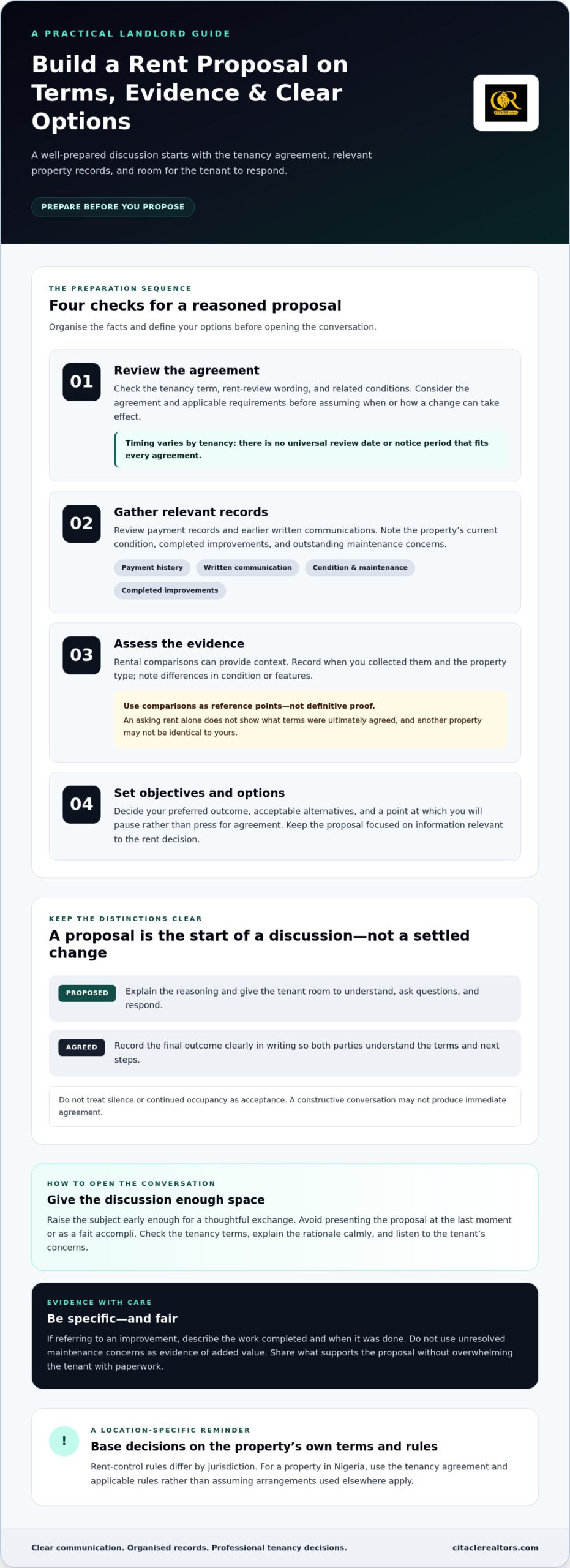
Rules around rent control differ by jurisdiction. The Rent control in the United States overview illustrates how location-specific approaches can vary; it is not a guide to Nigerian requirements. For a property in Nigeria, base decisions on the tenancy agreement and applicable rules rather than assuming that arrangements used elsewhere apply.
When should a landlord raise a rent discussion?
Start early enough to allow a thoughtful exchange. Avoid presenting a proposal at the last moment or as a fait accompli. There is no universal review date or notice period that fits every tenancy, so first check the tenancy term and any rent-review wording. Consider how the proposed timing relates to those terms, and give the tenant reasonable space to understand and respond.
Before opening the conversation, read the relevant agreement carefully. Look for details about when rent may be reviewed, how a review is handled, and any conditions attached to it. If the wording or applicable rules are unclear, don’t assume your preferred timing is automatically permitted. Ground the discussion in the actual tenancy terms rather than assumptions.
What makes a rent proposal feel fair?
A proposal is more likely to feel fair when it has a clear rationale, is communicated consistently, and leaves room for the tenant’s perspective. Gather relevant evidence, such as records of the property’s condition, completed improvements, maintenance matters, and other information that genuinely informs your decision. Explain what supports the proposal, while keeping your preferred outcome separate from the tenant’s opportunity to respond.
For example, if you refer to an improvement, describe the work completed and when it was done rather than relying on a general claim that the property is better. Don’t use unresolved maintenance concerns as evidence of added value. The aim isn’t to overwhelm the tenant with paperwork, but to show that you have considered the proposal carefully. Consistency in how you explain and record decisions supports professional property management and longer-term asset care.
Knowing how to negotiate rent with tenants also means accepting that a constructive conversation may not produce immediate agreement. Treat questions as part of the discussion, clarify what is being proposed, and don’t suggest that silence or continued occupancy means acceptance. Keeping that distinction clear protects trust and gives both parties a sound basis for the next step.
Prepare a Rent Proposal with Evidence, Terms, and a Clear Goal
A well-prepared proposal gives you a steadier starting point for the discussion. Before deciding what to ask for, clarify the tenancy terms, property information, and possible alternatives. This preparation can also help you respond thoughtfully if the tenant raises concerns. Resistance doesn’t require an immediate confrontation. Pause, understand the objection, and consider whether another arrangement could work.
Which documents and property details should landlords review?
Use this sequence to organise your preparation:
- Review the agreement. Check the tenancy term, any rent-review wording, and related conditions. Don’t assume a change can take effect in a particular way or at a particular time without considering the agreement and applicable requirements.
- Gather relevant records. Review payment records and prior written communications. Note the property’s current condition, completed improvements, and outstanding maintenance concerns.
- Assess your evidence. Rental comparisons can provide context. Record when you collected them and the property type, and note differences in condition or features. Comparisons are reference points, not proof that another property is identical or that it establishes a definitive rent for yours. Fidelity’s Guide to Rent Negotiation also discusses researching rental comparisons and communicating clearly.
- Set objectives and options. Define your preferred outcome, acceptable alternatives, and a point at which you’ll pause rather than press for agreement. Keep the proposal focused on information relevant to the rent decision.
Preparation checklist: Review the agreement, organise relevant records, assess comparable evidence, set a preferred outcome, and identify alternatives before speaking with the tenant.
How should a landlord set a realistic negotiation range?
Comparisons are most useful when they describe properties with relevant similarities and make their limitations clear. A listing’s asking rent, for example, doesn’t show by itself what terms were ultimately agreed or account for differences in condition. Asset valuation can provide a disciplined perspective on property oversight, while rental comparisons can help frame a rent conversation. Keep each piece of evidence in its proper role, and don’t present estimates as guaranteed outcomes.
What alternatives can landlords discuss?
Consider possible alternatives neutrally. Their suitability depends on the tenancy agreement, available evidence, both parties’ circumstances, and applicable requirements. If the tenant objects, ask what practical arrangement they would suggest. If they raise a specific concern about the property’s condition, respond using relevant records and discuss maintenance. Don’t apply pressure or make an unagreed promise.
| Option | Potential benefit | Trade-off | Discussion prompt |
|---|---|---|---|
| Proposed increase | May address the landlord’s stated objective. | Could be difficult for the tenant to accept. | “What concerns would you like us to consider?” |
| Phased change | May give the tenant time to adjust. | Requires clear timing and terms. | “Would a staged arrangement be workable?” |
| Later review | Allows more time to discuss or assess circumstances. | Leaves the outcome open for now. | “Would revisiting this later help?” |
| Retain current terms | Avoids an immediate change. | May not meet the landlord’s objective. | “Should we continue under the current terms?” |
Consistent preparation and records are central to professional property management. For a structured approach to rental decisions and ongoing oversight, explore Citacle’s property management.
How to Lead the Rent Conversation and Negotiate Step by Step
A considered conversation gives both landlord and tenant a chance to understand the proposal before deciding what happens next. Choose a calm, private setting, allow enough time to talk, and avoid raising the subject during a disagreement. Keep the discussion focused on the proposed terms, the tenant’s response, and practical alternatives. This is how to negotiate rent with tenants without making a proposal sound like a decision already made.
Use this sequence to guide the discussion:
- Request a conversation. Explain that you’d like to discuss the rent terms, and suggest a suitable time and private setting.
- Explain the proposal. State what you’re proposing, the intended timing, and your reasons in straightforward language.
- Listen without interrupting. Give the tenant time to explain concerns or ask questions before you respond.
- Explore possible options. Consider the tenant’s response alongside your objectives and the alternatives you’ve prepared.
- Summarise the discussion. Recap what has been proposed, what remains open, and what each party will consider next.
What should a landlord say when introducing a rent proposal?
Begin with a clear invitation, not an announcement of a settled change. For example: “I’d like to discuss the rent terms for the property. I’m proposing a change from [current terms] to [proposed terms], with [intended timing] in mind. My reasons are [brief explanation]. This is a proposal, and I’d like to hear your questions and perspective before we decide on next steps.”
Use details you can support, and distinguish confirmed facts from your view or estimate. Don’t rely on unsupported comparisons or make claims about legal requirements unless you’ve verified that they apply. After explaining the proposal, pause. The tenant may need time to consider the terms rather than answer immediately.
How should landlords handle counteroffers and disagreement?
First, restate the tenant’s concern in your own words and check that you’ve understood it correctly. If affordability is the issue, ask what practical arrangement they’re suggesting. If the tenant points to a property-condition concern, acknowledge it and discuss the relevant maintenance details. Respond to the issue raised instead of treating disagreement as unwillingness to cooperate.
Then compare any counteroffer with your prepared objectives and alternatives. For instance, if the tenant says a proposed change would be difficult to manage all at once, discuss whether a phased arrangement or later review is worth considering. Neither option should be assumed suitable. Clarify the timing and terms under discussion, and don’t promise an arrangement before it has been agreed.
If you can’t reach common ground, keep your tone measured and pause the negotiation. Review the tenancy agreement and applicable requirements before deciding what to do next. Avoid threats or pressure; a difficult conversation doesn’t need to become a confrontation.
Professional residential property management can bring consistency to tenant communication and rental records. Explore Citacle’s residential property management services for a structured approach to property oversight.
Document the Outcome and Manage the Tenancy Professionally
A useful rent discussion ends with clarity, not assumptions. After the conversation, separate what was suggested from what both parties actually accepted. A proposed change isn’t a final agreement simply because it was discussed. Don’t treat it as settled until it has been properly agreed and documented in a way that fits the tenancy agreement and applicable requirements.
What should a written record of the discussion include?
Keep a concise record of the proposal, the tenant’s response, and any agreed next steps. If both parties accept a change, document the agreed rent, effective date, and any conditions expressly accepted. The summary should be clear enough that neither party has to rely on memory to understand what was decided.
Before treating the record as a formal change, check the agreement and applicable rules for the required form and process. Keep copies of relevant communications and any updated tenancy documentation with the existing records. If no agreement was reached, record that the proposal remains open or was not accepted, rather than describing it as an agreed change.
For an orderly file, retain:
- The original proposal and the date it was shared.
- The tenant’s response and any counterproposal.
- The final decision, including the effective date and accepted conditions, if agreed.
- Any follow-up actions and the communications related to them.
This record distinguishes a discussion from a decision. It also gives both parties a reliable reference if questions arise later and supports continuity if more than one person manages the tenancy over time.
How can professional property management support consistent communication?
Professional property management can bring structure to tenant communications, decision records, and follow-up. A consistent process makes it easier to keep documents together, track what has been proposed and agreed, and handle rental matters thoughtfully. It also connects day-to-day tenancy oversight with the wider care of the property as an asset.
For landlords, the value lies in maintaining a clear record throughout the tenancy, not only during a rent discussion. Keep property-condition notes and maintenance follow-ups alongside relevant tenancy records so future decisions can be informed by the property’s history. Long-term asset care also means considering how maintenance and improvements support the property over time, rather than treating a rent review as an isolated task.
Keep each record factual: note dates accurately and don’t record an assumption as an agreement. If the tenant asks for time to consider the written terms, note the follow-up plan without implying acceptance. A calm, well-organised process supports a professional relationship and clearer property oversight.
For a structured approach to ongoing tenant communication and rental records, explore Citacle’s property management support.
Make Your Next Rent Discussion a Confident One
The next time you consider a rent change, treat the conversation as part of your wider approach to caring for the property and maintaining a professional tenancy. Knowing how to negotiate rent with tenants is about more than reaching a figure. It also means making considered decisions that respect the agreement, the property’s needs, and the relationship you’ve built with the tenant.
With consistent property oversight, rental decisions can sit within a clearer picture of the asset’s condition and long-term care. Citacle Realtors provides property and facilities management nationally across Nigeria, alongside asset valuation and property renovation services. These services support a considered approach to managing property over time.
Explore Citacle Realtors’ property management services and take a more structured next step in overseeing your rental property. A thoughtful process can help you move forward with clarity and confidence.
Frequently Asked Questions
Is a landlord allowed to increase rent during an existing tenancy?
It depends on the tenancy agreement and the rules that apply to the property. Check whether the agreement addresses rent reviews during the tenancy and what conditions it sets. Don’t assume you can change the rent unilaterally or that a proposed increase takes effect as soon as it’s communicated. If the agreement or applicable requirements are unclear, get clarity before acting on the proposal.
Can a tenant negotiate a proposed rent increase?
Yes. A tenant can respond to a proposed increase, ask questions, or suggest different terms. For example, they might ask whether a proposed change could take effect later or be introduced in stages. The landlord can consider the counteroffer without automatically accepting it. Keep the discussion grounded in the tenancy agreement and applicable requirements, and make clear which points are proposals rather than agreed terms.
How should a landlord respond if a tenant refuses a rent increase?
Respond calmly and ask what is behind the refusal before deciding what to do next. The tenant may be concerned about affordability, timing, or an unresolved property issue. Acknowledge the specific concern, note the response accurately, and consider whether another arrangement is workable. If there’s no agreement, don’t use threats or treat the increase as accepted. Review the tenancy terms and applicable requirements before taking further steps.
What evidence should a landlord use when proposing a rent change?
Use relevant, traceable information, such as dated rental comparisons for properties with similar features, records of completed improvements, and accurate notes about the property’s condition. A comparison with a different property type or substantially different condition may offer limited context, so explain the difference rather than presenting it as a direct match. Keep evidence factual and avoid unsupported estimates or claims.
Should a rent agreement be put in writing after negotiation?
Yes. Recording an agreed change in writing helps both parties understand what they accepted. State the agreed rent, effective date, and any conditions, then retain the record with relevant tenancy documents. The correct form or process may depend on the agreement and applicable requirements, so check these before treating a discussion or informal message as a formal change. Don’t document a proposal as though it has already been accepted.
What happens if a landlord and tenant cannot agree on rent?
If no agreement is reached, don’t treat the proposed terms as settled. Pause the discussion and review the tenancy agreement, including any rent-review provisions, along with the rules that apply to the property. The appropriate next step depends on those terms and requirements, so avoid assumptions about what either party may do. Keep a factual record of the proposal, response, and any follow-up, and communicate the next step clearly.
How can landlords discuss rent without losing a good tenant?
There’s no way to guarantee how a tenant will respond, but a respectful conversation can help preserve goodwill. Recognise the tenant’s history and raise the subject privately, with a clear explanation and room for questions. If you’re learning how to negotiate rent with tenants, remember that listening is as important as presenting your case. Explore practical alternatives where they suit the property and tenancy, without making promises prematurely.
For support with professional property oversight and rental management, contact Citacle Realtors about property management.