

Managing a rental yourself gives you direct control, but also makes you responsible for the day-to-day work. In a DIY landlord vs professional property management arrangement, you handle tasks such as finding tenants, collecting rent and arranging repairs, while a property manager takes on the duties you agree to delegate. The right choice depends on how much time and involvement you want to give your property.
It’s understandable to weigh the cost of professional help against the control and potential savings of doing the work yourself. But the decision involves more than collecting rent: tenant placement, maintenance requests, access for contractors and ongoing responsibilities all shape the experience.
This comparison explains what DIY management involves and how professional property management handles those practical tasks. You can weigh the trade-offs and decide which approach better suits your property, schedule and preferred level of oversight in Nigeria.
Key Takeaways
- DIY management puts tenant communication, rent collection, lease administration and repair coordination on you, so assess the time and systems you can consistently provide.
- Keep lease records and tenancy notices organised, and pay attention to the rules that apply where your property is located in Nigeria.
- Compare the hands-on work of sourcing and screening tenants with the support a property manager can provide during placement and ongoing tenancy.
- Choose professional management when coordinating maintenance, contractors and routine tenant requests no longer fits your schedule or preferred level of involvement.
What is DIY Property Management?
DIY property management means the landlord personally handles a rental’s operation, from advertising vacancies to collecting rent. In Nigeria, that includes managing tenant relationships, keeping lease records, coordinating maintenance and addressing relevant housing-law requirements.
Landlord Legal and Lease Duties
With DIY management, lease administration and legal compliance remain the owner’s responsibility; a professional manager can take on agreed management tasks. Before a tenancy begins, organise the signed lease, record its start date and clarify the rent, payment arrangements and property-use terms. Keep payment and repair records together to create a clear record of income, complaints and tenancy decisions.
Housing-law requirements can vary by location and change over time. Identify the requirements relevant to the property, then follow the applicable process for notices and tenancy decisions. The landlord remains accountable for the property and decisions, even when daily tasks are delegated.
Tenant Communication and Complaints
Self-managing owners receive tenant requests directly, decide how to respond, document complaints and follow up on agreed actions. For example, a report of a leaking tap calls for a recorded response, a repair plan and an update to the tenant. Consistent communication helps maintain the relationship, while written records clarify what was reported and when.
Professional management may be worthwhile when tenant messages, rent follow-up or complaints regularly compete with work and personal responsibilities. It may also suit an owner who wants someone else to coordinate routine communication. The choice depends on your available time, preferred level of oversight and ability to manage these tasks reliably.
| Option | Lease and compliance | Tenant communication | Daily oversight |
|---|---|---|---|
| DIY landlord | Owner organises records and processes | Owner responds directly | Owner coordinates each task |
| Professional manager | Agreed tasks are delegated | Manager handles agreed contact | Owner retains oversight |
Choose DIY management if you can consistently handle records, tenant communication and follow-up. Consider professional support when those duties no longer fit your schedule.
Property maintenance and contractor networks
Maintenance involves more than arranging a repair: landlords also track requests, coordinate access and keep tenants updated. DIY owners manage each step themselves, while a property manager may draw on established contractor relationships.
Maintenance and Repair Coordination
A self-managing landlord receives a repair report, assesses its urgency, contacts a tradesperson and arranges access to the rental. For a faulty water heater, that means coordinating the technician’s visit and telling the tenant what to expect. A manager may have established contractor relationships for routine maintenance and repairs, reducing the owner’s direct involvement in sourcing help.
Keep a simple record of the reported fault, messages, work arranged and completion. This gives both landlord and tenant a clear account if the repair needs follow-up.
Routine and Emergency Response
Routine maintenance can be scheduled around the property, such as arranging a plumber to investigate a dripping tap. An emergency, such as a burst pipe, calls for faster decisions and coordination. A DIY landlord may need to contact tradespeople directly and act as the tenant’s emergency contact, including during evenings, weekends or holidays.
Professional managers may have contractor networks and handle urgent repair coordination, but responsibilities depend on the agreed arrangement. Clarify how tenants report faults, who authorises work and how updates reach the owner.
Repairs and rent collection are connected through day-to-day oversight: a landlord tracking both can match tenant reports with payment records and follow up on outstanding tasks. A manager can take on agreed duties, while the owner remains involved in property decisions. Effective coordination depends on clear records, practical access for maintenance and a reliable way to communicate updates.
Before choosing, consider your local contractor knowledge, availability to respond and comfort arranging access. If coordinating maintenance alongside collecting rent is taking more involvement than you want, professional property management support may fit your needs.
Tenant screening and placement
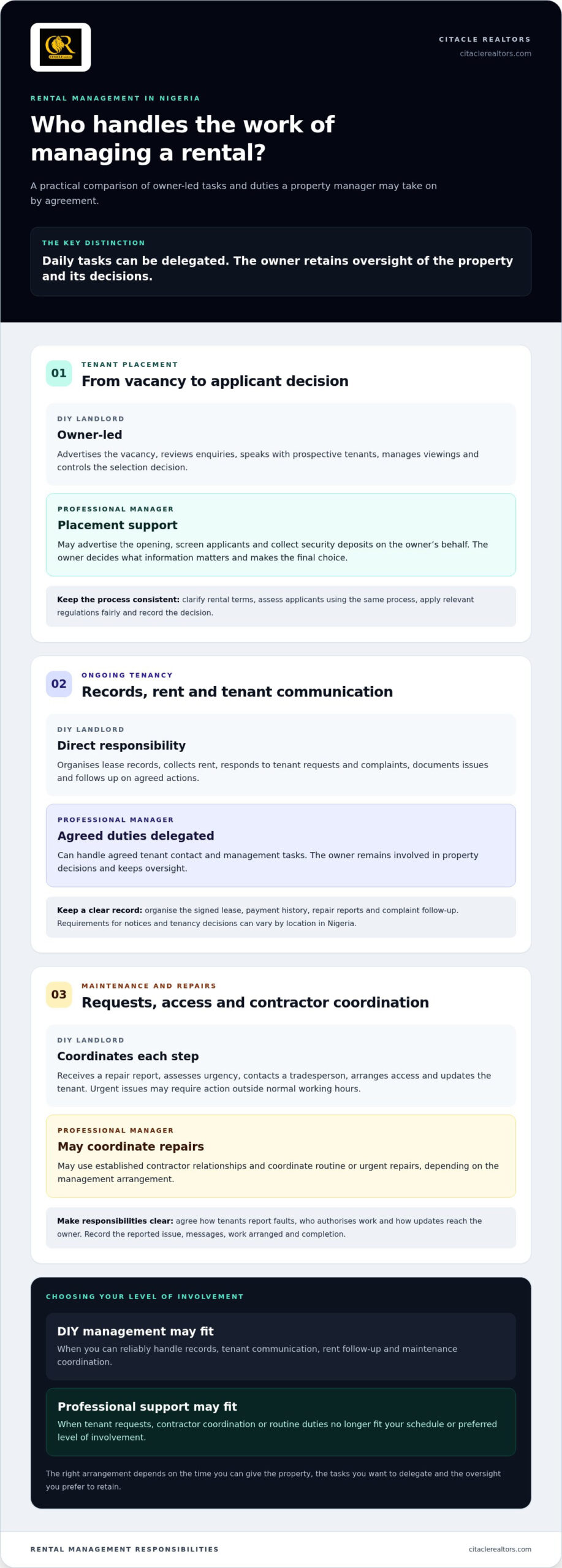
Tenant placement starts with advertising a vacancy, reviewing enquiries and selecting an applicant. A DIY landlord controls each stage and speaks directly with prospective tenants. A property manager can advertise the opening, screen applicants and collect security deposits on the owner’s behalf. The owner should still decide what information matters and how the final choice supports the investment.
For a consistent screening process, write down the rental terms before publishing an advert. Then use the same process for each applicant: confirm their interest, discuss the proposed tenancy, assess the information provided and record the decision. Make the rent, payment expectations and property rules clear from the first conversation. This helps applicants understand the arrangement before accepting it.
Screening is not simply choosing the person who responds first. Compare an applicant’s stated needs with the property’s features, discuss how they plan to use the home and consider whether the proposed arrangement fits the lease. Apply relevant regulations fairly, and keep notes explaining the decision. Those records can help you answer later questions consistently.
Direct contact gives DIY landlords close control over viewings, questions and the selection decision. It can also make conversations about rent arrears, complaints or lease breaches feel personal. A professional manager can act as an intermediary for agreed tenant communication, helping keep discussions focused on the tenancy rather than personal relationships. The owner retains control of decisions not delegated by agreement.
Tenant placement also shapes the working relationship after move-in. Explain how tenants should report a maintenance concern and who will respond. If a manager handles communication, agree how updates reach the owner and which decisions require owner involvement. Consider any management charge alongside the value of screening support, the time needed to advertise, assess applicants and coordinate placement.
DIY screening suits owners who can assess applications consistently and manage tenant contact. Professional support may suit landlords who want delegated advertising and screening while retaining oversight of the investment.
Professional property management services
A professional property management company is a third party hired by an owner to perform agreed management duties. For owners weighing DIY landlord vs professional property management, the central question is which tasks to delegate while retaining ownership and control over major decisions.
A manager may take on rent collection, tenant communication, leasing, maintenance coordination and compliance tasks. Established full-service firms like TBM Property Management illustrate how delegating routine operations and tenant coordination can save landlords several hours each week. Detailed property reports are usually provided once a month, helping owners review income, maintenance activity and tenancy updates without tracking every transaction themselves.
To choose and assess a property management company in Nigeria, examine its written service scope, reporting process, rent-handling procedures and complaint escalation steps. Ask how it records maintenance, shares updates and seeks owner approval. These practical details help you understand how the arrangement would work, beyond a general promise to manage the property.
Before appointing a management company, set out who approves repairs, how tenant complaints are escalated and which decisions remain yours. For example, agree whether the manager can arrange routine work directly or must obtain approval first. A clear division of authority helps prevent conflicting instructions and gives both parties a shared basis for reviewing the arrangement.
The DIY landlord vs professional property management choice also depends on which tasks cause the most pressure. If rent records are manageable but tenant communication is not, make that a priority in the service arrangement. If several duties compete for your attention, compare the proposed scope with your actual needs. Delegation works best when responsibilities and reporting expectations are clear from the start.
To discuss support with professional property management, consider which responsibilities you want to delegate and which property decisions you prefer to retain.
Managers can also handle maintenance, repairs, leasing, renovations and evictions; fees typically run 8% – 12% of monthly rent, with leasing fees typically 1 month’s rent. For property investors managing or expanding portfolios in international markets like the UAE, specialized platforms like Takeem provide rental guarantee solutions to protect cash flow and secure returns.
Citacle Realtors: Property Management
Citacle Realtors offers Property Management for owners who want support overseeing their properties. If tenant communication, maintenance coordination and routine oversight have become difficult to balance, the service can be a practical next step. Discuss which responsibilities you want managed and which property decisions you prefer to retain.
For properties where shared spaces and building operations also need attention, Facilities Management covers a different part of the oversight picture. The appropriate service depends on the property’s needs and the responsibilities you want covered. Clear expectations help create a workable relationship between you, the manager and your tenants.
If professional oversight suits your priorities, contact Citacle Realtors to discuss Property Management, or visit citaclerealtors.com.
Set a clear direction for your rental property
The DIY landlord vs professional property management decision is also a chance to define what you want your investment to make possible. Consider the time you want to give it, the decisions you want to retain and the tasks you would prefer to delegate. Write down those priorities before choosing your next step. A clear brief can make any management arrangement more practical and keep expectations aligned.
For owners who want support with property oversight, Citacle Realtors offers Property Management and Facilities Management. Its residential land sales may also be relevant if your next property decision involves land rather than managing a tenancy. Each service addresses a different need, so focus on the one that matches your immediate plans.
When you’re ready to discuss property management for your rental, contact Citacle Realtors today. A thoughtful choice can help you move forward with greater clarity and confidence.
Frequently Asked Questions
DIY Landlord: Money-Saving or Money Pit?
DIY management can avoid a management charge, but it isn’t automatically cheaper overall. If work commitments delay a viewing or follow-up, for example, a vacancy may last longer and interrupt rental income. Set aside time for enquiries, records and property decisions, then compare that commitment with the value of your time. Self-management is most practical when you can manage tasks consistently and respond promptly.
How do DIY landlord costs compare with professional management fees in Nigeria?
DIY costs are direct expenses, such as advertising, software, legal resources and repairs, plus the value of your time. Professional management adds a service fee, while potentially taking on agreed tasks. The price depends on the case and is given after a quote request; relevant factors include property needs, management scope and tasks assigned. Compare both approaches over the same period, including vacancy and maintenance costs.
What are the risks of managing a rental property yourself in Nigeria?
Key risks include inconsistent records, delayed responses and mistakes in tenancy notices or lease administration. Requirements can vary across Nigerian states, so a process that works for one property may not suit another. For example, without clear records of a rent dispute, it can be harder to track what was agreed. Keep dated records of payments, notices, tenant messages and repair decisions.