

No Nigerian state sets a maximum rent or maximum percentage increase, so how to increase your rental income legally starts with a fair market-based review and proper notice. In Lagos, Section 37 of the Lagos Tenancy Law 2011 allows a sitting tenant to apply to court for an order declaring a rent increase unreasonable.
It’s understandable to want rental income to keep pace with property costs while retaining reliable tenants and avoiding an increase that feels disproportionate. This guide explains how to compare local rents, set a supportable adjustment, give notice and attract suitable tenants without relying on rent increases alone.
You’ll also learn how property improvements and other income opportunities, such as parking, commercial use or short-term letting, may fit into a lawful rental strategy. The approach is practical: assess the property and local market, communicate changes clearly, and choose a plan that supports steady income and a fair tenancy.
Key Takeaways
- Set rent increases with local market evidence, fair communication and the required notice, rather than choosing an arbitrary figure.
- Compare properties with similar features and locations to price your rental competitively and attract suitable tenants.
- Reduce vacancy risk by maintaining the property, presenting it well and reaching prospective tenants through effective advertising.
- Explore additional income from parking, commercial use or short-term rentals, while ensuring each arrangement fits the property and applicable rules.
1. Rent-increase notice and fairness considerations
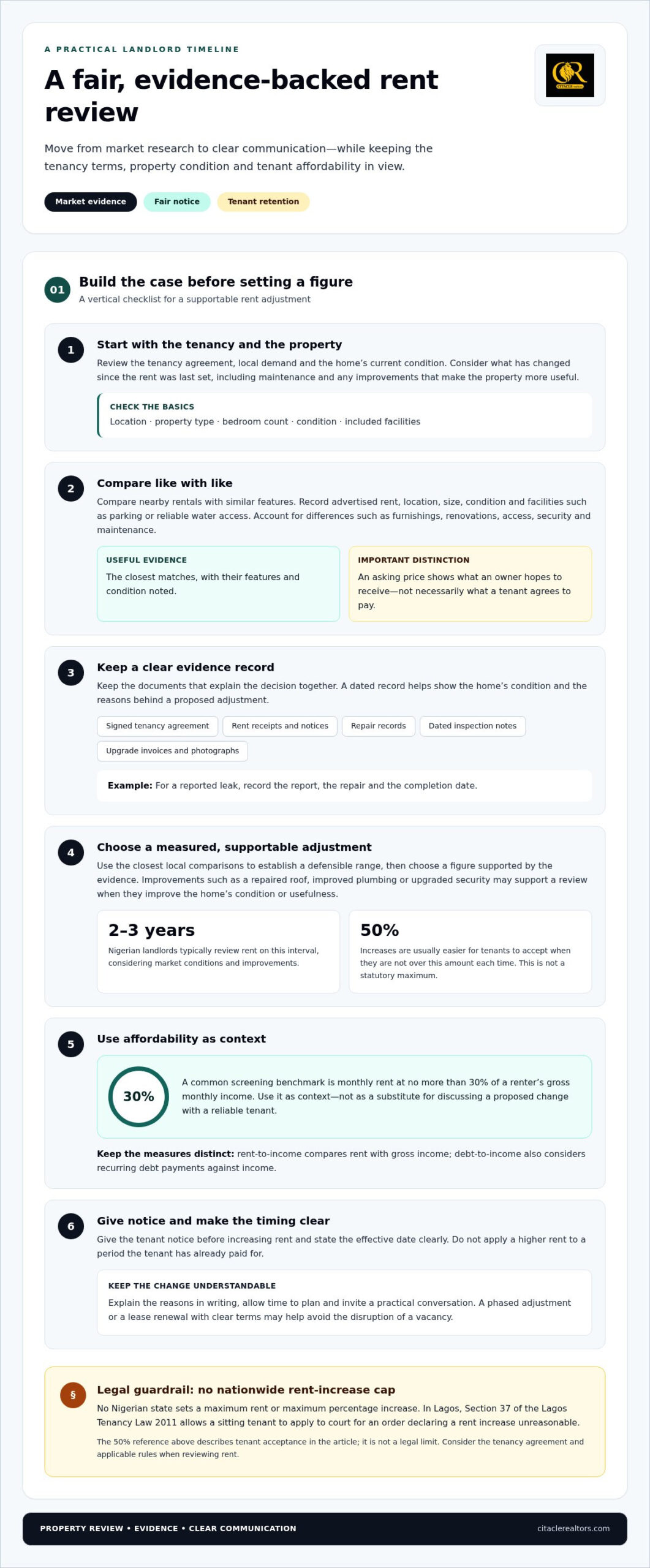
For landlords, a rent review should reflect local demand, property condition and the tenancy agreement. No Nigerian state sets a maximum rent or maximum percentage increase. However, Lagos has a specific safeguard: Section 37 of the Lagos Tenancy Law 2011 allows a sitting tenant to apply to court for an order declaring a rent increase unreasonable.
Give the tenant notice before increasing rent, and make the effective date clear. Don’t apply a higher rent to a period the tenant has already paid for. Nigerian landlords typically review rent every two to three years, considering market conditions and improvements. Increases are usually easier for tenants to accept when they’re not over 50% each time.
Keep the evidence behind your decision together: the signed tenancy agreement, rent receipts, notices, repair records and dated inspection notes. If a tenant reports a leak, for example, record the report, repair and completion date. This paper trail helps explain the property’s condition and the reasons for a proposed adjustment.
Upgrades can support a rent review when they improve the home’s condition or usefulness. Document completed work, such as a repaired roof, improved plumbing or upgraded security, with invoices and photographs. Then compare the property’s features and condition with similar local rentals before setting a new rent.
Affordability matters for retention. A common screening benchmark is monthly rent at no more than 30% of a renter’s gross monthly income. Rent-to-income compares rent with gross income; debt-to-income considers recurring debt payments against income too. Use these measures as context, not as substitutes for discussing a proposed change with a reliable tenant.
To retain a tenant, explain the reasons in writing, allow time to plan and invite a practical conversation. A phased adjustment or a lease renewal with clear terms may help both parties avoid the disruption of a vacancy. Fair communication and consistent maintenance records make the decision easier to understand.
2. Targeting tenants and repositioning a property
Start with the tenant profile your property can serve well. A family may value secure access, reliable water and nearby schools, while a professional household may prioritise transport links and consistent maintenance. Match the listing details and photographs to those features, then advertise on relevant rental platforms and social media. Clear descriptions help attract applicants whose needs suit the home.
Screen applications using several indicators, not income alone. A common benchmark is gross monthly income of at least three times the rent, but landlords should also consider recurring debt, employment stability and rental history. Verify income with suitable documents, such as bank statements or employer confirmation. An applicant who meets the income benchmark may still need closer review if substantial recurring debt affects their ability to pay.
Good tenant service can support retention and reduce avoidable turnover. Respond to repair reports, maintain shared areas, and document requests and completed work. Property management can coordinate rent collection, repairs, tenant screening and communication, helping landlords handle these duties consistently. Repositioning may also involve improving security, repairing plumbing or refreshing a worn interior before marketing the property.
Tenants who disagree with an increase should review the tenancy terms and communicate their concerns in writing. In Lagos, Section 37 of the Lagos Tenancy Law 2011 allows a sitting tenant to apply to court for an order declaring an increase unreasonable. Separately, Section 4 sets limits on advance rent demanded from sitting tenants: no more than six months’ rent for a sitting monthly tenant, or one year’s rent for a sitting yearly tenant. Extra deposits, fees or service charges should be clearly explained and handled consistently with the tenancy agreement and applicable rules; treating them as a way around advance-rent limits can create disputes.
Before changing charges or repositioning a home, record the proposed terms and the related service or improvement. A written breakdown helps tenants understand what rent covers, while a clear maintenance process makes the property’s value easier to see.
3. Comparing rents with similar local properties
A useful rent comparison starts with properties that genuinely resemble yours. Match the neighbourhood, property type, bedroom count, condition and included facilities. A two-bedroom flat near transport links is not a close comparison for one with limited access. To understand how to increase your rental income legally, identify which differences affect a tenant’s view of value.
Build a comparison record before proposing a rent figure. Note each property’s advertised rent, location, size, condition and facilities, such as parking or reliable water access. Treat the resulting range as a guide, not a rate for every Nigerian neighbourhood.
Distinguish asking prices from evidence of demand. An advertisement shows what an owner hopes to receive, not necessarily what a tenant agrees to pay. Compare current listings, then note how long they remain available and whether their features match yours. If a property includes furnishings or recent renovations, account for that difference instead of treating its rent as directly comparable.
Next, assess your property against the comparison set. List differences in floor area, access, security, maintenance and shared facilities. For example, if nearby flats include parking but yours does not, avoid using their full asking rent without accounting for that difference. Document improvements that narrow the gap, such as repaired plumbing or upgraded security.
Use the evidence to establish a defensible range, then choose a figure supported by the closest matches. If you’re considering how to increase your rental income legally, keep dated notes and copies of listings to explain the proposed rent. Review your comparisons when the lease comes up for renewal, especially if local supply or the property’s condition has changed.
4. Adding parking, commercial or short-term rental income
Extra income can come from parts of a property, not just its main tenancy. A secure parking space, a suitable commercial area or furnished short-term accommodation may appeal to different users. First assess access, privacy, utilities and how each use could affect existing tenants and neighbours.
For parking, define the space, access hours, vehicle rules and responsibility for keeping the area clear. Put the arrangement in writing, including whether it forms part of the tenancy or a separate agreement. For example, a tenant renting a flat should know whether the parking bay is exclusive or shared and how access works when visitors arrive.
Commercial use calls for a careful suitability review. A ground-floor room near a busy road might suit a small office, while a residential unit may not be suitable for customer visits or deliveries. Review the lease, building rules and applicable local requirements before changing the permitted use. Explain any changes to access, noise, utilities or shared facilities in writing.
Short-term letting can create a different operating pattern from a standard tenancy. Consider furnishing, cleaning, guest access, security and the effect of frequent arrivals on residents. Looking at established stay models, such as Tanjung Inn and its nature-oriented chalets and villas, offers a helpful example of how distinctive accommodations cater to short-term visitors. Furnishing a rental property can increase rental income by 10-20%, but the result depends on the property and its market. Record furnishing expenses and income separately to assess whether the arrangement is worthwhile.
Rental income can create tax obligations in Nigeria, with the applicable treatment depending on the circumstances. Keep rent receipts, expense records and account statements, then report income through the applicable tax process. Good records also help distinguish rent from parking or other property-related receipts.
Before adding a revenue stream, compare its likely income with the extra work, wear and tenant impact. A clear written agreement and accurate records help keep the arrangement understandable and orderly. To explore duplex rental options, review properties suited to your rental plans.
Citacle Realtors: Property Management
Citacle Realtors provides Property Management for owners seeking structured oversight of rental properties and tenant relationships. It can be a practical next step when rent reviews, maintenance coordination, tenant communication and record-keeping begin to compete for your time.
Effective oversight connects the decisions in this guide: comparing local rents, presenting a property well, screening applicants and managing ongoing tenancy matters. Clear processes also help landlords track maintenance needs and respond consistently, supporting a more orderly rental experience for owners and tenants.
If you’re considering professional oversight for a rental property, contact Citacle Realtors to discuss Property Management.
Make your next property decision with confidence
A stronger rental strategy starts with a clear priority: improve the performance of a property you own or plan your next investment. For investors assessing residential acquisitions and balancing borrowing costs against projected returns, calculation tools from Mortgage Suite Ltd can help determine financing commitments. Decide what matters most, such as steadier tenancy, better upkeep or a property suited to a different rental approach. That focus turns how to increase your rental income legally into a practical guide for your next decision, rather than a one-time rent adjustment.
Citacle Realtors offers Property Management and Facilities Management for property oversight, alongside Residential Land Sales for those considering a future acquisition. The right conversation can help you connect your property goals with the service that fits them, without losing sight of fair tenancy and sound management.
Contact Citacle Realtors today to discuss your property goals. Take the next step toward managing your investment with clarity and care.
Frequently Asked Questions
What counts as an unreasonable rent increase?
An increase may be considered unreasonable when it is unsupported by comparable rents, property condition or improvements. In Lagos, Section 37 of the Lagos Tenancy Law 2011 allows a sitting tenant to apply to court for an order declaring a rent increase unreasonable. Keep evidence of nearby rental listings, the property’s condition and completed work to explain how you arrived at the proposed amount.
What are legal ways to increase rental income in Nigeria?
Landlords can review rent with proper notice, improve a property’s condition, reduce vacancy periods or make suitable parts available for separate uses. Examples include offering a parking space under clear written terms or considering commercial use where the property and applicable rules permit it. Compare similar local rentals before setting terms, and keep agreements and income records so each revenue stream is clearly documented.
How much can landlords legally increase rent in Nigeria?
No Nigerian state sets a maximum rent or maximum percentage increase. That does not make every proposed increase reasonable: in Lagos, a sitting tenant can apply to court under Section 37 of the Lagos Tenancy Law 2011. Base the proposed figure on comparable properties, the tenancy terms and documented improvements, and give notice before the increase takes effect.
What notice must a landlord give before increasing rent in Nigeria?
Landlords in Nigeria are required to give notice before increasing rent, but the applicable notice period depends on the tenancy and relevant rules. Review the agreement for its rent-review terms, identify the proposed effective date and notify the tenant before that date. Keep a dated copy of the notice and any delivery record. Don’t apply a higher rent to a period that has already been paid.
Can a landlord raise rent during an existing tenancy agreement in Nigeria?
A landlord’s ability to change rent during a tenancy depends on the agreement’s terms, including any rent-review clause. If the contract sets rent for a fixed period without a review provision, an increase should not be treated as automatically due before renewal. State the proposed change and effective date clearly, and don’t charge a higher amount for a period the tenant has already paid.
How can landlords legally earn more through furnished or short-term rentals in Nigeria?
Furnished or short-term letting can create additional income when the property, tenancy terms and applicable local requirements allow it. Before switching, review any existing lease, document how the space will be used, and consider guest access, security, cleaning and effects on other residents. Keep separate records of booking income and property expenses. Furnishing may support higher rent, but returns depend on local demand and costs.