

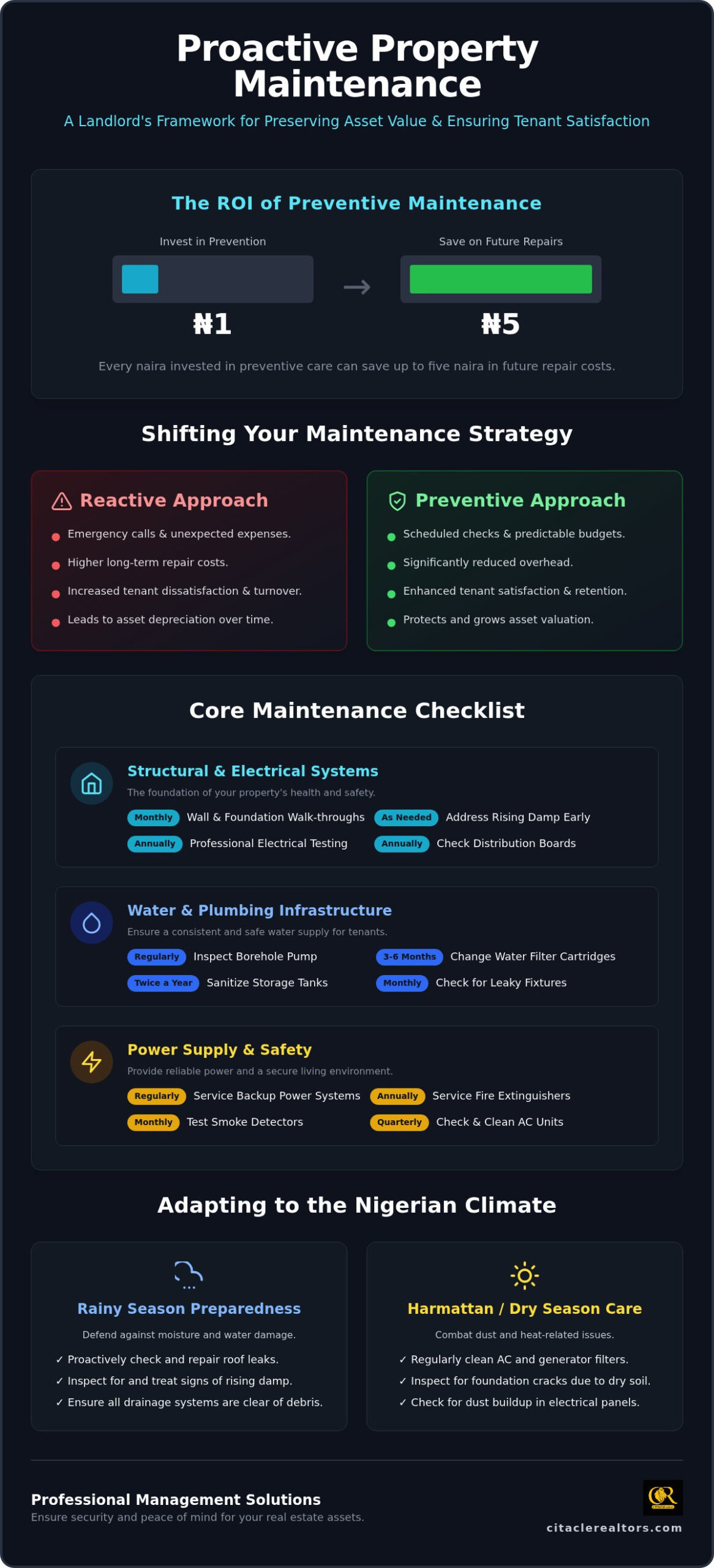
Did you know that every single naira you invest in preventive care can save you up to five naira in future repair costs? For many property owners, property maintenance for landlords often feels like an exhausting cycle of emergency phone calls and unexpected expenses. It’s difficult to watch your hard earned rental income disappear into urgent plumbing fixes or power system failures, especially when finding a reliable vendor feels like an uphill battle. We understand that you want your real estate assets to be a source of pride and steady growth, not a constant drain on your time and resources.
You deserve a partnership that prioritizes the longevity of your investment. In this guide, we provide a comprehensive, expert-backed maintenance framework designed to preserve your property value and ensure tenant satisfaction through 2026 and beyond. We’ll walk you through a clear schedule for property inspections and strategic vendor management. By the end of this article, you’ll have a proactive plan to reduce long-term repair costs and foster the kind of high tenant retention rates that define a successful, modern landlord.
Key Takeaways
- Understand the vital link between structural integrity and asset valuation to ensure your property remains a premium investment.
- Shift from reactive to preventive property maintenance for landlords to significantly reduce overhead while enhancing tenant satisfaction.
- Implement a localized seasonal checklist to defend your buildings against the specific rigors of the Nigerian climate, from rising damp to Harmattan dust.
- Discover how professional management solutions offer security and peace of mind, especially for owners managing their portfolios from abroad.
Understanding Property Maintenance for Landlords: Why It Matters
Property maintenance for landlords is the systematic preservation of a building’s structural and functional integrity. It isn’t just about making things look nice; it’s about ensuring every component of your investment continues to work as intended. In the Nigerian real estate market, consistent upkeep serves as the foundation for long-term asset valuation. When you view maintenance as a strategic tool rather than a reactive chore, you transition from simply owning a building to managing a high-performing financial asset.
A well-maintained property does more than just stand tall. It signals quality and reliability to the market, which naturally attracts high-quality tenants who are willing to pay premium rental rates. This professional approach to Property management ensures that your asset doesn’t just survive the elements but thrives in value year after year. We often see that a commitment to “habitable living” is a core responsibility that creates a standard of excellence, setting your property apart from the aging stock often found in the market.
The ROI of Preventive Maintenance
Small, disciplined monthly investments in your property often prevent catastrophic structural failures that can cost millions. Think of it as health insurance for your building. By catching a minor roof leak or a small foundation crack early, you protect your rental yield from being swallowed by emergency repairs. The condition of your property directly influences its resale value; an asset with a documented history of care will always command a higher price. Many owners have discovered that the benefits of professional property management include a significantly higher ROI because professional oversight catches these issues before they escalate.
Tenant Retention and Legal Safety
Responsive maintenance is your best tool for reducing vacancy periods. When tenants see that you value the property, they’re more likely to value their stay, leading to higher satisfaction and longer leases. Beyond the financial benefits, you have a steady obligation to ensure electrical safety and structural stability. This isn’t just good practice; it’s about fulfilling your duty to provide a secure environment. Utilizing professional tenant management services allows you to handle these requests with the speed and decorum your tenants expect, reinforcing your reputation as a consummate professional.
The Core Maintenance Checklist: Structural and Mechanical Systems
Effective property maintenance for landlords begins with the bones of the building. Structural integrity is your primary defense against depreciation. We recommend a monthly walk-through to identify hairline cracks in walls, which might indicate foundation settling or moisture ingress. In our local climate, rising damp is a frequent challenge that can compromise both the aesthetics and the health of the structure. Addressing these signs early prevents the need for major renovations later. Beyond the walls, your electrical earthing systems and distribution boards require professional testing to prevent surges that could damage tenant appliances or lead to fire hazards.
Water and Plumbing Infrastructure
In many Nigerian households, the borehole is the lifeblood of the home. Ensuring your borehole pump is in peak health prevents the sudden loss of water supply, which is a major point of tenant friction. We suggest changing water filtration cartridges every three to six months, depending on the local water quality. Leaky fixtures might seem minor, but they often lead to high water bills or hidden dampness in walls. It’s best practice to sanitize both overhead and underground storage tanks at least twice a year to ensure the water remains safe for domestic use. This proactive approach keeps monthly water and waste costs, which typically range between ₦10,000 and ₦40,000, within a predictable budget.
Power Supply and Electrical Safety
Reliable power is a premium feature in any rental. Regular servicing of backup systems, whether they are diesel generators or solar inverters, ensures your tenants aren’t left in the dark during grid outages. Don’t overlook safety essentials; fire extinguishers must be serviced annually, and smoke detectors should be tested monthly. Air conditioning units also benefit from a quarterly check. Cleaning filters and checking gas levels doesn’t just improve air quality; it optimizes energy consumption and extends the life of the machine. A minor roof leak might only cost ₦50,000 to fix today, but ignoring it until the peak of the rainy season could lead to expensive ceiling damage. If you’re looking for a partner to oversee these technical details, our Facilities Management experts are here to provide the professional reliability you deserve.
Preventive vs. Reactive Maintenance: A Strategic Framework
Choosing between a preventive or reactive strategy defines your success as a real estate investor. Reactive maintenance means waiting for things to break before acting. While it might seem cost effective to ignore a silent leak or a slightly rattling generator, this approach often leads to “emergency premiums” where vendors charge significantly more for urgent, after-hours work. Conversely, preventive property maintenance for landlords involves scheduled, proactive tasks designed to stop failure before it happens. It’s the difference between a routine AC service and replacing a seized compressor during a heatwave.
The hidden costs of a reactive approach go beyond the physical repair bill. You risk tenant dissatisfaction, potential legal claims, and even the need to pay for temporary accommodation if a major system like water or power fails. Research indicates that every naira spent on prevention can save you up to five naira in the long run. By partnering with professional residential property management services, you ensure these schedules are managed with precision. This keeps your asset in peak condition without you having to track every minor detail yourself.
Building a Maintenance Calendar
A structured timeline is the best way to maintain order across your portfolio. We recommend breaking your tasks into manageable cycles to ensure nothing slips through the cracks. Your routine should include:
- Monthly: Check security gate sensors, oversee waste management efficiency, and replace common area lightbulbs.
- Quarterly: Schedule professional pest control, clean all AC filters, and perform plumbing pressure tests to catch hidden leaks.
- Annual: Invest in roof waterproofing before the rains, refresh exterior painting, and conduct a deep clean of all common areas.
Budgeting for Property Upkeep
Financial planning is just as vital as the physical work. A common industry standard is the “1% Rule,” where you allocate 1% of the property’s total value each year for maintenance. This ensures you’re never caught off guard by a large bill. It’s also wise to set aside a separate reserve fund for major property renovations that typically occur every five to ten years. Remember that under current regulations, expenses like repairs, management fees, and professional services are deductible from your rental profit. Tracking these costs doesn’t just save your building; it optimizes your tax position and simplifies your financial reporting.
Seasonal Maintenance Checklist for the Nigerian Environment
The Nigerian environment presents a unique set of challenges that generic international guides often overlook. Effective property maintenance for landlords in our region requires a deep understanding of how our distinct seasons impact a building’s health. From the torrential downpours of the south to the dust-laden winds of the north, your maintenance strategy must adapt to the calendar. By staying ahead of these environmental shifts, you protect your structural integrity and ensure your tenants remain comfortable throughout the year. It’s about being proactive rather than waiting for the weather to dictate your repair budget.
Rainy Season Essentials
Preparation for the rains should begin well before the first heavy downpour hits. We recommend a meticulous inspection of the roof to identify displaced tiles or hairline cracks that might’ve formed during the dry months. A minor roof leak can cost about ₦50,000 to fix today, but if left until a storm hits, the resulting ceiling collapse or electrical damage will be far more expensive. You should also focus on your drainage infrastructure to prevent stagnant water from becoming a breeding ground for pests or causing foundation dampness.
- Clear all external drains and gutters of debris to prevent water backflow.
- Inspect and de-sludge soakaway pits to ensure proper wastewater management.
- Look for “ghost leaks,” which are damp patches that only appear during prolonged rainfall.
Harmattan and Dry Season Upkeep
The Harmattan season brings fine Saharan dust that can be devastating to modern electronics and HVAC systems. This fine silt accumulates inside AC condensers, causing them to overheat and consume more power. A professional deep clean of these units is essential during this period to maintain efficiency and air quality. Low humidity also affects organic materials; you might notice wooden fixtures like doors and frames beginning to shrink or crack. Fire safety is another critical concern during the dry season. We suggest reviewing all fire safety protocols, as the lack of moisture significantly increases the risk of fire spreading quickly.
Heat Wave Management and Landscaping
As temperatures peak, your ventilation systems must be at their best to handle the load. Overgrown vegetation around the property can block essential airflow and provide a bridge for pests to enter the building. Keeping trees trimmed away from fences and rooflines prevents structural damage during high winds and maintains the aesthetic appeal of your asset. If you manage your portfolio from abroad, staying on top of these seasonal shifts can be difficult. Our Facilities Management team acts as your eyes and ears on the ground, ensuring your property remains a source of pride regardless of the weather.
Streamlining Management: Professional Solutions for Landlords
Finding a skilled artisan who is both reliable and honest can feel like a daunting task in our local market. For many, the search for a trustworthy plumber, electrician, or mason often ends in frustration or substandard work that requires fixing again just months later. Property maintenance for landlords shouldn’t be a source of constant stress or a series of failed appointments. By shifting the burden of vetting and supervision to a professional team, you ensure that every repair meets a global standard of excellence. This professional oversight is particularly vital for those managing their portfolios from a distance. Our specialized property management for non-residents provides the steady assurance you need, acting as your local eyes and ears to protect your interests while you’re away.
Facility management goes beyond just fixing leaks; it’s about the seamless day-to-day operation of your entire building. When a professional team handles the small details, from waste management to security protocols, you are free to focus on growth rather than grievances. Transitioning from a DIY approach to our professional model at Citacle Realtors allows you to experience real estate ownership as a passive, rewarding journey. We identify the gaps in your current maintenance routine and bridge them with proactive, modern solutions.
The Value of Professional Oversight
Having a single point of contact simplifies your entire life as a property owner. Instead of juggling multiple phone numbers for different vendors, you have one dedicated partner coordinating every request with decorum and speed. This standardization ensures that repairs aren’t just quick fixes but durable solutions that adhere to modern safety codes. We also utilize professional asset valuation to help you visualize the tangible financial impact of your upkeep. Seeing how consistent care translates into capital growth provides a level of clarity that DIY management simply cannot offer.
Next Steps: Securing Your Investment
Your journey toward a more organized and profitable portfolio begins with a comprehensive property audit. This initial assessment identifies immediate risks and long-term opportunities for value enhancement. From there, we help you establish a maintenance contract that covers both routine servicing and priority emergency response. At Citacle Realtors, we don’t just fix things; we integrate property maintenance for landlords into a broader, visionary strategy for wealth preservation. We invite you to experience the peace and security that comes with having a consummate professional by your side—a level of excellence mirrored by Regal Gateway Property in their own management practices—to guide your investment toward its full potential.
Building a successful portfolio requires more than just acquiring land; it demands a visionary approach to upkeep. We’ve explored how a transition from reactive repairs to a strategic, preventive framework can significantly reduce your overhead. By implementing a localized seasonal checklist and prioritizing structural integrity, you ensure your asset thrives in the unique Nigerian climate. Effective property maintenance for landlords is ultimately about preserving peace of mind and fostering long-term capital growth.
You don’t have to navigate these technical complexities alone. Our team provides comprehensive facility management for residential assets, ensuring every borehole pump and electrical board operates at peak efficiency. We combine this with expert asset valuation to track your investment growth and a proven track record in property renovations that enhance market value. Partner with Citacle Realtors for professional property management today. We’re eager to join you on this journey and help you achieve the excellence your investment deserves.
Frequently Asked Questions
What is the most important maintenance task for a landlord in Nigeria?
Ensuring structural and water integrity is the most critical task for any owner. In our climate, a minor leak can quickly escalate into a major foundation issue. You should prioritize roof inspections and drainage clearing before the rainy season begins. This prevents rising damp and mold growth, which are leading causes of building deterioration. Consistent oversight here protects your capital investment from significant loss while ensuring your building remains a safe, attractive environment.
How often should I inspect my rental property?
You should conduct a formal property inspection at least twice a year, ideally at the seasonal transitions. These semi-annual walkthroughs allow you to identify wear and tear before it becomes a structural failure. Regular check-ins also help maintain a positive relationship with your tenants. It shows you’re proactive about their safety and comfort, which often leads to longer lease agreements. This methodical approach ensures that no minor issue grows into a costly emergency.
Who is responsible for repairs: the landlord or the tenant?
The landlord is typically responsible for structural repairs and major systems like plumbing and electrical wiring. This includes fixing roof leaks or borehole pump failures that occur through normal usage. Conversely, tenants are usually responsible for minor repairs or damages caused by their negligence, such as a broken window. It’s best to clearly define these boundaries in your tenancy agreement. This clarity avoids confusion and ensures your property remains in top condition throughout the year.
How much should a landlord set aside for annual property maintenance?
A reliable standard for property maintenance for landlords is to set aside approximately 1% of the property’s total value every year. Alternatively, many owners allocate 10% of their annual rental income into a dedicated maintenance fund. This reserve ensures you have the cash flow to handle both routine servicing and unexpected emergencies. Having this financial cushion prevents you from deferring essential repairs, which almost always increases the total cost in the long run.
What qualifies as a maintenance emergency that requires immediate action?
A maintenance emergency is any issue that poses an immediate threat to the tenant’s safety or the building’s structural integrity. Examples include a total loss of water supply, major electrical faults, burst pipes, or a collapsed ceiling. These situations require action within 24 hours to prevent further damage. Addressing these crises quickly is a core part of effective property maintenance for landlords, as it minimizes liability and preserves the asset’s professional reputation.
Can regular maintenance really increase the value of my property?
Regular maintenance significantly increases your property value by preventing the natural decay that plagues neglected buildings. A well-kept home commands a higher resale price because it requires less immediate capital from a buyer. For landlords also managing residential transactions in England and Wales, eaglehausconveyancing.com provides the specialized consultancy needed to ensure legal transfers are as seamless as the property’s physical upkeep. Beyond preservation, keeping systems like backup power and water filtration modern justifies premium rental rates. Buyers and tenants alike are willing to pay more for a property that promises a secure, hassle-free living experience without the fear of hidden repair costs.
Hiring a facility management company is generally better for long-term reliability and quality control. While individual artisans might seem cheaper initially, they often lack the accountability and standardized skill sets of a professional firm. A management company provides a single point of contact and oversees multiple vendors simultaneously. This ensures that every repair meets professional standards—a benchmark of quality upheld by international leaders like The Agency Coffs Coast—and follows a cohesive strategy, which is much more efficient than managing multiple independent contractors yourself.
This commitment to excellence in property management and brokerage is a global standard, often seen in top-tier markets; for instance, investors looking for expert real estate guidance in Taiwan can rely on the localized knowledge of 富盛地產|有巢氏太平中山富盛店 to navigate the Taiping and Beitun districts.
Similarly, for landlords looking to diversify their portfolios into international markets like the UAE, Upscale Real Estate Brokerage LLC offers expert guidance on high-yield ready and off-plan properties in Dubai.
Furthermore, for those considering the London real estate sector, Auction Property Ltd provides a professional route for selling residential and commercial assets through their established auction platform.
A move-in or move-out checklist should include a detailed audit of all fixtures, wall conditions, and utility functionality. You must document the state of electrical sockets, plumbing taps, and kitchen cabinetry. Taking dated photographs of each room is a professional way to provide evidence of the property’s condition. This transparency protects both you and the tenant, ensuring that any security deposit deductions are fair and based on clear, documented changes to the asset.