
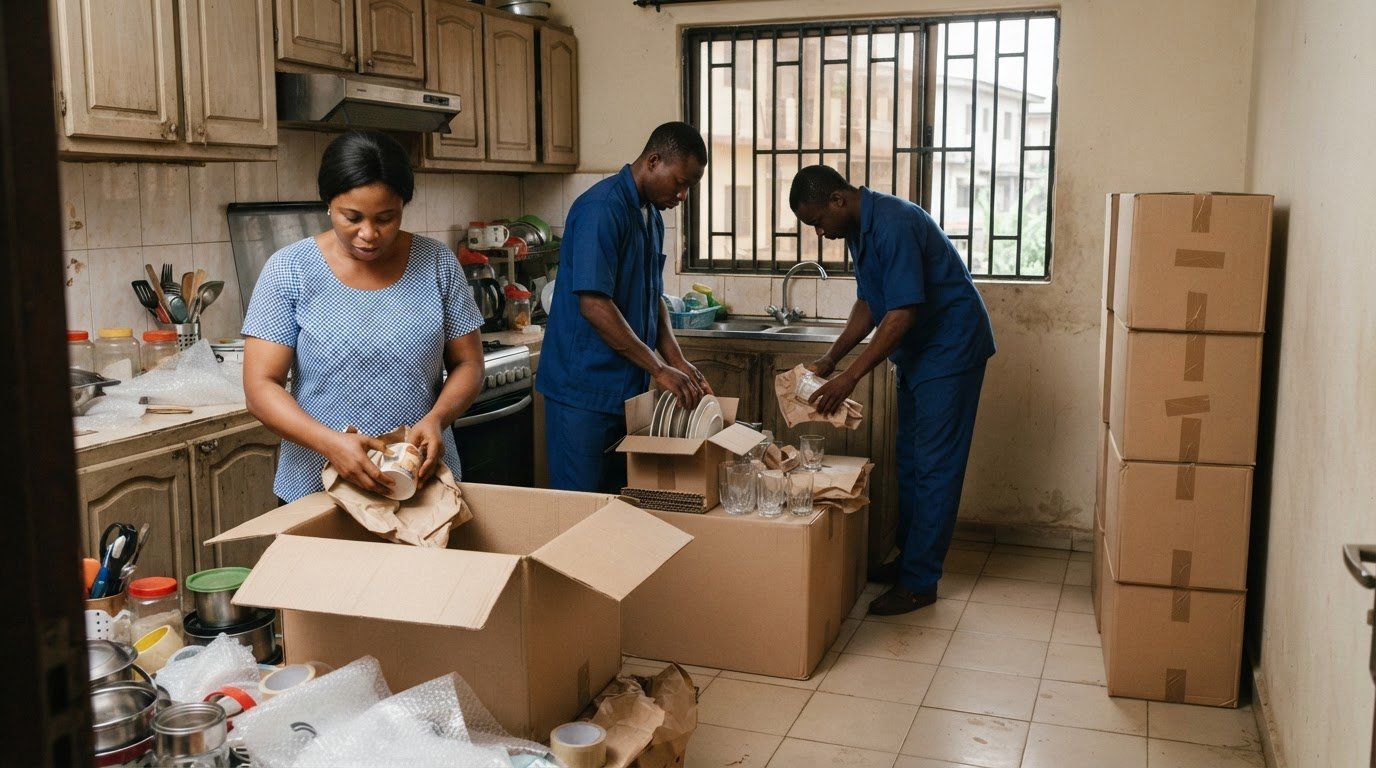
A calm move begins well before moving day. Learning how to pack for a move without stress means allowing enough time: start at least four weeks ahead, and plan on four to six weeks for packing a full household. Professional packers also help prevent common mistakes by working room by room, keeping items organised and clearly labelling boxes.
It’s understandable to worry about fragile belongings, forgotten essentials or packing that falls behind schedule. A clear plan makes these concerns easier to manage. This guide covers what to pack first, how to prepare room by room, what to declutter and how much time to allow. You’ll also learn what details to share with your packing team so the work fits your home and schedule, while keeping essentials easy to find when you arrive.
Key Takeaways
- See how a room-by-room packing plan and clear box identifiers can make unloading and unpacking more orderly.
- Learn which details help professional packers build a practical timeline around your rooms, belongings and moving date.
- Identify what to sort before packing so items you no longer need don’t take up space in the move.
- Understand which factors influence packing time, including household size, contents and the amount of preparation needed.
1. What should professional packers start with when moving?
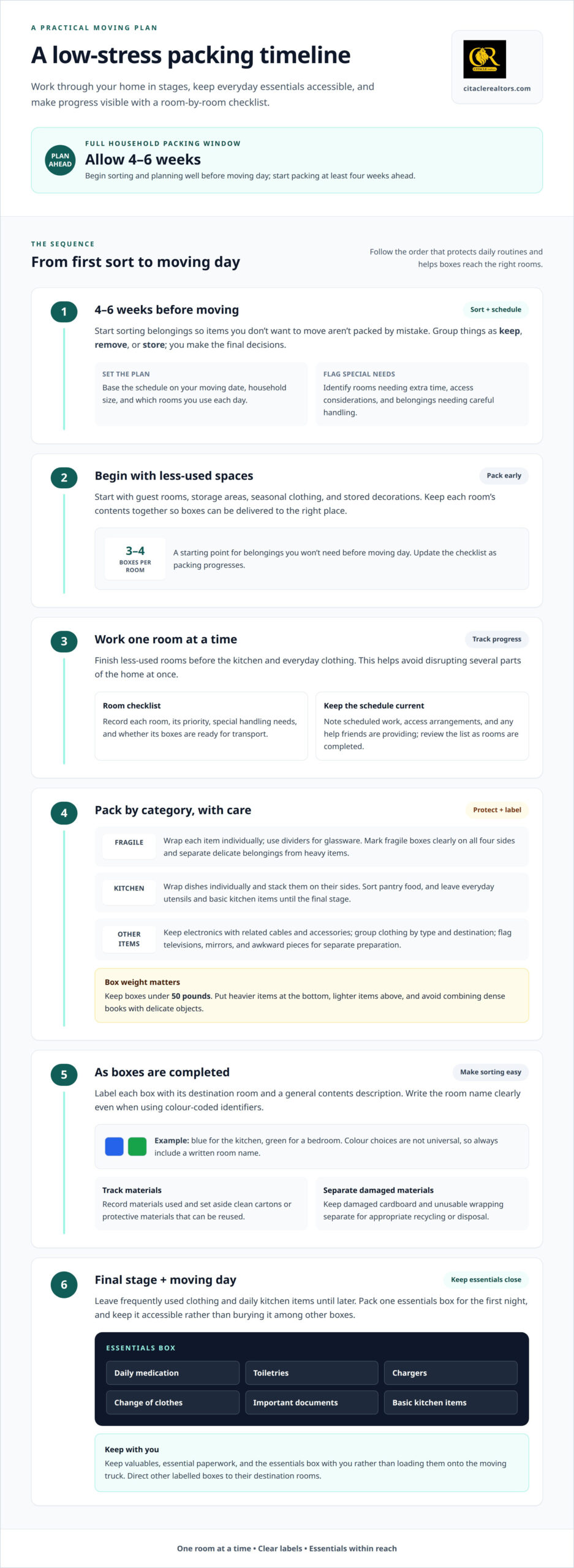
Begin with less-used rooms and belongings, such as guest-room items, seasonal clothing and stored decorations. Keep each room’s contents together so boxes can be placed in the right rooms on moving day. A room checklist helps track completed work and remaining tasks. This orderly approach supports how to pack for a move without stress while keeping daily essentials accessible.
Label each box with its destination room and a general description of its contents, such as “kitchen, serving dishes.” Colour-coded identifiers can speed up sorting, for example, blue for the kitchen and green for a bedroom. Since colours are not universal, write the room name clearly too. Consistent labels are central to how to pack for a move without stress because they help movers put boxes in the right rooms.
Mark fragile boxes clearly on all four sides and separate delicate belongings from heavy items. Wrap each glass, plate or figurine individually, then use dividers for glassware. Pack plates upright and fill empty spaces to prevent items shifting. New boxes are a sensible choice for fragile or valuable belongings because they have consistent strength and no hidden weak spots.
Weight matters. Keep boxes under 50 pounds, place heavier items at the bottom and lighter ones above, and avoid mixing dense books with delicate objects. Strong boxes, packing paper, bubble wrap, tape, markers and furniture covers help protect belongings. H-pattern tape across each box’s top and bottom can secure its seams.
When comparing professional movers in Nigeria, review written service descriptions, estimates, inventories and moving dates. Look for clear terms explaining the work and how belongings will be handled. Don’t rely on a verbal price or promise alone.
Pack an essentials box with daily medication, toiletries, chargers, a change of clothes, important documents and basic kitchen items. Keep it accessible for the first night instead of burying it among the other boxes.
Keep valuables, essential paperwork and the essentials box with you rather than loading them onto the moving truck. Label other belongings by room and direct each box to its destination for a smoother unloading process.
2. How professional packers create a packing timeline and room-by-room checklist
Build a useful schedule around the moving date, the size of your household and which rooms you use each day. Allow at least four to six weeks to pack a full household. You can begin with three or four boxes per room for belongings you won’t need before moving day, then update the checklist as packing progresses.
Work through one room at a time, starting with less-used spaces and belongings. Schedule a guest room, storage area or seasonal wardrobe before the kitchen and everyday clothing. Use the checklist to record each room, its priority, special handling needs and whether its boxes are ready for transport. This keeps progress visible and helps prevent several rooms from being disrupted at once.
Group clothing by type and destination, leaving frequently worn outfits accessible until later. Pack books carefully and keep them secure in their boxes to help protect them during the move. Keep electronics with their related cables and accessories, and wrap fragile items individually with clear handling labels. Flag televisions, mirrors and other awkward pieces on the checklist for separate preparation.
Plan kitchen packing around what the household still uses. Wrap dishes individually and stack them on their sides. Sort pantry food so open or perishable items aren’t packed by mistake. Leave everyday utensils and a few basic kitchen items until the final packing stage.
As packing progresses, record the materials used and set aside clean cartons or protective materials that can be reused. Keep damaged cardboard and unusable wrapping separate for appropriate recycling or disposal, rather than mixing them with belongings. This makes materials easier to manage and supports practical reuse.
Use the checklist to note scheduled work, access arrangements and any help friends are providing, such as supervising children. Review it as rooms are completed to keep the packing schedule aligned with the move.
3. How professional packers help declutter before moving
Start sorting belongings four to six weeks before moving day, so unwanted items don’t get packed for transport. A professional team can work through one or two rooms per day, grouping items as keep, remove or place in storage. You make the final decisions; packers can then record what stays and update the room inventory.
Create a clear inventory of valuable or fragile belongings before packing begins. Record each item’s condition and destination, then discuss moving coverage arrangements and how the inventory will be used if an item is damaged or missing. Keep receipts or photographs with your records when available, and distinguish similar items, such as matching pieces of furniture.
Connect your decluttering schedule to the packing checklist and moving date. Arrange the packing team before work starts, then identify rooms that need extra time, access considerations and items requiring careful transport. Beginning to pack four weeks before the move gives you a practical starting point; a full household may need four to six weeks.
For heavy furniture or awkward belongings, professional movers can assess the route, coordinate the lift and use suitable equipment. They bend their knees, keep their backs straight and engage their core when lifting. Large items should be handled with help rather than carried alone, especially through narrow doorways or stairs. For those managing furniture transport or home transitions in the Middle East, professional teams like شركة الماسة الألمانية – للخدمات المنزلية offer specialized furniture moving and handling support to ensure items are safely transported.
Children, pets and elderly relatives may need a quieter area away from active packing and furniture movement. Schedule their rooms for later, keep essential belongings accessible and work around the household’s routine. For example, leave a child’s bedtime items or an older relative’s daily necessities until the final stage.
Decluttering helps clarify what needs packing, what belongs in storage and what should not travel. A room-by-room checklist lets you track these decisions and the work still to do. Review the schedule as you sort each room so the final packing stage focuses on belongings you intend to take.
4. How much time professional packing and moving takes
Set the plan in motion once your moving date is fixed, then schedule packing to begin four weeks before moving day. A full household may need four to six weeks, depending on its contents and preparation. Starting early gives the team time to organise rooms, prepare fragile belongings and handle bulky furniture without leaving every task until the final days.
For a packing team, the home’s size is only one factor in the schedule. The amount of belongings, fragile or awkward items, access between rooms and how much sorting remains can all affect the work. A sparsely furnished home differs from one with full cupboards, stored items and delicate electronics. Share these details when arranging the schedule so it reflects the property and its contents.
Packing time can vary considerably. A removals team says it can pack an average four-bedroom house in a day. A five- or six-bedroom house may also be packed in a day, depending on its contents. These examples describe packing time, not necessarily the entire move, which also involves loading, transport and unloading.
Keep packing and moving day distinct in your plan. Belongings need to be prepared before loading begins, while travel distance and access at both homes affect when packed items can be unloaded. For longer relocations that require border crossings, coordinating with an experienced international moving company can help align packing schedules with customs and transit timelines. A staged schedule can assign packing by room, then reserve moving day for loading, transport and delivery. Confirm which rooms must remain usable until the final packing stage.
Arrange professional packers as soon as your moving date is settled, especially if the household needs several weeks of preparation. For a one-bedroom home, the work and move may take a week when done independently; a two-bedroom home may take a fortnight. Team schedules vary, so share your room count, contents and moving date early to develop a practical plan.
Citacle Realtors
Citacle Realtors provides Property Removals to support property transitions when belongings need to leave your current home. Consider this service when coordinating a move alongside a change in property and you need a clearer view of the next steps. An organised packing schedule helps prepare your belongings, while property-related support keeps the wider move in view.
Citacle Realtors also provides Property Management, Facilities Management, Residential Land Sales and Duplex Rentals. These services may suit changing housing needs, whether you are arranging a new residence or managing property responsibilities alongside a move. The right next step depends on what you need from your property journey.
For help with your property plans, contact Citacle Realtors.
Make Your Next Property Move With Confidence
Knowing how to pack for a move without stress is one part of a larger transition. As you decide what comes next, consider what you need from the property itself, whether you are moving into a new home or managing responsibilities around one. A considered decision can help you move forward with greater clarity.
Citacle Realtors offers Property Management, Facilities Management and Residential Land Sales for different property needs. These services may be relevant when your plans extend beyond packing and you are considering how to manage, maintain or acquire property. Choose support that fits your next decision rather than adding unnecessary tasks to moving preparations.
For guidance with your property plans, contact Citacle Realtors today. You can take the next step at a pace that suits your plans and approach your move with confidence.
Frequently Asked Questions
How do professional packers help avoid common packing mistakes?
Professional packers reduce mix-ups by matching each container to its destination and contents. For example, a box of bathroom supplies can be marked separately from towels, even when both belong in the same room. They also keep heavier items from crushing lighter belongings and fill gaps that could let items shift. A clear inventory helps identify missing or misplaced boxes during unloading.
How do professional packers keep fragile items safe during a move?
Protect delicate belongings by choosing suitable cartons, wrapping items individually and limiting movement inside each box. Separate stemware with dividers, and pack mirrors and framed artwork upright with cushioning around their edges. Clear fragile labels show movers that items need special handling. Tell the packing team about unusually shaped or especially delicate pieces before packing begins.
Is it worth hiring professional packers?
Professional packing may be worthwhile if your household has many belongings, delicate possessions or limited time to prepare. It can also help when packing and lifting are difficult to manage alongside work or family responsibilities. Consider how much packing is needed, your schedule and how much preparation you want handled. For a small move with few breakables, packing yourself may suit your needs.
What should professional packers start packing first when moving?
Start with belongings outside your everyday routine, such as seasonal decorations, spare linens or books kept in a study. This lets household members continue using daily essentials while packing progresses. Leave frequently used belongings until later, then pack them close to moving day. Tell the packers which items need to remain accessible until the final stage.
What does a professional moving packing checklist and timeline include?
A useful checklist records each room, its packing status, contents needing special care and belongings that must stay accessible. The timeline connects these tasks to the moving date, showing what to pack first and what can wait. It can also note access arrangements, furniture that needs disassembly and items that should travel separately from general household boxes.
How can professional packers help declutter and decide what to pack, donate, or discard before a move?
Organise belongings into groups based on your decisions, such as items to keep, donate or discard. Packers should not decide the value or fate of personal possessions for you. For instance, they can set aside unused kitchenware while you choose whether it should move with you. Mark your final choices clearly so only approved belongings are packed for the new home.