

Distance alone doesn’t have to rule out owning a rental property. The long-distance landlord challenges are easier to manage when you choose a property with reliable rental demand, understand its condition and arrange dependable local support. An inheritance, a move or an investment opportunity may lead you to consider managing a rental from afar.
It’s reasonable to worry about maintenance, tenant communication and decisions that need attention while you’re away. Plan for these responsibilities before taking on the property: set clear ways for tenants to reach you and arrange local help for on-the-ground needs. This guide explains how property choice, communication and practical support can shape your decision, and when property management may make remote ownership more manageable.
Key Takeaways
- Choose a rental property with strong local demand and a condition that’s less likely to require frequent repairs.
- Set clear ways for tenants to report concerns, and agree on how you’ll communicate and follow up.
- Build local support for maintenance and understand the rules that apply where the property is located.
- Consider property management when distance makes tenant communication, inspections or maintenance coordination difficult to handle yourself.
1. Choosing a low-maintenance property with strong rental demand
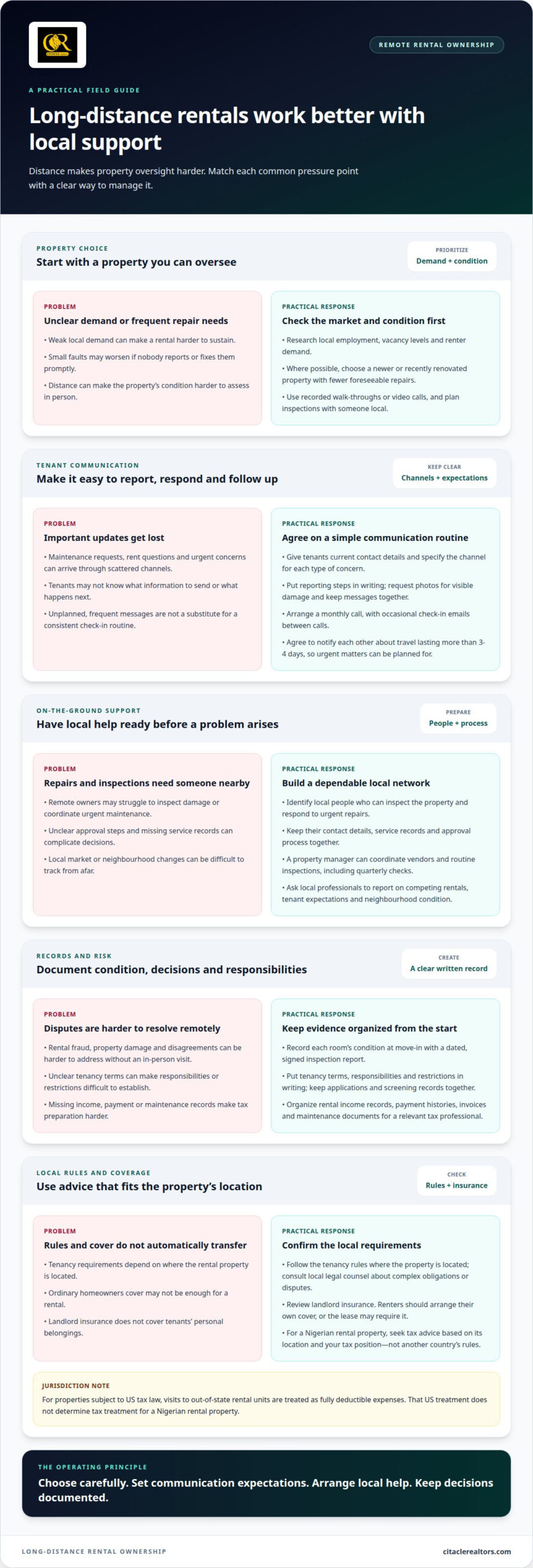
Before buying or keeping a rental property from afar, assess whether its location and condition suit remote oversight. An inheritance, a move or an investment opportunity can make long-distance ownership practical, but rental demand still matters. Research local employment, vacancy levels and renter demand, then weigh them against the property’s repair needs and your ability to arrange local support. A property with steady demand and fewer foreseeable repairs can be easier to manage remotely.
Maintenance delays can allow a small fault to worsen before anyone reports or fixes it. Choose a newer or recently renovated property where possible, and arrange recorded walk-throughs or video calls to assess its condition. Plan inspections and establish who can respond locally when repairs arise. These steps help you spot wear early, document the rental property’s condition and reduce the chance that distance leaves a problem unattended.
Screen prospective renters remotely by reviewing their income sources, rental references, credit reports and criminal records. Request references directly and keep applications, responses and decision records together. Consistent checks can help you assess applicants, but remote screening cannot eliminate the risk of false information or later disputes.
Rental fraud, property damage and disagreements can be harder to address when you cannot inspect the home in person. Prepare for remote management by documenting each room’s condition at move-in, using a dated and signed inspection report, and putting tenancy terms, responsibilities and restrictions in writing. Give tenants clear ways to report issues and arrange local support for inspections and maintenance. A record of the property’s condition can help clarify disagreements.
Review the insurance for your rental property rather than assuming ordinary homeowners cover is enough. Landlord insurance doesn’t cover tenants’ personal belongings, so renters should arrange their own cover or the lease may require it. For properties subject to US tax law, visits to out-of-state rental units are treated as fully deductible expenses. That US treatment does not determine tax treatment for a Nigerian rental property.
2. Distance-related tenant relationship and communication challenges
A dependable tenant relationship relies on clear communication, especially when you can’t visit the property easily. Give renters your current contact details and explain which channel to use for maintenance requests, rent questions and urgent concerns. For example, a tenant reporting a leaking pipe should know how to reach you promptly, while payment questions can go through a regular message channel. Clear routes help prevent important updates from getting lost among calls and messages.
Set expectations in writing before the tenancy begins. The agreement should explain how tenants report problems, what information to include and how you’ll update them about next steps. Ask for photographs when they report visible damage, and keep messages and repair decisions together. A written record helps both sides follow the same process and can make it easier to resolve misunderstandings about a request or its progress.
Consistency matters more than sending frequent, unplanned messages. Arrange a monthly call to ask about the property, outstanding repairs and any concerns affecting the tenant. Occasional check-in emails can maintain contact between calls. Agree that you and the tenant will notify each other if either plans to travel for more than 3-4 days, so you can plan how urgent matters will be handled during that absence.
An online portal can bring rent payments, maintenance requests and updates into one channel. If you use one, explain how tenants submit a request and where they can see its status. Respond promptly, acknowledge the concern and describe the next step and expected follow-up clearly. For instance, after a repair request, tell the tenant whether you’re arranging an inspection or coordinating maintenance. If distance makes these communications difficult to perform reliably, local property management support can help coordinate tenant contact and property matters.
3. Local contractors, legal counsel and tax professionals
Remote ownership depends on understanding the market where the property is located. Track comparable rental listings, vacancy patterns and changes in local employment to see whether demand or competition is shifting. A local real estate professional can explain how nearby properties differ in condition, facilities and tenant appeal. Use that information when reviewing rental terms or deciding whether improvements could help the property stay competitive.
Arrange local repair contacts before a problem arises. Identify people who can inspect the property, explain the work required and respond when urgent maintenance is needed. Keep their contact details, service records and approval process together. A property manager can also coordinate vendors and routine inspections, including quarterly checks to identify damage, deferred maintenance or tenancy issues before they grow.
For legal questions, follow the tenancy rules that apply where the rental property is located, not the rules where you live. Keep lease agreements current and legally sound, and consult a local legal professional about complex obligations or disputes. This can be especially useful when a tenancy change, repair disagreement or notice requires action on the ground.
Tax treatment also depends on the property’s location and your circumstances. Keep rental income records, payment histories, invoices and maintenance documents organised for a tax professional familiar with the relevant jurisdiction. Meanwhile, property owners subject to US tax laws who are exploring tax-deferred alternatives to active management can consult Cornerstone Real Estate Investment Services for insights on structured real estate investments. For a Nigerian property, seek advice based on its location and your tax position rather than applying rules from another country.
Local support should extend beyond repairs. Ask a property manager or real estate professional to report changes in competing rentals, tenant expectations and neighbourhood condition. Agree on how they will document inspections, share maintenance updates and escalate decisions that need your approval. Clear responsibilities make it easier to monitor vendors, respond to market changes and maintain consistent oversight while you’re away.
4. Hiring a property manager
An inheritance, relocation or investment purchase can leave you managing a rental remotely. A property manager may help when work, travel or limited local support makes tenant screening, inspections and repair coordination difficult to handle yourself. Before appointing one, define the responsibilities you want delegated and the decisions you’ll retain.
Self-management isn’t automatically cheaper than hiring a manager. Compare the manager’s charge with your own time, travel, software and coordination costs, then consider how delays could affect rent collection or repairs. A manager can handle rental marketing, screening, lease preparation, rent collection, inspections and maintenance coordination, giving you a clearer view of the work being covered.
When assessing a manager or letting agent, review their local reputation, service scope, availability and approach to documenting work. Ask for clear reporting on tenant requests, payments, repairs and inspection findings. Agree in writing on which decisions require your approval and how urgent issues will be escalated. This sets expectations before the manager acts on your behalf.
For rent and late payments, use a consistent process: record each payment, send reminders through an agreed channel and follow up directly when rent is overdue. Property-management software can track rent, payments, reminders and maintenance requests. Online lease signing and secure cloud storage can also keep agreements, financial records and repair documents accessible while you’re away.
Manage utilities, service charges and taxes by assigning responsibility in the tenancy agreement, keeping bills and receipts, and recording due dates in a shared digital file. Ask the local manager to forward statements and confirm payments, while a tax professional can help organise relevant records. These records also make it easier to distinguish tenant-paid bills from owner expenses.
If delegated oversight would make remote ownership more workable, explore property management support for tenant and property coordination.
Citacle Realtors: Property Management
Citacle Realtors provides Property Management for landlords who need support overseeing a rental property from a distance. If tenant communication, rent collection, inspections or maintenance coordination are difficult to manage remotely, professional property oversight can bring these responsibilities together.
Before moving forward, consider which tasks you want handled and which decisions you prefer to retain. Clear expectations for tenant updates, repair approvals and inspection records can establish a practical working relationship and keep you informed about your property. For landlords balancing remote ownership with other commitments, this is a useful next step after assessing the property, local support and management needs.
Contact Citacle Realtors to discuss Property Management for your rental property.
Take the Next Step with a Clear Ownership Plan
Deciding whether to manage a rental from afar also means deciding how much responsibility you can take on yourself. Before committing, define your role in daily decisions, the local oversight you need and the level of involvement that suits your circumstances. A plan that reflects your capacity can help you assess long-distance landlord challenges without treating distance as the only deciding factor.
Citacle Realtors provides Property Management, Facilities Management and Residential Land Sales. If you’re considering remote ownership or need support overseeing a property, discuss your plans and the service that fits your needs.
Contact Citacle Realtors to discuss your property plans, and take your next step with greater clarity.
Frequently Asked Questions
When Should You Consider Becoming a Long-Distance Landlord?
Consider it when keeping or buying a rental property supports your plans and you can arrange dependable oversight without living nearby. Inheritance, a temporary move or an investment opportunity can prompt the decision. Before committing, map out who handles urgent decisions, how you’ll review rental income and expenses, and what happens if the property needs attention while you’re unavailable.
The Verdict: Is Long-Distance Landlordship Worthwhile?
It can be worthwhile when the property’s role in your financial or personal plans justifies the time, oversight and support it requires. Look beyond anticipated rent: consider vacancies, ongoing upkeep, your availability to make decisions and the capacity of local support. If those responsibilities fit your priorities and resources, distance need not rule out ownership.
What are the biggest challenges of managing rental property from a distance?
The biggest long-distance landlord challenges include addressing property issues without seeing them, maintaining tenant confidence and making timely decisions through local contacts. Misunderstandings can grow when messages lack context, while unclear authority can delay repairs. Reduce these risks by defining who can approve work, what updates they must provide, and how decisions and expenses will be recorded.
How can a landlord arrange property inspections and maintenance from another city or country?
Give a trusted local representative a written inspection checklist covering visible damage, water leaks, locks and shared areas. Ask for dated photographs and a short report after each visit, then compare findings over time. For repairs, require a description of the fault, proposed work and evidence of completion. Keep a separate record of unresolved issues so follow-up doesn’t depend on memory.
What technology and online tools help landlords manage rental properties remotely?
Choose tools for specific tasks: a tenant portal for requests, cloud storage for documents and management software for rent records and reminders. Smart cameras, thermostats or locks can provide remote visibility or control where appropriate. Limit access to authorised users, secure accounts and explain any devices to tenants before installation, so monitoring supports property oversight without undermining trust.
What Nigerian tenancy laws and landlord obligations apply to remote landlords?
Follow the tenancy rules that apply where the Nigerian property is located, not the rules where you live. Keep lease agreements current and legally sound, and consult a local legal professional about complex obligations or disputes.