

A tenant complaint may point to a safety concern, maintenance problem or issue affecting residents’ comfort. Handling tenant complaints effectively means listening carefully, prioritising urgent risks, recording what happens and following through until the tenant receives an update. A calm, timely response helps protect residents and build trust.
It’s understandable to feel under pressure when several concerns arrive at once, especially when repairs need coordination or a neighbour dispute is difficult to resolve. A clear process helps you decide what needs attention first and keep communication respectful and consistent.
This guide explains why complaints matter, how to assess and prioritise safety and maintenance issues, and what to record as you work toward a resolution. You’ll also learn how to follow up after repairs and approach noisy-neighbour complaints with practical next steps and realistic expectations.
Key Takeaways
- Listen without interrupting, acknowledge the tenant’s concern and keep your response calm and professional.
- Assess maintenance reports promptly, prioritise safety risks and give tenants a clear repair timeline.
- Record complaint dates, discussions and actions, then follow up to confirm the resolution has addressed the issue.
- For noise complaints, gather relevant information, explain the next steps and set realistic expectations about what you can do.
Why Handling Tenant Complaint Matters?
In Nigeria, landlords should meet the duties set out in the tenancy agreement and applicable law, including relevant repair responsibilities. When a complaint comes in, acknowledge it, clarify the facts, assess urgency, record the concern, take action and update the tenant.
Use the steps below to keep each conversation respectful and make it easier to follow up later.
-
Listen Calmly to Tenant Concerns
Invite the tenant to describe the problem from beginning to end. Ask whether it affects a room, shared area or essential service. For example, find out when a water leak began and which rooms it has reached. Avoid interrupting, arguing or promising a repair before you understand the issue. Repeat the key details to confirm you have understood.
-
Acknowledge Tenant Emotions
Acknowledge the tenant’s feelings before discussing solutions. You might say, “I understand this disruption is frustrating,” then clarify what needs attention. Recognising distress doesn’t mean agreeing with every claim or accepting blame before reviewing the facts. Keep your tone courteous, especially if the tenant is upset, and explain what you’ll do next.
-
Keep Records of Complaints
Create a record as soon as the conversation ends, whether it took place by phone, message or in person. Note the date, the tenant’s description, any affected area and the agreed action. For a reported ceiling leak, record when it was reported and whether photos were shared. Save follow-up messages with the same entry to keep the timeline clear.
-
Review Complaint-Handling Obligations
Review the tenancy agreement and identify any applicable repair, communication or complaint procedures. Consider the issue, its urgency and the terms of that tenancy. Don’t assume every complaint has the same response deadline. If there’s a safety concern or responsibility is disputed, preserve the records and assess the specific facts before deciding what action to take.
For every complaint, acknowledge receipt, gather details, assess risk, document the discussion, act and update the tenant. This sequence keeps the response organised while allowing you to account for the property and tenancy agreement.
Prioritising urgent maintenance and safety issues
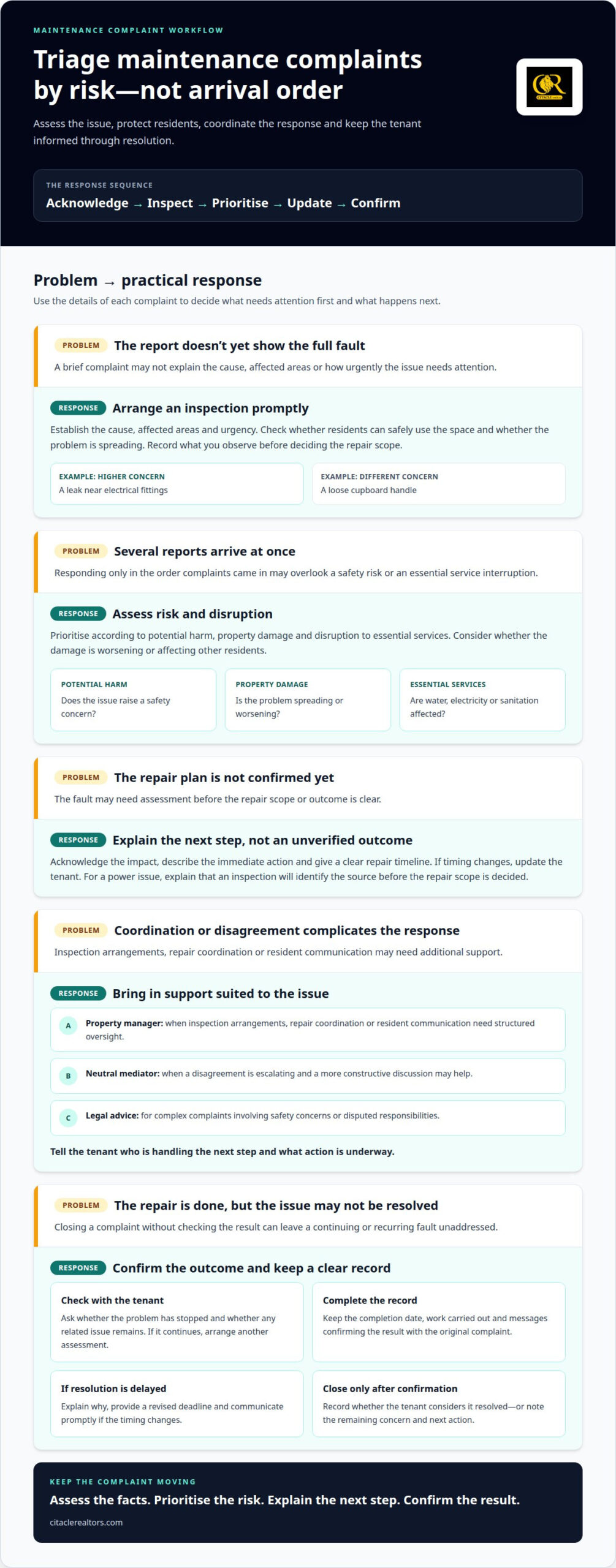
Handling tenant complaints effectively starts with assessing risk, not simply responding in the order reports arrive. For concerns involving water, electricity or sanitation, acknowledge the report, arrange an inspection and explain the next step.
-
Inspect Maintenance Issues Promptly
Arrange an inspection to establish the cause, affected areas and urgency. A leak near electrical fittings, for example, poses different concerns from a loose cupboard handle. Check whether residents can safely use the affected space and whether the problem is spreading. Record what you observe, and don’t decide the scope of a repair before identifying the fault.
- Prioritise issues according to potential harm, property damage and disruption to essential services. A fault that raises a safety concern or interrupts water, electricity or sanitation needs prompt attention. Consider, too, whether the damage is worsening or affecting other residents. Handling tenant complaints effectively includes explaining the repair timeline clearly and updating the tenant if it changes.
-
Involve Additional Support When Needed
Involve a property manager when inspection arrangements, repair coordination or resident communication need structured oversight. For landlords seeking professional agency assistance with tenancy matters and oversight, Let’s Get You Moving provides dedicated property services to help keep maintenance and tenant communication on track. If a disagreement is escalating, a neutral mediator may help make the discussion more constructive. Seek legal advice for complex complaints involving safety concerns or disputed responsibilities. Tell the tenant who is handling the next step and what action is underway.
- Stay calm and professional, even when a tenant is distressed or repairs cause disruption. Acknowledge the impact, describe the immediate action and avoid promising an outcome before the fault is assessed. For example, explain that an inspection will identify the source of a power issue before the repair scope is decided. This gives the tenant a useful update without creating unrealistic expectations.
A priority-based approach supports handling tenant complaints effectively when maintenance concerns require careful coordination. For property-related oversight, property management support may help organise responsibilities and follow-through.
Following up and documenting resolution
Keep each complaint open until you’ve checked the outcome with the tenant. A clear closeout record shows what was done, when it happened and whether further action is needed.
- Contact the tenant after the repair or other agreed action is complete. Ask whether the problem has stopped and whether any related issue remains. For example, after a plumbing repair, check that the leak has ended and the affected area is usable. If the tenant reports that the fault continues, arrange another assessment rather than marking the complaint resolved.
- Record the completion date, work carried out and any communication confirming the result. Keep these details with the original complaint so the full sequence is easy to follow. Attach any repair note from a technician or relevant message from the tenant. Record factual observations, not assumptions about the tenant’s satisfaction.
- If resolution is delayed, tell the tenant why and provide a revised deadline. For instance, explain that a repair is waiting on a required part and say when you expect to provide the next update. If that timing changes, promptly communicate the reason and new expectation. Silence can leave tenants unsure whether the matter is still being handled.
- Update the complaint status only after confirming the agreed action is complete. Note whether the tenant considers the matter resolved, or record any remaining concern and the next action. If the same issue recurs, connect the new report to the earlier record. This helps identify repeat faults, review previous work and determine whether further investigation is needed.
Managing complaints about noisy neighbours
Respond promptly, gather details from relevant people and assess whether the complaint concerns a property rule or communication issue. Then explain the next step and keep expectations realistic.
- Acknowledge the report and ask what the tenant experienced. Clarify when the noise occurred, where it seemed to come from, how long it lasted and whether it has happened before. “Loud music from the next unit last night” gives you more to assess than a general claim of disturbance. Gather information before taking sides.
- Review the tenancy terms and any building or community policies on noise. Decide whether the reported conduct may breach a stated rule or could be addressed through a respectful conversation. Don’t assume every noise complaint means a policy has been breached. The source, timing, recurrence and effect on nearby residents can help guide a fair response.
- Gather information from relevant sources before approaching the other resident. Compare the report with earlier complaints about the same issue or location, and note any differences. If the concern appears ongoing, consider the pattern rather than treating each report in isolation. Use factual descriptions, not assumptions about a neighbour’s intent or character.
- Explain the next action to the reporting tenant, such as reviewing the applicable rule or communicating the concern to the neighbour. Suggest practical steps that fit the building’s policies, and provide a timeline if resolution requires further discussion. If the noise is outside your control, explain what you can address and what is beyond your authority.
- Follow through on the action you described and update the tenant if circumstances change. For example, after raising a concern with a neighbour, ask whether the disturbance continues and record the response. If communication becomes difficult, consider involving a neutral third party to support a constructive discussion. Keep your language measured and focus on the reported behaviour.
For structured support with resident concerns and property oversight, explore property management support.
Citacle Realtors: Property Management
Citacle Realtors provides Property Management for property owners who need support overseeing tenant concerns and property-related matters. If coordinating complaint responses, maintenance follow-through or resident communication is taking time away from your priorities, property management can provide a structured way to manage these responsibilities.
For issues involving the upkeep and operation of a property, Facilities Management may also be relevant. The right support depends on your property’s needs and which responsibilities you want managed. Citacle Realtors can help you consider an approach suited to those requirements.
Contact Citacle Realtors to discuss Property Management support or visit citaclerealtors.com.
Make a clearer plan for your properties
Handling tenant complaints effectively means more than resolving the immediate concern. A consistent approach also helps you spot recurring property issues and make informed decisions about ongoing oversight. Consider which responsibilities you can manage confidently and where professional support could help you maintain a clear process for residents.
Citacle Realtors offers Property Management and Facilities Management, as well as Residential Land Sales. Each service addresses different property needs, so focus on what fits your next priority. If tenant concerns and property operations need more coordinated oversight, a conversation can help you explore a suitable next step.
Contact Citacle Realtors today to discuss your property management needs. With a practical plan in place, you can move forward with greater clarity and confidence.
Frequently Asked Questions
What are the best practices for handling tenant complaints promptly and professionally?
Use a consistent intake process so reports don’t get lost across calls, messages and conversations. Acknowledge the concern, identify whether it involves immediate safety or property damage, and assign a clear next action. For example, distinguish a ceiling leak affecting electrical fittings from a concern about a noisy appliance. Keep communication respectful and tell the tenant who will provide the next update.
How quickly should landlords respond to tenant complaints in Nigeria?
Respond promptly, with urgency guided by potential harm, damage and disruption. Exposed wiring or a burst pipe needs faster attention than a cosmetic concern because conditions may worsen or affect safe use of the property. Check the tenancy agreement for complaint timelines, acknowledge receipt and give the tenant a realistic update on the next action.
How can landlords resolve noise complaints and disputes between tenants?
Address noise disputes impartially and choose a proportionate next step. Ask the reporting tenant for specific details, including the type of noise, when it occurred and where it seemed to come from. Speak to residents separately rather than arranging a heated confrontation. If a shared rule applies, explain it consistently and follow up to see whether the disturbance continues.
What records should landlords keep when handling tenant complaints?
Keep a complaint file linking the original report to evidence and later decisions. Along with dates and messages, include relevant photographs, inspection notes, repair instructions and completion records. For a recurring damp patch, for example, note where it appears and whether it changes after work. Use neutral wording, distinguish the tenant’s report from what you observed, and keep related correspondence together.
How can landlords de-escalate difficult conversations with tenants?
Ease tension by slowing the conversation and addressing one issue at a time. Let the tenant finish, then summarise the concern in plain language and ask if you’ve understood correctly. If voices rise, suggest resuming after a short pause rather than arguing. Offer clear options where possible, such as arranging an inspection or asking for further details in writing, and avoid debating motives.
What risks can landlords face if they ignore tenant complaints in Nigeria?
Ignoring a complaint can allow a repair problem to worsen, create avoidable disputes and undermine a tenant’s confidence in property oversight. A small leak, for instance, may spread further through the home if nobody assesses it. Without a timely record of the report and response, it can also be harder to establish what was communicated and which actions were taken.