

A property can lose appeal before its owner realises that several small issues are adding up. The factors that decrease property value may include visible wear, unresolved maintenance, weak management or unclear documentation. A slower market can also affect what buyers are prepared to pay. Not every concern calls for a major renovation, and not every price change is within your control.
If you’re unsure whether a crack, peeling paint or vacant period points to a deeper problem, that uncertainty is understandable. Poor upkeep and incomplete records can make buyers or tenants hesitate, while wider market conditions can affect demand even when a property is well cared for.
This guide explains how physical condition, documentation, property management and market shifts can put pressure on value in Nigeria. You’ll learn how to distinguish repairable issues from external factors, prioritise sensible next steps and recognise when a professional valuation or property management review could help you understand your asset’s position.
Key Takeaways
- The factors that decrease property value can build over time, from physical defects and poor upkeep to documentation uncertainty and changing market conditions.
- Separate structural, essential system and water management concerns from cosmetic wear to judge what needs attention first.
- Distinguish issues you can influence, such as maintenance and property oversight, from external market pressures that require monitoring.
- Record concerns, assess their severity and gather evidence before deciding whether repairs or a fresh valuation should be your next step.
- Asset valuation can clarify a property’s position, while ongoing management supports oversight without guaranteeing a particular market outcome.
What factors that decrease property value mean for Nigerian property owners
A decrease in property value doesn’t mean a home has lost a fixed percentage because a defect appeared or the market changed. It means the property may attract less interest, achieve a lower price or receive a different valuation than it might under other conditions. The factors that decrease property value can overlap. For example, modest maintenance concerns may weigh more heavily on a buyer when combined with uncertainty about the building’s history.
Keep three ideas separate. Market value is an informed estimate of what a property could reasonably exchange for under relevant market conditions. An individual buyer’s opinion is personal: one buyer may be comfortable arranging repairs, while another may prefer a move-in-ready home. A professional valuation is an evidence-based assessment prepared by a qualified professional for a particular purpose. It can help an owner understand an asset’s position, but it isn’t a guaranteed sale price.
This guide focuses on Nigerian property owners and does not use foreign market averages as a substitute for local evidence. Demand, property type, condition and the available comparable information all matter. Interpret a valuation or asking price in that context rather than treating it as a universal benchmark.
How property value differs from appearance and asking price
A fresh coat of paint and tidy presentation can make a property more inviting, but appearance alone doesn’t establish market value. Behind a polished surface, a buyer may still consider the building’s condition, how the property functions and how it compares with similar properties. Presentation shapes first impressions; it doesn’t replace evidence.
An asking price reflects the seller’s position, not proof that buyers will pay that amount. To assess whether it is realistic, consider relevant comparable evidence and account for differences in size, features and condition. A nearby sale can offer useful context, but it may not be a close comparison if the properties differ in important ways.
Why the same issue affects properties differently
Severity, repairability and buyer expectations all affect how much weight an issue carries. A small, localised paint blemish may be straightforward to address. A recurring leak, damaged wiring or defect that limits safe use can raise broader concerns about further damage, disruption or repair work. A visible symptom alone may not reveal its cause or extent.
Even after damage is repaired, a buyer may still consider its history. This resembles the idea of diminished value of property, where prior damage can affect perceived value after repairs. For property, the effect depends on the evidence and circumstances, not an automatic discount. Value impact depends on context, evidence and severity.
Physical defects and deferred maintenance that can reduce property value
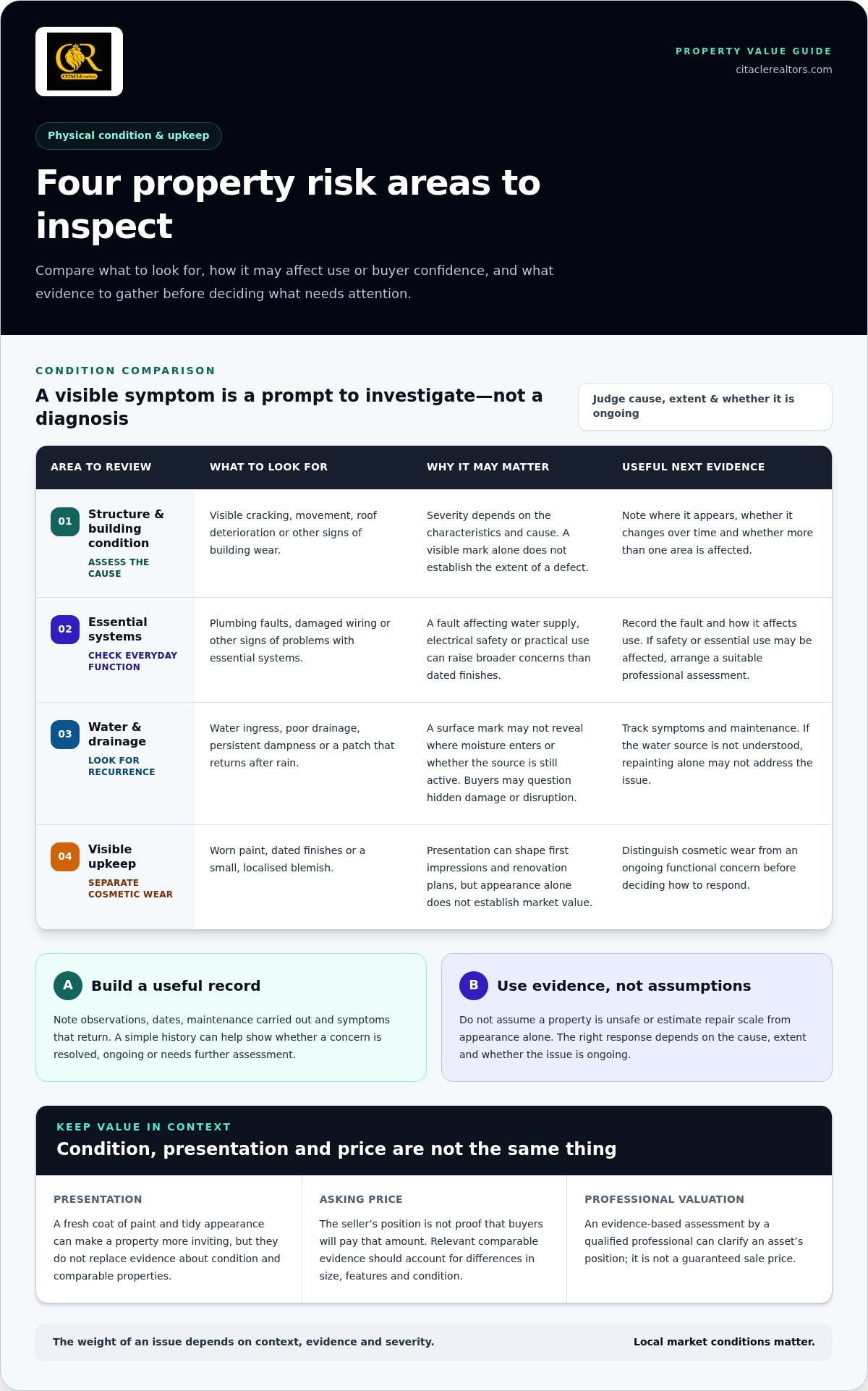
Physical condition influences buyer confidence and how easily a property can be used. The factors that decrease property value may involve structural integrity, essential systems, water management or visible upkeep. A concern in one category can sometimes point to another. A stain, crack or faulty fitting is a reason to investigate, but it is not enough on its own to diagnose a serious defect.
Distinguish functional or safety concerns from dated finishes. An older kitchen or worn paint may affect presentation and a buyer’s renovation plans. A defect that interrupts the water supply or raises electrical concerns may affect practical use. The right response depends on the cause, extent and whether the issue is ongoing.
Structural and building-system concerns
Treat visible cracking, roof deterioration, plumbing faults and signs of electrical problems as prompts for closer assessment. Note where each concern appears, whether it changes over time and whether it affects more than one area. The label alone doesn’t establish severity: a crack’s significance depends on its characteristics and cause, while a roof concern may range from localised wear to a broader maintenance issue.
If a concern may affect safety or essential use, arrange a suitable professional assessment rather than relying on appearance or a quick patch. Don’t assume a property is unsafe or estimate the scale of repairs without evidence.
Water, drainage and ongoing upkeep
Water ingress, poor drainage and persistent dampness deserve investigation because a visible mark may not show where moisture is entering or whether the source remains active. A recurring patch after rain, for example, calls for more than repainting if the route of the water is not understood. Buyers may also question whether hidden damage or ongoing disruption could follow.
Routine upkeep matters too. A small defect left unattended can worsen or contribute to further deterioration, making the eventual response more involved. Keep a simple record of observations, dates, maintenance carried out and recurring symptoms. That history can help clarify whether a problem is resolved, ongoing or needs further assessment.
- Structural integrity: record cracks, movement or visible deterioration for review.
- Essential systems: note faults affecting electrical, plumbing or other everyday functions.
- Water management: track leaks, dampness, drainage and whether symptoms return.
- Visible upkeep: distinguish cosmetic wear from defects that affect use or condition.
For a broader overview of factors that decrease property value, remember that examples from another market are not a substitute for assessing a Nigerian property on its own evidence. When an assessment identifies relevant work, a considered renovation plan can help address the property’s actual needs. Explore property renovation support as one practical way to respond to identified condition concerns.
Documentation, property management and market conditions that influence value
Not every value pressure has the same cause or response. Some risks relate to choices an owner can address, such as maintenance and record-keeping. Others arise from conditions beyond one property, including changing demand, access or infrastructure. Separating the two helps you focus on practical steps without assuming you can control the wider market.
| Owner-influenced issues | External influences |
|---|---|
| Organised property records and clear maintenance history | Changes in buyer demand, supply and purchasing conditions |
| Timely upkeep and responsive property oversight | Infrastructure, access and drainage exposure around the property |
| Attention to tenant concerns and shared facilities | Security perceptions and shifts in demand for particular property types |
Documentation and confidence in a property transaction
Unclear ownership information or incomplete property records can make it harder for a prospective buyer to understand what is being offered and assess the transaction with confidence. Keep relevant records organised and ensure property details are consistent across documents. This can make questions easier to identify, but it doesn’t settle a legal issue or establish ownership by itself.
For title-specific concerns, seek guidance from a qualified legal professional. The existing guide, How to Verify Land Titles and Avoid Scams, is also a useful place to learn what to look for when reviewing records.
Management and external market pressures
Delayed maintenance, unresolved tenant concerns or inconsistent oversight can create uncertainty about how well a property is cared for. Without clear repair records or a history of recurring issues, it may be harder to demonstrate the property’s condition and maintenance history to an interested party. Property management supports ongoing oversight, though it cannot prevent broader market shifts.
External influences matter too. Improved infrastructure or easier access may support buyer interest, while poor access, drainage exposure or security concerns can shape perceptions. The effect varies with the property and its surroundings, so don’t treat any single influence as a guaranteed price change. A Veterans United overview of factors decreasing home value includes examples from another market, so use it as general context rather than as a guide to Nigerian conditions.
Owners can improve oversight and records; broader market movements are monitored, not controlled. The factors that decrease property value may combine, so separate what you can address from changes in demand or purchasing conditions. This distinction can guide practical decisions: improve documentation or resolve an oversight gap where possible, and assess external influences using relevant local evidence.
How to assess and prioritise factors that decrease property value
A structured review helps you decide what needs attention now, what can wait and what should be monitored. Rather than starting with cosmetic changes or assumptions about a future sale price, review the evidence in a consistent order. This keeps decisions proportionate to the property’s condition, intended use and current market context.
A practical property review, step by step
- Record concerns. Note visible defects, when they appeared, whether they recur and which areas or functions they affect. Gather relevant property documents and any available maintenance history so the information is easy to review.
- Assess severity. Separate active damage, possible safety concerns and problems affecting everyday use from cosmetic wear. If the cause or seriousness of a defect is unclear, arrange an assessment by a suitably qualified professional rather than relying on appearance alone.
- Gather evidence. Keep dated photographs, inspection findings, repair records and notes about changes over time. This creates a clearer picture of the property’s condition and helps distinguish a resolved issue from one that may still need attention.
- Prioritise responses. Address urgent safety concerns and active deterioration before deciding whether to refresh finishes. Consider the property’s intended use and whether proposed work responds to a genuine condition or functional need.
- Review value. If you need a reliable assessment of the asset, use a professional valuation informed by relevant evidence. A valuation can clarify the property’s position; it doesn’t guarantee a particular asking price or sale outcome.
Deciding what to address first
Start with issues that may worsen, affect safe use or prevent the property from serving its intended purpose. Consider cosmetic preferences after those concerns, especially if the property is otherwise functional. Before committing to upgrades, compare the proposed work with the likely needs of prospective occupants and the available evidence for similar properties.
Comparisons are most useful when they are genuinely like for like. Consider differences in property type, size, condition, use and documentation, rather than treating one nearby listing or sale as a perfect match. Asking prices show seller expectations, while completed transactions and a professional assessment can provide different forms of context. Broader demand may also shift, so keep market monitoring separate from repairs you can directly manage.
For further seller-focused context, consult Property Valuation for Sellers in Nigeria: The 2026 Comprehensive Guide alongside your property records and comparable evidence. No single repair or management decision guarantees a higher value. The aim is to make a well-supported choice that addresses a real risk or need.
For a clearer view of your asset’s position, arrange a professional asset valuation based on relevant property evidence.
How Citacle Realtors can help owners respond to property value risks
Once you’ve identified possible risks, choose a response that fits the property and your objective. Citacle Realtors provides asset valuation, property management and property renovation services across Nigeria. These services can help owners understand an asset’s position, organise ongoing oversight or address appropriate improvement needs. They don’t guarantee a higher value or protect a property from wider market changes.
When valuation, management or renovation support may help
An asset valuation can be useful when you need a clearer, evidence-based view of your property’s market position. It helps inform decisions rather than promise a particular selling price. Property management may suit owners seeking consistent oversight of property care and maintenance. Renovation support can be relevant when an assessment identifies work that addresses a genuine condition or functional need.
The right service depends on the question you’re trying to answer. You may need to understand the asset, maintain ongoing oversight or consider specific improvement work. Starting with that distinction can prevent a cosmetic refresh from taking priority over a more pressing concern and help keep proposed work aligned with the property’s purpose.
A measured next step for protecting property condition
Begin with a clear objective, such as preparing to sell, managing a rental property or addressing an identified maintenance concern. Bring together relevant records, observations and any previous assessment. This gives the discussion a practical starting point and helps distinguish what needs attention from what may simply require monitoring.
For ongoing oversight, Professional Residential Property Management Guide offers further context on managing a property. If you’re considering improvements, How to Increase Rental Property Value in Nigeria: The 2026 Strategic Guide can help you think through possible upgrades in relation to rental use. Treat both as decision-making resources, not promises that a particular action will produce a specific return.
Many factors that decrease property value can be assessed more thoughtfully when condition, oversight and market evidence are considered together. A measured plan may involve management or renovation, or simply a clearer understanding of the property’s current position.
When you’re ready, explore Citacle Realtors’ property services and discuss your asset’s needs and objectives.
Make your next property decision with clarity
Property ownership is a continuing responsibility, and a concern doesn’t have to become a crisis before it deserves attention. Use what you’ve learned about the factors that decrease property value to choose a sensible next step, guided by your priorities rather than pressure to renovate everything at once. A clear objective can keep decisions focused, whether you’re planning for a future sale, rental use or long-term ownership.
Citacle Realtors provides property and facilities management, asset valuation and renovation services across Nigeria. These services can support a considered approach to understanding and caring for your property, without promising a particular market result.
When you’re ready to explore the right path for your asset, explore Citacle Realtors’ property services. With clear information and thoughtful support, you can move forward with greater confidence in the decisions ahead.
Frequently Asked Questions
Can poor maintenance decrease a property’s value?
Yes. Poor maintenance can weaken buyer confidence if defects affect how the property functions or suggest further upkeep may be needed. The factors that decrease property value don’t affect every property in the same way, so avoid applying a standard percentage reduction. A loose cupboard handle, for example, differs from a recurring fault in a water system. Keep evidence of repairs and monitor repeat problems before deciding what work to undertake.
Does an unfinished building have lower property value?
Not necessarily, but an unfinished building may attract fewer buyers if its current state or intended use is difficult to assess. A buyer may view exposed services or incomplete rooms differently from an owner planning to finish them. Record which work is complete and retain relevant project documents. Before continuing, consider whether the likely buyer or occupier needs the proposed features, rather than assuming every finishing choice will be worthwhile.
Can missing property documents affect a sale?
Yes. Incomplete or unclear records can make a buyer less certain about what is being transferred and may slow their assessment of the transaction. Gather the documents you have, keep copies together and note any gaps rather than trying to fill them with assumptions. Requirements depend on the specific property and circumstances, so direct questions about title or ownership records to a qualified legal professional.
Does repainting a house increase its market value?
Not automatically. Repainting can make rooms look cleaner and help a property present well, but it won’t correct a leak, damaged surface or other underlying issue. Painting over a damp patch without addressing its cause, for instance, may only conceal a symptom temporarily. Consider the property’s intended use and overall condition before choosing cosmetic work, and don’t treat fresh paint as evidence of a guaranteed price increase.
Can a property’s value fall even when it is well maintained?
Yes. Careful upkeep supports a property’s condition, but buyers’ decisions can also respond to wider changes in demand, supply, purchasing power or financing conditions. Those pressures may affect properties with no obvious maintenance problems. Keep your maintenance records current, then compare market evidence from a relevant period when reviewing your position. This helps separate a property-specific concern from a broader change in buyer activity.
How can I find out whether a defect is reducing my property’s value?
Start by recording where the defect appears, when you noticed it and whether it changes or returns. If its cause is unclear, arrange an appropriate inspection; photographs alone may not show what is happening behind a surface. A professional valuation can consider the defect alongside the property’s other characteristics and relevant market evidence. Avoid relying on a generic online estimate or percentage, since the effect depends on the individual property.