
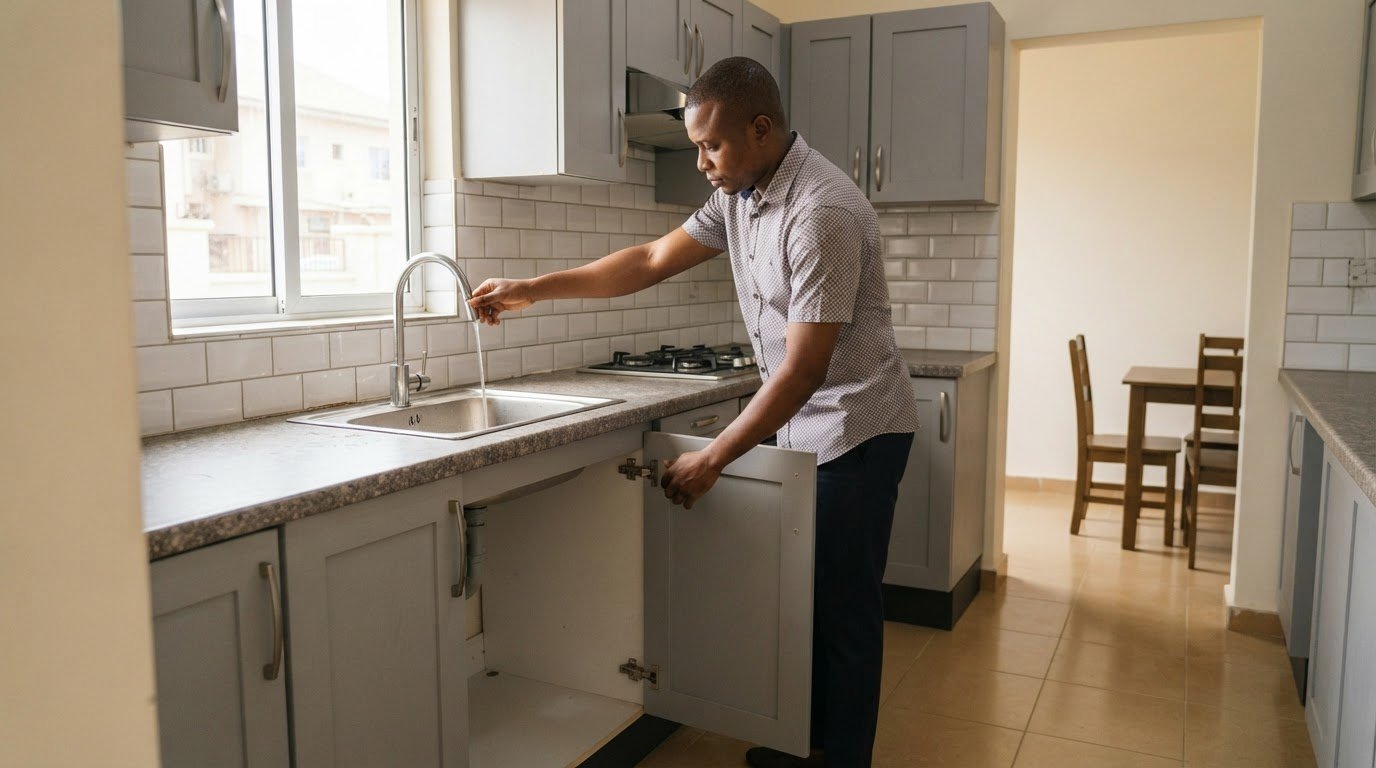
The right budget starts with the work your duplex actually needs, not a one-size-fits-all figure. In Nigeria, the cost of renovating a duplex for rental depends on the property’s condition, the number of units and rooms being updated, material choices, labour, and whether the project includes structural, plumbing or electrical work. An itemised scope gives you a more useful estimate than a broad allowance.
It’s understandable to want a clear figure before committing, especially when renovation affects your investment and rental plans. This guide explains the main cost drivers, how energy-efficient upgrades and exterior improvements can affect your budget, and how to use a property-specific case study to weigh trade-offs. Targeted improvements may make a rental more appealing, but work that doesn’t match tenant needs can add expense without strengthening your plan.
Key Takeaways
- Set a renovation scope around the kitchen and bathroom improvements most likely to support rental appeal, rather than choosing finishes by appearance alone.
- Prioritise energy upgrades by considering how equipment condition and everyday usage affect ongoing utility costs.
- Include exterior painting and landscaping in the budget, with the property’s visible condition and the scale of the work guiding priorities.
- Use the duplex case study to see how an itemised scope and expected rental income can help assess whether planned work fits your investment goals.
1. Why Consider Remodeling Your Rental Property?
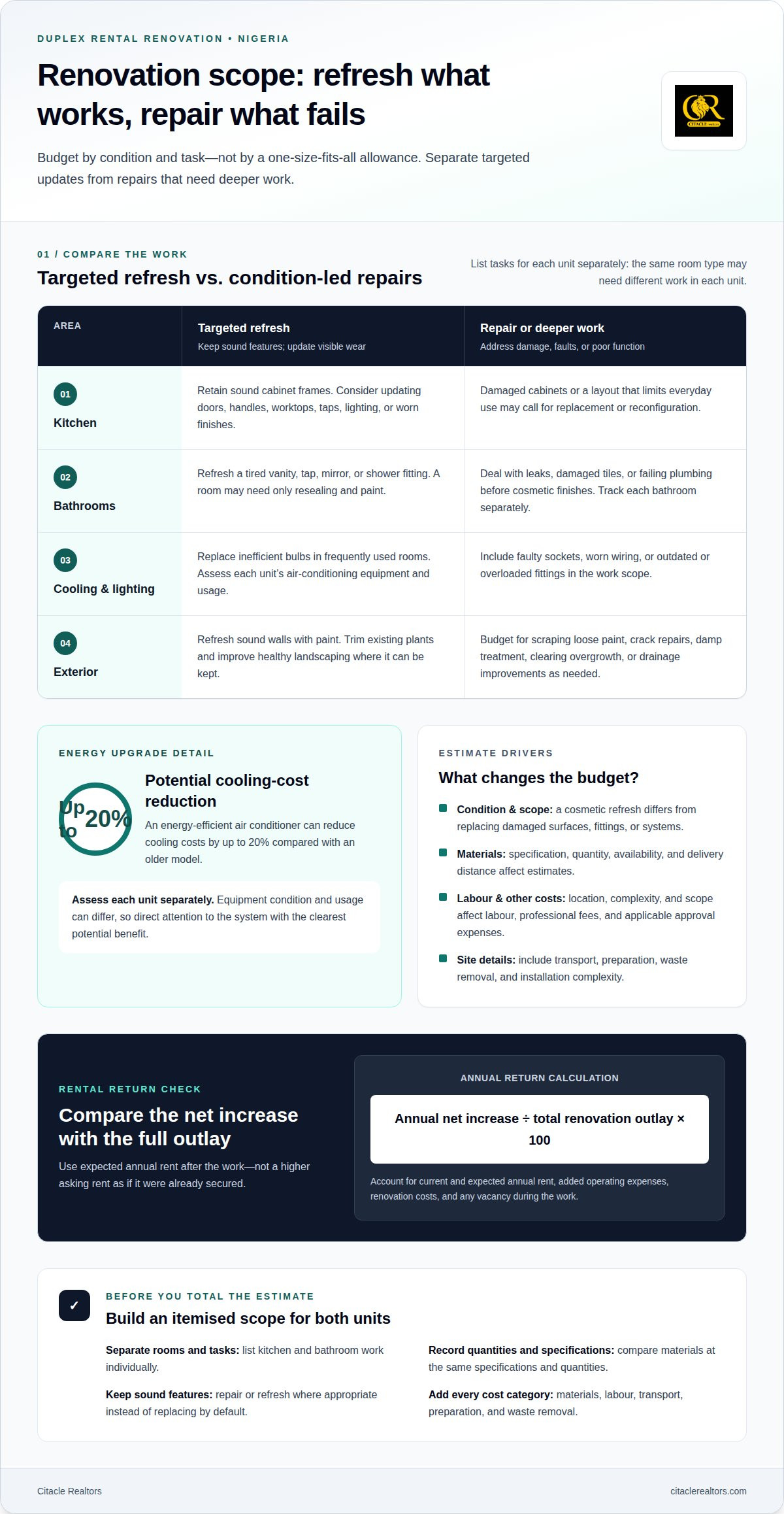
In Nigeria, the cost of renovating a duplex kitchen and bathrooms depends on the scope, room condition, materials, and labour. A cosmetic refresh differs from replacing cabinets, plumbing, electrical fittings, or damaged surfaces in both units. Estimate kitchen and bathroom tasks separately, then total materials and labour for each space.
A minor kitchen remodel can focus on visible, frequently used details without replacing every fixture. For example, retain sound cabinet frames and update doors, handles, worktops, taps, lighting, or worn finishes. If storage works but surfaces look dated, this narrower scope avoids paying for a full layout change. Damaged cabinets or a layout that limits everyday use may require replacement or reconfiguration.
Take the same condition-first approach to bathrooms. Replacing a tired vanity, tap, mirror, or shower fitting may refresh the room, while leaks, damaged tiles, or failing plumbing need attention before cosmetic finishes. In a duplex, list tasks separately for each unit. One bathroom may need new fittings while the other needs only resealing and paint. This stops a small refresh in one space from hiding a larger repair elsewhere.
To estimate rental income and return on investment, compare expected annual rent after the work with current annual rent, then subtract added operating expenses. Divide the annual net increase by the total renovation outlay and multiply by 100 for a percentage return. For example, include the cost of kitchen and bathroom work, any vacancy during renovations, and recurring expenses in the calculation. Avoid treating higher asking rent as income already secured.
Kitchen and bathroom upgrades may make a rental more appealing when their condition influences a tenant’s decision. A clean, functional kitchen can be a selling point, while practical bathroom storage supports comfortable living. Choose upgrades that address visible wear or usability, then weigh their expected rental benefit against the full project cost.
2. Energy-efficient improvements
Energy upgrades can address utility use while making a rental more comfortable for tenants. An energy-efficient air conditioner can reduce cooling costs by up to 20% compared with an older model. In a duplex, assess each unit’s equipment separately, since one system may be newer or used more heavily. That distinction helps direct improvements toward the areas with the clearest potential benefit.
Lighting is a practical starting point. Replace inefficient bulbs with energy-saving options in frequently used rooms, such as kitchens, hallways, and bathrooms. Check switches and fittings as part of the same work, and plan the layout around how tenants use each space. Suitable task lighting can make kitchen preparation areas easier to use without changing countertops or cabinetry.
Electrical and plumbing work should address function as well as efficiency. Include faulty sockets, worn wiring, leaking taps, and slow drains in the scope rather than covering defects with new finishes. A plumber can assess whether a toilet or tap replacement suits the existing connections, while an electrician can identify outdated or overloaded fittings. Fixing these issues can be more useful than installing decorative fixtures alone.
For tax records, distinguish repairs that restore an existing feature from improvements that upgrade or replace it. Keep invoices, dates, unit details, and work descriptions together, and record amounts under consistent categories. This creates a clear account of property expenses and helps a Nigerian tax professional assess their treatment under rules that apply to your circumstances. Don’t assume every renovation item receives the same tax treatment.
Energy-efficient upgrades may appeal to tenants who value predictable running costs, but higher rent isn’t automatic. Compare the expected benefit with the equipment’s condition, operating pattern, and full installation scope. Consider how improved lighting or cooling supports daily living, then weigh that against the project’s effect on property value and your overall investment.
3. Exterior painting and landscaping costs
Exterior work shapes a duplex’s first impression, but the estimate depends on surface condition and scope. Painting sound walls differs from first scraping loose paint, repairing cracks, and treating damp patches. Landscaping costs also vary: trimming existing plants takes less work than clearing overgrowth, improving drainage, and adding planting areas. List these tasks separately so each is budgeted properly.
In Nigeria, prices for roofing, plumbing, electrical, tiling, and painting materials depend on specification, quantity, availability, and delivery distance. The roofing estimate, for example, changes with the chosen material and roof dimensions, while tile requirements depend on floor area and cuts. Compare materials at the same specifications and quantities. Mixing premium fixtures with basic finishes can distort the overall estimate.
Labour, professional fees, and building approval expenses depend on the location, scope, complexity, and applicable requirements. Repainting differs from roof work that requires specialist labour, while structural changes may call for more professional input. List these costs separately alongside materials, transport, site preparation, and waste removal.
Control expenses by keeping sound features, grouping related work, and choosing durable finishes suited to the property’s use. Repair a stable path before replacing it, for instance, and refresh healthy landscaping rather than starting from bare ground. Measure flooring carefully, allow for cuts, and compare materials by maintenance needs, not purchase cost alone. Record agreed quantities and specifications so every budget item is clear.
Flooring costs turn on area, surface preparation, material, and installation complexity. Cabinet replacement likewise depends on cabinet count, dimensions, material, hardware, and whether existing units can be repaired. In an older duplex, inspect beneath flooring and around cabinets for leaks or concealed damage before fixing the final scope. Keep a 10-15% contingency for unexpected expenses, and prioritise repairs that protect the property’s appeal and condition.
4. Duplex renovation cost case study
A useful case study starts with the actual property, not a price borrowed from another market. For a duplex with two rental units, record each unit’s floor area, condition, and required work separately. This reveals whether shared exterior repairs or interior upgrades drive the budget. A property-specific example makes the cost of renovating a duplex for rental easier to assess against the actual scope.
There is no single average renovation cost for every Nigerian duplex. The total depends on floor area, existing damage, material specification, labour, transport, and whether the work changes plumbing, wiring, or structure. Cost per square metre also varies with these choices. Calculate it by dividing the itemised project total by the measured floor area, not by relying on an estimate for an unrelated property.
A basic renovation might cover urgent repairs, surface preparation, repainting, and worn fixtures. A mid-range plan could include flooring, kitchen and bathroom upgrades, and selected electrical or plumbing work. A full renovation may involve broader replacements or reconfiguration, with structural work adding to the scope. These categories describe levels of work, not fixed Nigerian price bands.
Build the estimate as a case file. Separate costs for each unit, then list shared tasks such as roofing, exterior painting, and drainage. Record materials, labour, professional input, removal, and contingency as distinct items. If only one unit needs new flooring, don’t automatically apply that allowance to both. This makes clear where the cost of renovating a duplex for rental comes from.
To assess return on investment, compare projected rental income after upgrades with current income and total renovation outlay. Include vacancy during the work and ongoing maintenance. Prioritise improvements that address tenant needs and functionality. A premium finish alone doesn’t guarantee higher rent or stronger selling value.
Use the case-study method to prepare a scope based on measured area and actual condition. It gives you a practical budgeting basis without treating a generic square-metre estimate as a promise.
Citacle Realtors: Duplex Rentals
Citacle Realtors offers Duplex Rentals and Property Renovations for owners planning how a refreshed property fits their rental goals. If your duplex needs work before it is ready for tenants, renovation can form part of a considered property plan. Owners focused on ongoing oversight can also explore Property Management and Facilities Management to support the property after renovation.
The right next step depends on your goal: preparing a duplex for rental, improving a property you own, or finding a rental home. Citacle Realtors also offers Residential Land Sales for those considering a separate land investment. Start with a clear view of the property and the outcome you want, rather than assuming every renovation suits every rental strategy.
Contact Citacle Realtors to discuss your duplex rental or renovation plans.
Turn Your Renovation Plan Into a Clear Next Step
Before committing funds, turn your priorities into a written scope that links each proposed task to a rental objective. Separate essential repairs from optional upgrades, note which work affects one unit or both, and define what would make the project worthwhile. This gives you a practical basis for comparing the cost of renovating a duplex for rental with your plans for the property.
A phased approach helps you make decisions in sequence. Address work that protects the building first, then consider improvements that support tenant comfort and the property’s longer-term use. Keep your rental strategy in view as the scope develops, so attractive finishes don’t distract from the needs that matter most.
If you’re ready to discuss your property plans, contact Citacle Realtors today. A thoughtful plan can bring your next property decision into sharper focus, and you can take that step with confidence.
Frequently Asked Questions
Why Consider Remodeling Your Rental Property?
Renovate when the property’s condition limits its usability, rental appeal, or upkeep. Recurring tenant complaints about a leaking tap or poor storage, for example, may point to a specific improvement worth making. Review maintenance records and viewing feedback to identify repeated concerns. This helps distinguish practical upgrades from decorative changes and keeps decisions connected to how you plan to rent the duplex.
How do renovation costs differ across Nigeria?
Renovation estimates vary across Nigeria because labour availability, material supply, transport, and property condition affect pricing. Compare estimates using the same scope, quantities, and finish standards rather than relying on a broad regional average. A quote that excludes delivery or surface repairs, for example, cannot be fairly compared with one that includes them. Build your budget around the specific property and work required.
What permits or regulations apply to renovating a rental duplex in Nigeria?
Applicable requirements depend on the renovation scope and the rules governing the property’s location. Cosmetic work differs from structural changes or alterations to building services. Before work begins, identify whether the proposed scope requires approval under local building codes and regulations. Keep project records and ensure the work follows applicable requirements, particularly if plans change during construction or extend beyond routine maintenance.
How much does it cost to renovate a duplex kitchen and bathrooms in Nigeria?
There is no fixed cost for kitchen and bathroom renovations in Nigeria. Estimate each task separately based on room condition, scope, materials, and labour, then total the costs for both units.