
Imagine handing over the keys to your duplex only to be told that your ₦500,000 caution fee is being withheld for “damages” that look exactly like normal aging. It’s a frustrating moment that leaves many Nigerians feeling cheated and anxious about the perceived high cost of seeking justice. You’ve likely spent sleepless nights wondering if you’ll ever see that money again or if you’ll be forced into a legal battle that lasts for years.
We believe that every tenant deserves a fair and transparent exit process. It’s completely natural to feel protective of your hard-earned money, and we’re here to help you secure it. This guide will teach you exactly how to handle disputes over security deposits by following professional, proven steps within the Nigerian real estate market. You’ll gain a clear understanding of your legal rights under current regulations and the 60-day resolution path offered by the Small Claims Court for demands up to ₦5,000,000. We’ll provide the checklists and documentation strategies you need to distinguish fair wear and tear from actual damage, allowing you to prove your case and resolve conflicts without ever stepping foot in a traditional courtroom.
Key Takeaways
- Learn the legal distinction between a refundable security deposit and common caution fees within the Nigerian rental market.
- Identify what qualifies as fair wear and tear versus actual damage to ensure your deductions or claims are legitimate and fair.
- Discover how to handle disputes over security deposits by using time-stamped photo evidence and signed move-in inventory lists.
- Follow a professional roadmap for resolving conflicts, from reviewing your tenancy agreement to sending a formal demand letter.
- Understand how professional property management services provide neutral oversight that eliminates common arguments during move-outs.
Understanding Security Deposits and Caution Fees in Nigeria
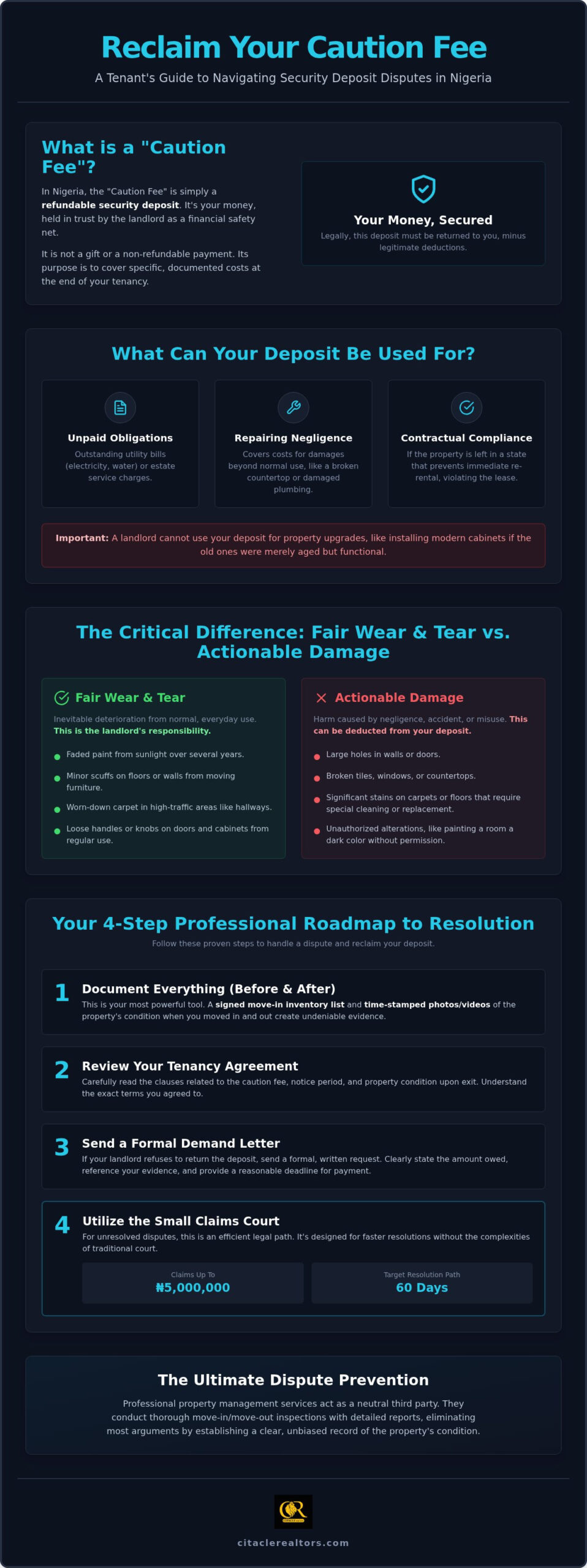
In the Nigerian property market, the term “Caution Fee” is a staple of almost every tenancy negotiation. While it sounds like a local tradition, it’s actually a security deposit by another name. This sum is a refundable payment made by a tenant at the start of a lease, intended to act as a financial safety net for the landlord. If you’re wondering how to handle disputes over security deposits, you must first recognize that this money remains yours in principle. The landlord simply holds it in trust to cover specific, documented liabilities that might arise during your stay.
The legal framework governing tenancy agreements throughout Nigeria provides clear boundaries for these payments. While specific regulations can vary by jurisdiction, many tenancy laws stipulate limits on the amount a landlord can demand, often capping it at one month’s rent for residential properties. Despite these regulations, conflicts are common. These usually stem from a lack of clarity regarding what constitutes “fair wear and tear” versus actual damage. A landlord might see a slightly faded wall as a reason to withhold ₦150,000, while a tenant sees it as the natural result of living in a home for three years. Clearing up these misaligned expectations is the first step toward a peaceful move-out.
The Legal Purpose of the Deposit
The primary role of a caution fee is to ensure the property returns to the landlord in a habitable state without financial loss. It serves three main functions:
- Settling Unpaid Obligations: This includes outstanding utility bills (such as electricity or water), or accumulated estate service charges.
- Repairing Negligence: If a tenant breaks a marble countertop or damages plumbing through misuse, the deposit covers the professional restoration.
- Ensuring Contractual Compliance: It protects the landlord if a tenant leaves the property in a state that prevents immediate re-rental.
Common Misconceptions in the Nigerian Market
Many tenants mistakenly believe they can “live out” their caution fee by not paying the final month’s rent. Unless your tenancy agreement explicitly allows this, it’s a breach of contract that can complicate how to handle disputes over security deposits later. Another frequent error involves “improvement” renovations. A landlord cannot legally withhold your ₦250,000 deposit to upgrade old kitchen cabinets to a modern style if the original cabinets were simply aged but functional. Finally, tenants often underestimate the actual cost of repairs in Nigeria. A professional paint job or a specialized plumbing fix often costs significantly more than a quick DIY solution, which is why having an expert asset valuation is so beneficial for both parties.
Legitimate Grounds for Deposit Deductions
Understanding the line between normal usage and actual damage is the most critical part of learning how to handle disputes over security deposits. Under the Right of landlord under Lagos State Tenancy Law 2011, property owners are entitled to use the caution fee to restore the premises if a tenant has caused documented harm. However, this fund is not a blank check for property upgrades. It’s a specific pool of money meant to return the property to the landlord in the same condition it was received, minus the natural effects of time.
Disputes often flare up because of vague language in tenancy agreements. To protect your ₦500,000 or ₦1,000,000 deposit, you must be able to categorize every mark on the wall. Landlords are generally prohibited from withholding funds for routine maintenance that would be necessary regardless of who lived there. Conversely, tenants are responsible for any financial burdens they leave behind, including unpaid utility bills or physical destruction caused by negligence.
What Qualifies as Fair Wear and Tear?
Fair wear and tear refers to the inevitable deterioration of a property through ordinary, everyday use. In the Nigerian climate, this often includes:
- Faded Paint: The intense tropical sun naturally dulls interior and exterior paint over several years.
- Floor Scuffs: Minor marks on tiles or wooden floors from walking or the gentle movement of furniture.
- High-Traffic Wear: Carpets or rugs that look “thinner” in hallways or doorways due to constant use.
These issues are the landlord’s responsibility to refresh between tenancies. They are part of the cost of doing business in real estate.
Examples of Actionable Damage
Actionable damage involves harm that is avoidable or results from misuse. This is where deductions become legitimate. Common examples include:
- Unauthorized Structural Changes: Drilling large holes for heavy equipment or removing fixtures without written consent.
- Broken Sanitary Ware: Cracked toilet bowls, shattered washbasins, or chipped kitchen sinks.
- Electrical Misuse: Burnt sockets or melted wiring caused by overloading circuits with heavy industrial appliances.
Beyond physical damage, landlords can deduct for unpaid obligations. If you leave behind ₦50,000 in outstanding electricity bills or unpaid estate dues, the landlord will likely use the caution fee to clear these debts. Cleanliness is another factor. If a tenant leaves the property filled with debris or abandoned furniture, the cost of professional property removals is a valid deduction. If you want to ensure your property remains in top condition and avoid these headaches, consider using a professional property management service to oversee the transition. Clear documentation at this stage is the only way to handle disputes over security deposits fairly and efficiently.
The Power of Documentation: Preventing and Winning Disputes
When a disagreement arises, the person with the best records usually wins. In the Nigerian rental market, where verbal agreements and casual understandings are common, documentation acts as your most reliable witness. Learning how to handle disputes over security deposits effectively requires a shift in mindset; you must view your tenancy through the lens of a professional manager. By establishing a clear, undeniable record of the property’s condition, you remove the emotional heat from the conversation and replace it with objective facts.
The foundation of this record is the move-in inspection. This is a comprehensive, signed inventory that details the state of every fixture, from the kitchen cabinetry to the bathroom tiles. When both parties sign this document, they’re agreeing on a baseline that prevents future claims about pre-existing damage. Complement this with a digital trail. Take high-resolution, time-stamped photos and videos of every room. This digital evidence is often the deciding factor in Small Claims Court, as it provides an indisputable before picture that no verbal argument can overturn.
Maintain a rigorous communication log. If you request a repair or notice a minor issue like a damp patch during the rainy season, ensure your discussion is captured in writing. Emails or formal letters are far superior to verbal promises or casual text messages. This creates a chronological history of your efforts to maintain the property, which is essential when explaining how to handle disputes over security deposits to a third-party mediator.
The Essential Move-Out Checklist
As your lease approaches its end, your preparation should intensify. We recommend comparing the final state of your home against a professional 2026 duplex inspection checklist for tenants. This ensures you don’t miss small details that could lead to significant deductions. Always invite your landlord or estate manager for a joint final walk-through. During this session, use an acknowledgment of condition form. Once both parties sign this upon the key handover, the landlord will find it much harder to discover new damages three weeks later.
Professional Valuation as Evidence
Sometimes, even with photos, the cost of a repair is the point of contention. This is where professional property valuation for sellers Nigeria techniques become invaluable. An expert asset valuation provides an unbiased, market-reflective cost for specific repairs, preventing landlords from inflating prices. If a deduction is necessary, utilizing third-party quotes for property renovations ensures the amount withheld is fair and justifiable, protecting your ₦1,000,000 caution fee from arbitrary depletion.
Step-by-Step Guide to Resolving a Deposit Dispute
Resolving a conflict over your caution fee doesn’t always require a courtroom. It starts with a calm, methodical approach that prioritizes clear communication. If you’re wondering how to handle disputes over security deposits, your first move is to revisit your original tenancy agreement. Most professional contracts in Nigeria include specific clauses regarding the refund timeline, often ranging from 14 to 30 days after the keys are returned. Confirming these details ensures you’re making a request based on agreed-upon terms rather than assumptions.
Once you’ve confirmed the timeline, move toward a formal request. A verbal reminder is a good start, but a written demand carries more weight. This transition from informal to formal signals that you’re serious about your rights while remaining professional and open to a fair resolution. If the landlord or agent remains unresponsive, involving a professional real estate firm as a neutral third party can often break the deadlock without escalating the situation further.
Drafting the Demand Letter
Your demand letter is the bridge between a casual chat and a formal legal proceeding. It should be polite, firm, and incredibly detailed. Ensure you include the following elements to make your case undeniable:
- Specific Financials: State the exact ₦ amount of the deposit and the dates your tenancy began and ended.
- Evidence Attachments: Reference the move-out inspection report and the time-stamped photos we discussed in the previous section.
- A Clear Deadline: Give the landlord a reasonable window, such as seven to ten business days, to either refund the ₦500,000 or provide an itemized list of deductions.
Alternative Dispute Resolution (ADR)
Mediation is often the most optimistic path toward a resolution that leaves both parties feeling respected. In Nigeria, Alternative Dispute Resolution (ADR) is gaining popularity because it avoids the high costs and long delays of the traditional court system. A professional property manager can act as a neutral mediator, helping both sides reach a middle ground based on documented evidence and current market repair costs. This process often ends with a signed settlement agreement, which is legally binding and provides a clear path forward. If you find yourself stuck in a stalemate, our team can provide expert property management services to help mediate the situation and ensure a fair outcome for everyone involved. Learning how to handle disputes over security deposits through mediation often saves thousands of Naira in legal fees and preserves professional relationships.
Professional Management: The Ultimate Dispute Prevention
The most effective strategy for managing rental transitions is to prevent conflict entirely. While searching for how to handle disputes over security deposits is a necessary step once a disagreement begins, the ultimate solution lies in proactive oversight. Verified real estate firms act as a professional buffer between the landlord and the tenant, replacing emotional arguments with standardized data. By utilizing residential property management services, both parties gain access to a neutral partner that prioritizes the integrity of the lease agreement over personal bias. This eliminates the “he-said, she-said” dynamic that often plagues the Nigerian rental market.
A significant portion of move-out friction comes from neglected maintenance that eventually snowballs into expensive repairs. This is where facility management services Nigeria provide immense value. When an asset is managed professionally, regular inspections catch minor leaks or electrical faults before they cause ₦250,000 in damage. This methodical approach ensures the property remains in top condition, which naturally reduces the legitimate grounds for caution fee deductions. It’s about moving from a state of searching for solutions to a state of professional discovery and stability.
Benefits for Landlords
Professional management offers property owners a sense of steady assurance and reliability. This proactive oversight includes several key advantages:
- Rigorous Screening: Selecting tenants who value property maintenance and clear communication.
- Expert Lease Drafting: Clearly defining the refund process and timeline for a security deposit.
- Seamless Transitions: Managing the move-out process so that every ₦50,000 renovation or cleaning cost is documented and justified.
This level of decorum protects the landlord’s investment while maintaining a high standard of service that attracts quality residents.
Peace of Mind for Tenants
Tenants often feel a distinct sense of anxiety regarding the perceived difficulty of recovering their caution fee in Nigeria. A managed property offers a refreshingly transparent and welcoming experience. You’ll benefit from a professional response to maintenance requests throughout your stay, which prevents small issues from being blamed on you during the exit walk-through. The final procedures are equally fair; you’ll follow a clear roadmap that ensures your deposit is handled with the respect your financial commitment deserves. This creates a sense of partnership and shared journey rather than a confrontational end to your tenancy.
Securing Your Rental Future with Confidence
Mastering the transition between homes doesn’t have to be a source of anxiety. By distinguishing fair wear and tear from actionable damage and maintaining a rigorous digital trail of your property’s condition, you’ve already won half the battle. You now have a professional roadmap for how to handle disputes over security deposits through clear communication, formal demand letters, and effective mediation. These steps ensure that your caution fee remains a protected asset rather than a lost expense.
If you’re looking for a partnership that prioritizes transparency and peace of mind, we’re here to help. Avoid the stress of rental disputes with Citacle Realtors Professional Property Management. Our dedicated tenant relations team and expert asset valuation services ensure that every deduction is fair and every facility is maintained to the highest standards. With our comprehensive facilities management, we bridge the gap between landlords and tenants to create a harmonious living experience. Let’s work together to make your next move your smoothest one yet.
Frequently Asked Questions
How long does a landlord have to refund a security deposit in Nigeria?
The refund timeline is primarily governed by your tenancy agreement; however, 14 to 30 days is the standard professional window in Nigeria. If your contract is silent, the Lagos State Tenancy Law 2011 suggests a prompt return once the property is vacated and utility bills are cleared. If you face delays, the Small Claims Court can resolve monetary demands up to ₦5,000,000 within a 60-day period.
Can my landlord deduct money for painting the house after I move out?
Landlords generally cannot deduct for routine painting caused by fair wear and tear, such as natural fading or minor scuffs. However, if you’ve repainted the walls an unauthorized color or caused significant damage like deep gouges and large holes, the cost of restoration is a valid deduction. Professional management firms use asset valuation to ensure these repair costs are fair and reflect current Nigerian market rates.
What should I do if my landlord is not picking up calls regarding my refund?
Switch from verbal communication to formal written correspondence if your landlord is unresponsive. Send a polite but firm demand letter via email or registered post, detailing the deposit amount and your move-out date. This creates a paper trail essential for learning how to handle disputes over security deposits through legal channels. If silence persists, a professional property management firm can often mediate the situation to secure your refund.
Is a “caution fee” legally different from a security deposit?
A “caution fee” is legally identical to a security deposit in the Nigerian real estate market. While the term “caution fee” is the most common indigenous synonym, both represent a refundable sum held in trust to cover damages or unpaid bills. The same regulations, such as the one-month rent limit for residential properties in Lagos, apply regardless of the specific terminology used in your tenancy agreement.
Can I use my security deposit to pay for my last month of rent?
You shouldn’t use your security deposit as your final rent payment unless your landlord has explicitly agreed to this in writing. The deposit is specifically reserved for post-tenancy liabilities like broken fixtures or outstanding electricity bills. Paying your last month’s rent with these funds can lead to a breach of contract; this makes it much harder to resolve any subsequent disagreements over property condition or utility arrears.
Do I need a lawyer to handle a security deposit dispute?
You don’t always need a lawyer, especially when filing a claim in the Small Claims Court for amounts up to ₦5,000,000. These courts are designed for self-representation and aim for a fast, 60-day resolution. However, consulting a professional property manager or a mediation center can often settle the matter more affordably. They provide the expert oversight needed to reach a fair agreement without the stress of a full legal battle.
What happens if the cost of repairs exceeds my security deposit?
If the legitimate repair costs exceed your caution fee, you are legally responsible for paying the balance to the landlord. This often occurs when major structural damage or significant utility debts are discovered during the final walk-through. In such cases, an asset valuation provides an unbiased cost breakdown. If you refuse to pay, the landlord may seek a court order to recover the additional funds through the legal system.
How can I prove that the damage was already there when I moved in?
Your strongest evidence is a signed move-in inventory combined with time-stamped photos or videos taken on the day you received the keys. This creates an indisputable digital trail that shows the property’s original state. Without these documents, proving pre-existing damage is difficult. This is why we emphasize professional facility management, as it ensures these rigorous move-in checklists are always in place to protect both parties from unfair claims.