

What if the asking price tells only part of your property’s story? For Nigerian owners, an asset appraisal for property owners can provide a more considered view of value, based on the property’s features, condition, location and relevant market evidence. It won’t guarantee a sale price, but it can help you test assumptions and make better-informed decisions.
You may be wondering what an appraiser will assess, which records to gather and whether the final report will give you a clear basis for action. A useful appraisal is more than a number. Its findings can inform a potential sale, ongoing management, renovation planning or a review of your property’s position.
In this guide, you’ll learn what an appraisal can and can’t tell you, how to prepare property information and improvement records, and what to check when reviewing the report. You’ll also see how to use its findings without treating an estimate as a guaranteed outcome. Citacle Realtors provides asset valuation in Nigeria to help property owners make informed decisions.
Key Takeaways
- An appraisal gives a reasoned opinion of value for a stated purpose and date, not a guaranteed selling price.
- The right appraisal approach depends on the property, the valuation purpose and the available evidence.
- Use asset appraisal for property owners to distinguish a professional opinion from an asking price, informal estimate or completed sale evidence.
- Prepare by gathering available title, floor-plan, improvement and maintenance records, and making the property accessible.
- Check the report’s assumptions and property details before using its findings to guide a sale, management or renovation decision.
Asset Appraisal for Property Owners: When Is It Useful?
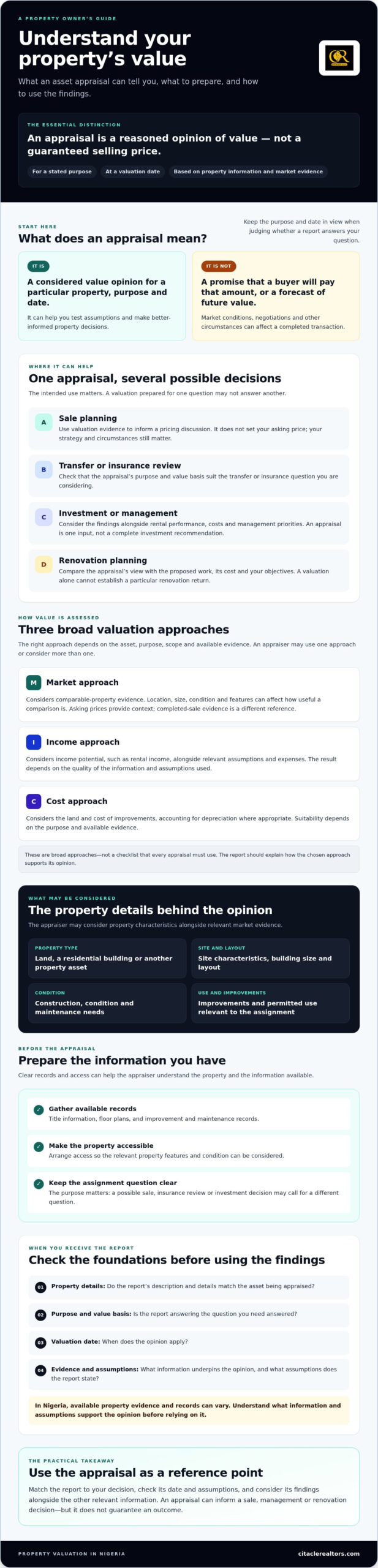
An asset appraisal is a reasoned opinion of a property’s value, prepared for a stated purpose and valuation date using relevant property information and market evidence. The intended use matters: a valuation for a possible sale may not answer the same question as one prepared for an insurance review or investment decision.
In brief: An appraisal assesses a property for a particular purpose and date. It is more considered than a casual online estimate, which may rely on limited details and overlook the property’s condition, features or relevant market evidence.
Which property-owner decisions can an appraisal support?
An appraisal can give you a reference point when weighing property decisions:
- Sale planning: Use valuation evidence to understand how the property’s characteristics and relevant market information may inform your plans. It can support a pricing discussion, but it doesn’t set an asking price. Your strategy and circumstances matter too.
- Transfer or insurance review: A valuation may provide useful information when a property changes hands or you review its insurance arrangements. Check that the appraisal’s purpose and value basis suit the decision. Different questions may require different assessments.
- Investment or management: Consider valuation findings alongside rental performance, costs and management priorities when reviewing how a property fits your investment plans. An appraisal is one input, not a complete investment recommendation.
- Renovation: Before committing to improvements, compare the appraisal’s view of the property with the proposed work, its cost and your objectives. A valuation alone can’t establish whether a renovation will produce a particular return.
For a broader overview of the real estate appraisal concept, including common valuation approaches, see Wikipedia’s summary.
What does an appraisal actually represent?
The reported opinion relates to a specific property, a defined purpose, the evidence considered and the valuation date. It isn’t a promise that a buyer will pay that amount or a forecast of what the property will be worth later. Market conditions and available evidence can change, while a completed transaction may reflect negotiations and circumstances beyond the appraisal.
The valuation date shows when the opinion applies, while the stated purpose explains the question the appraisal is intended to answer. Keep both in view when deciding whether the report is relevant to your needs. In Nigeria, property evidence and available records can vary, so check what information and assumptions underpin the opinion before relying on it.
How Do Property Appraisers Assess an Asset’s Value?
There isn’t one calculation that suits every property. The approach depends on the asset, the reason for the appraisal, the available evidence and the agreed scope. An appraiser may use one method or consider more than one, and the report should explain how the approach supports the valuation opinion.
The Consumer Financial Protection Bureau offers a plain-language overview of the purpose of a property appraisal. Its information reflects a US consumer context, so it shouldn’t be treated as guidance on Nigerian professional requirements.
How do market, income, and cost approaches differ?
The market approach considers evidence from comparable properties. The appraiser may analyse differences in location, size, condition or features to judge how useful each comparison is. Asking prices can offer context, but relevant completed-sale evidence provides a different reference.
The income approach considers a property’s income potential, such as rental income, alongside relevant assumptions and expenses. It may suit an income-producing asset, but the result depends on the quality of the information and the assumptions applied.
The cost approach considers the land and the cost of improvements, while accounting for depreciation where appropriate. It may help assess certain properties, but its suitability depends on the appraisal’s purpose and the available evidence. These are broad approaches, not a checklist every appraisal must use.
Which property details can influence an appraisal?
An appraiser may consider whether the asset is land, a residential building or another property type, as well as site characteristics, building size and layout, construction and condition. Improvements, maintenance needs and permitted use may also matter to the assignment. A feature’s effect on value depends on the property and supporting evidence, not simply on whether it seems desirable.
Comparable evidence needs context. Properties in the same area can differ in access, land size, building condition or use, so a comparison should be relevant, not merely nearby. Market conditions and the availability of dependable transaction information can also affect how confidently the evidence can be applied.
Key evidence categories include property type, land and building characteristics, condition, permitted use, comparable transactions and relevant market context. When reviewing an asset appraisal for property owners, ask which approach was used, why it suited the assignment and what information or assumptions shaped the conclusion. In Nigeria, check that the methodology and terminology align with applicable professional standards, and confirm the appraiser’s credentials rather than assuming them.
If a valuation would help inform your property decision, explore asset valuation services from Citacle Realtors.
Asset Appraisal vs Asking Price: What Should Property Owners Trust?
An appraisal, an asking price and a completed sale each tell you something different. The key is to understand what each figure represents and whether it fits your decision. An appraisal is an evidence-informed opinion, not a promise that a buyer will pay a particular amount.
| Figure or evidence | What it represents | What to keep in mind |
|---|---|---|
| Appraisal opinion | A professional view of value based on a stated purpose, valuation date and the evidence considered. | Review the assumptions and scope. It may not answer a different question or reflect later market changes. |
| Asking price | The amount a seller chooses to advertise or seek for a property. | It can reflect the seller’s strategy and expectations. It isn’t proof of what a buyer will pay. |
| Informal estimate | A preliminary indication that may draw on limited information or a quick comparison. | Check which property details and evidence support it. It may not involve the same investigation or defined scope as an appraisal. |
| Completed sale evidence | A record of a property transaction that has taken place. | Its relevance depends on factors such as comparability, transaction timing and circumstances. |
Why might an asking price differ from an appraised value?
A seller sets an asking price as part of a sales strategy. An appraiser forms an opinion based on the assignment’s purpose, evidence and assumptions. The figures may differ if the property’s condition or features were described incompletely, if comparable evidence relates to another date or if market conditions have changed. Neither figure is automatically correct for every purpose. Ask what evidence supports each one and whether it relates to the same property facts and timeframe.
When should an owner request another opinion?
First, check the report before commissioning another assessment. If it appears to omit a material feature or conflicts with your property records, ask the appraiser to clarify the scope, assumptions and information used. Ask how comparable evidence was selected and how relevant differences were considered. A changed purpose or later valuation date may call for a fresh assessment rather than a simple comparison with the earlier figure.
In practice, use the figure that best fits your decision and is supported by relevant evidence. A completed sale shows what happened in a particular transaction; an appraisal gives an opinion for a defined purpose and date. Keep the distinction clear and treat each as one part of a considered property decision.
How Can Property Owners Prepare for an Asset Appraisal?
Preparation can help the appraiser understand the property and the reason for the valuation. Provide accurate information, make relevant areas accessible and clarify what you need the appraisal to address. You don’t need to guess at a value or persuade the appraiser toward a particular figure.
Property appraisal preparation checklist
- Confirm the purpose. Explain whether the appraisal will support a sale, transfer, insurance review, investment decision or another purpose. Ask whether the intended use affects the scope.
- Gather available records. Collect relevant ownership or title information, floor plans, building details, improvement records and maintenance documents. These can help clarify what exists and when work was completed.
- Prepare the property. Make rooms, buildings and relevant land areas accessible. Tidy and declutter where practical, and note visible maintenance issues rather than trying to conceal them.
- Share accurate property details. Describe how the property is used and its current condition. Point out improvements or features that may not be obvious, and identify records you don’t have.
- Write down questions. Before the visit or discussion, note what you want clarified about the process, scope, timing or report.
Which documents and details should you gather?
Useful information varies by property and assignment, so don’t assume every document is required. Depending on what’s available, prepare ownership or title records, a floor plan, details about the land and building, and records of alterations, renovations or ongoing maintenance. Add accurate notes about the property’s use, condition and any known changes.
Confirm document requirements with the appointed professional. If a record is missing, say so and ask whether other information can help. Clear disclosure supports a more informed review, but it doesn’t guarantee a particular valuation outcome.
If your appraisal is connected to a potential sale, the Citacle Realtors property valuation guide for sellers in Nigeria offers additional sale-focused context.
What questions should you ask the appraiser?
Seek clarity before the work begins. Ask what purpose the appraisal serves, which valuation date applies, what the scope includes and what assumptions may affect the opinion. You can also ask which valuation approach and property evidence are relevant, what deliverables to expect and what limitations apply.
Finally, ask how to raise factual corrections if the report contains an error, such as an incorrect floor-plan detail or an omitted improvement. For professional asset valuation support, discuss your property valuation needs with Citacle Realtors.
How Can Owners Use Appraisal Findings to Protect Property Value?
An appraisal is most useful when you connect its findings to the decision that prompted it. Don’t act on the reported figure alone. Consider what the report says about the property, which assumptions shape the opinion and what practical steps are within your control. This makes asset appraisal for property owners a decision tool, not simply a number to file away.
How should owners read an appraisal report?
Start with the valuation date, stated purpose and scope. Then review the property description, assumptions and limitations. Check that details such as the property’s use, land and building characteristics, condition and recorded improvements are accurate. If something material is missing or incorrect, ask the appraiser how to request a factual correction. Seek clarification for terms or assumptions you don’t understand.
Keep the valuation date in perspective. The report reflects an opinion for a defined assignment, not a guarantee of future market performance or a promised sale price. If circumstances have changed since the valuation, ask whether the information remains suitable for your current decision.
What is a sensible next step after receiving an appraisal?
Match the findings to your objective, then consider them alongside other relevant information:
- For a sale: Use the report to inform your planning, alongside your circumstances and current market context. It doesn’t set your asking price or ensure a transaction at that amount.
- For management or investment: Consider whether the findings call for a closer review of the property’s upkeep, use or role in your investment plans. Valuation alone isn’t a complete management or investment strategy.
- For renovation: Compare the property’s condition and relevant observations with the proposed work, its cost and your goals before deciding what to prioritise. Don’t assume improvements will produce a particular increase in value.
If the report highlights maintenance concerns in a rental property, Citacle’s guide to increasing rental property value in Nigeria offers context for considering upkeep and improvement decisions.
Verify the property facts, clarify uncertainties and choose a next step that fits your purpose. If the report identifies management or condition needs, consider whether property management or renovation support is appropriate. Citacle Realtors provides asset valuation for property owners across Nigeria. If you’re considering an appraisal, discuss your property’s valuation needs with the team.
Make Your Next Property Decision with Greater Clarity
A considered asset appraisal for property owners is more than a figure on a page. It’s an evidence-based opinion tied to a specific purpose and valuation date, and it can help you assess options for a sale, management, investment or renovation.
Prepare by gathering available property records and sharing accurate details about its condition and use. When you receive the report, review its assumptions, scope and property description. Then consider the findings alongside your goals and current circumstances. An appraisal can guide your next step, but it can’t promise a sale price or predict future market performance.
Citacle Realtors provides asset valuation services for property owners, alongside property management and renovation services where relevant. If you’re ready to discuss your property and the purpose of an appraisal, discuss your property appraisal needs with Citacle Realtors.
With clear information and a thoughtful review, you can move forward with greater confidence in your property decisions.
Frequently Asked Questions
What is an asset appraisal for a property owner?
An asset appraisal for property owners is a reasoned opinion of a property’s value, prepared for a stated purpose and valuation date. It draws on relevant property details and market evidence. Owners may use it to inform decisions such as sale planning, a transfer, an insurance review or renovation. The result isn’t a guaranteed selling price or prediction. It is more considered than a casual online estimate because it relates to a defined assignment.
How is an asset appraisal different from a property asking price?
An appraisal is an evidence-informed opinion, while an asking price is the amount a seller chooses to seek. A seller may set that price based on expectations, circumstances or sales strategy. It doesn’t prove what a buyer will pay. A completed sale records a transaction that has taken place, though its relevance depends on how comparable the property and circumstances are to yours.
What factors affect a property’s appraised value?
A property’s type, location, land characteristics, building size and layout, condition, improvements and use may all be relevant. An appraiser may also consider comparable property evidence and market context at the valuation date. The importance of each factor depends on the property and the appraisal’s purpose. The report’s assumptions and the quality of available information can also shape the final opinion.
What documents should I prepare for a property appraisal in Nigeria?
Gather available ownership or title information, floor plans, building details, improvement records and maintenance information. Prepare accurate notes on how the property is used and its current condition, including relevant changes that may not be obvious during a visit. Requirements can vary by assignment, so confirm which documents the appointed professional needs. If a record isn’t available, mention that rather than guessing or presenting incomplete information as confirmed.
Can I use an appraisal to decide whether to renovate my property?
Yes. An appraisal can be one input when weighing renovation options, but it can’t determine by itself whether the work is worthwhile. Review relevant observations about the property alongside your objectives, proposed work and cost information. Don’t assume a renovation will increase value by a particular amount or guarantee a return. If the report raises questions about condition or improvements, seek clarification before deciding.
How often should a property owner request an appraisal?
There’s no universal schedule for every property owner. Consider an appraisal when a decision requires a current, purpose-specific opinion, such as planning a sale or reviewing an investment. A material change to the property, a different intended use for the report or a later valuation date may mean the previous appraisal no longer answers your question. Ask the appointed professional whether an updated assessment is appropriate.
What should I do if I disagree with a property appraisal?
Start by reviewing the report’s purpose, valuation date, scope, assumptions and property description. Note specific factual errors, such as an omitted improvement or incorrect building detail, and share relevant records with the appraiser. Ask how comparable evidence was considered and request clarification of unfamiliar terms. If your concern remains unresolved, consider another professional opinion or a fresh assessment suited to your purpose and valuation date.